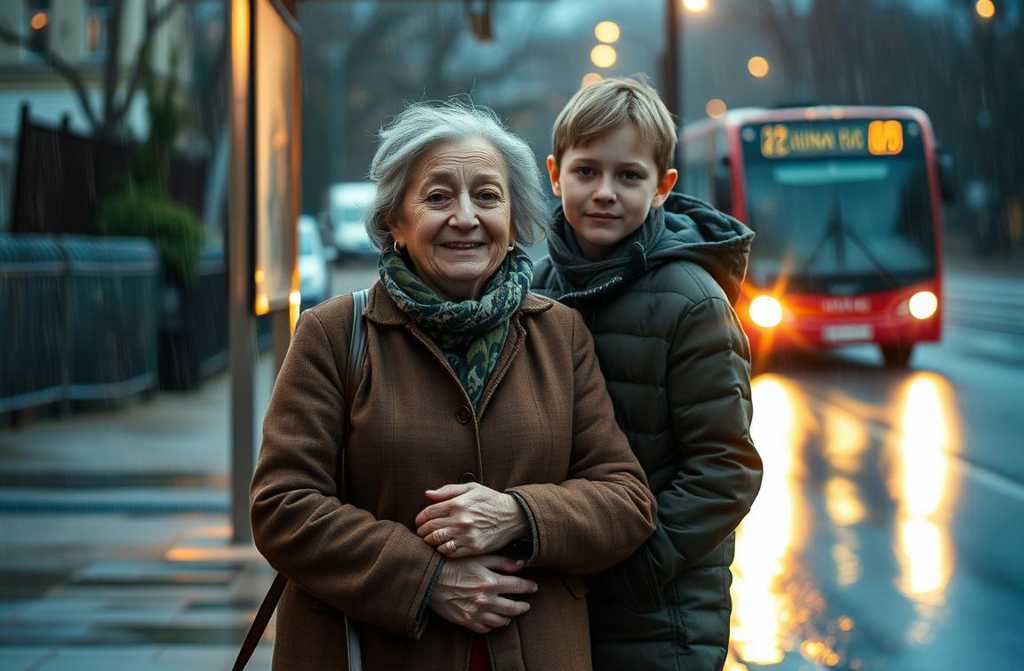
The evening sky over the district centre darkens quickly, as if someone has turned the lights down. The street lamps on Main Road flick on at exactly six oclock, and the wet tarmac reflects their glassy globes faintly. At the bus stop, where the bench seats still bear the dark stains of damp leaves, the regular crowd gathers: a handful of schoolchildren with backpacks, two elderly localsMargaret Smith and John Brownand a couple of younger adults. Everyone waits for the last service that each night carries them to the surrounding villages.
A new notice hangs on the timetable board, printed in large, stark letters: From 3November2024 the 19:15 service is cancelled due to it being unprofitable. District Council. The group reads it almost together, but no one says a word aloud. Only the Year7 pupil Oliver whispers to the girl beside him:
How will we get home now? Its a long walk
Margaret adjusts her scarf and shivers. She lives in a neighbouring hamlet that the bus reaches in just over half an hour. Walking would take at least two hours on the broken lane, and its frightening to do it in the dark. For her the bus is the only link to the pharmacy and the health centre. For the pupils it is the chance to return from afterschool clubs before night falls. Everyone knows this, but no one is quick to complain. The discussion starts later, once the initial shock settles.
At the corner shop, always scented with fresh bread and raw potatoes, voices grow louder. The shopkeeper Emily slices a sausage and asks the regulars quietly:
Heard about the bus? Now youll have to find your own way My sister gets home at night toowhat now?
The elders exchange short remarks. Someone remembers the neighbours old Ford:
Maybe someone can give a lift? Who has a car?
But it quickly becomes clear that there arent enough cars for everyone. John sighs:
I could drive, but I havent been out in ages. My insurance even lapsed.
The pupils stay apart, glancing at their phones. Their class chat already buzzes with questions about who can stay over at a neighbours house if the bus never returns. Parents type short, nervous messagessome have night shifts, and theres no one to fetch the kids.
Around seven, the air feels noticeably colder. A fine drizzle falls without pause, making the road glisten beneath the lamps. A small crowd gathers outside the shopsome waiting for a rideshare, some hoping for a kind truck driver. After six, traffic thins to almost nothing.
Local activist Sarah Johnson posts on the community page: Friends! The bus is cancelled and people are left without a way home! Lets meet tomorrow evening at the council offices we need a solution! Comments flood in quicklysome suggest organising carpools, others vent at the council, and a few recount nights spent in the town centre when the weather turned bad.
The next day the debate continues on the schools front steps and at the pharmacy. One suggestion is to contact the bus operator directlyperhaps theyll rethink the decision? The driver merely shrugs:
They told me the evening service isnt profitable Fewer passengers now that autumns here.
Attempts at informal rides are shortlived: a few families agree to rotate children, but that option isnt viable for the elderly. One evening Oliver and his friends wait half an hour at the shelter in the rain, hoping a friends mother will collect them all at once. Her car breaks down on the way.
Meanwhile the number of stranded people climbs: pensioners returning from clinic appointments and women from nearby hamlets join the schoolchildren, all trapped between their homes and the district centre because the timetable now shows a blank line.
In the evenings the shop windows fog up from the damp; inside, those with nowhere else to go warm themselves. Emily lets them stay until closing, after which they must step out into the night and hope for a passing vehicle or call a neighbour to crash on.
The collective irritation gradually turns to anxiety and fatigue. Chats list those most in need of transport: younger pupils, frail Margaret Smith with her aching legs, a woman from the third row of houses with poor eyesight Those names repeat more often each night.
One night the waiting room at the bus depot fills earlier than usualstill no bus. The air smells of wet clothing; rain taps on the roof. The pupils try doing homework at the luggage table, while pensioners sit with their shopping bags. By eight oclock it becomes clear: no one will get home on time tonight.
Someone suggests drafting a joint petition to the district leader right then:
If we all sign, they have to hear us!
People write down their detailssurnames, village addresses; a teenager pulls out a notebook for signatures. Voices are lowexhaustion outweighs anger. When the youngest girl, Ethel, breaks into tears fearing shell have to spend the night alone among strangers, a shared resolve spikes.
Together they compose the petition: they ask for the evening service to be reinstated at least every other day, or for an alternative that helps those who rely on the bus as their only way home. They list the number of residents per village, stress the routes importance for children and seniors, and attach a signature sheet taken right there in the waiting room.
By eightthirty the collective request is ready. They photograph it on a phone to email the council and print a copy to hand over at the secretarys desk the next morning.
No one argues any longer about whether to fight for the route or rely on neighbours private ridesrestoring the bus has become a matter of survival for many families.
The following morning is especially cold. Frost spreads a white net over the grass beside the depot, and the glass doors still hold yesterdays handprints and shoe marks. The same faces gather again: someone brings a thermos of tea, another shares the latest groupchat news.
Conversations now happen in hushed tones, but the worry is evident. Everyone waits for the councils reply, understanding that such issues arent solved quickly. Pupils scroll through messages; the elderly swap theories about how theyll get around if the service never returns. Emily arrives with a printed copy of the petitionso no one forgets weve done everything we can.
Evenings see the group reconvene at the shelter or on the bench outside the pharmacy. Talk shifts from the bus to organising adult volunteers to escort children, or whether a minibus could be hired for the toughest days. Fatigue shows in every movement; even the most energetic speak softer, as if conserving strength.
The local chat updates almost daily: somebody calls the council and gets a vague answer; another shares a photo of the crowded waiting room with the caption Waiting together. Activist Sarah posts progress reports on how many people are still forced to seek rides or spend nights in the town centre each week.
It becomes clear the problem extends beyond a single village or family. Social media posts beg for likes and shares to make the appeal visible to officials.
Silence from the council weighs heavier than any storm. Residents wonder if officials will still deem the route unprofitable. What will those who cannot afford to wait an extra hour do? Streetlights flicker yellow behind frosted windows; the roads are empty as everyone tries to stay indoors unless necessary.
A few days later the first official reply arrives: the joint petition is under review, and a passengerflow study will be carried out. They ask for confirmed numbers of those in need per village, school club schedules, and healthcentre opening hours for seniors. Teachers compile lists of pupils with addresses; pharmacy staff help gather data on patients from surrounding hamlets.
The anticipation of a decision becomes a shared concern for the whole district. Even those who previously cared little about the bus now follow the debate, realizing the issue affects every second resident.
A week after the petition, the frost thickens and the asphalt becomes icy. A small crowd gathers outside the council offices, clutching copies of the petition. Schoolchildren with backpacks and pensioners in warm coats stand side by side.
At noon the secretary emerges with a letter from the council leader. It states officially: the route will be partially restoredan evening service will run every other day according to a new timetable until the end of winter; passenger numbers will be monitored via special registers; if load factors improve, daily services may resume in spring.
Initial reactions are mixedrelief mingles with weariness after a week of anxiety. Some people weep at the council entrance; children hug each other in triumph.
The new timetable is posted beside the old cancellation notice, photographed on phones and forwarded to neighbours in outlying villages. Local shops discuss the change:
At least well have something now I was scared wed have to walk all the way home.
Every other day is better than nothing. Let the officials see how many of us actually use it!
The first restored journey takes place on a Friday evening. Thick fog hangs over the road as the bus emerges slowly from the white mist, headlights cutting through Novembers gloom.
Pupils claim the front seats, pensioners settle together by the windows, and brief cheers pass between them:
See? We did it together!
Lets keep it going!
The driver greets everyone by name and checks the new passenger register carefully.
The bus rolls forward at a gentle pace, fields and lowroofed houses with smoking chimneys flashing past. People look ahead more calmly than before, as if the hardest part of the road has already been travelled together.
Margaret Smiths hands tremble with lingering excitement long after she steps off the bus at her cottageshe knows that if anything goes wrong tomorrow or next month, the neighbours who signed the petition will be there to help.
Life in the district returns to its usual rhythm, but every passing glance now feels a little warmer. On the bench by the shelter, plans for future trips are discussed and thanks are given to those who took the initiative that rainy night.
Late that evening the bus slows at the central square, and the driver waves to the children waiting by the school:
See you the day after tomorrow!
That simple promise sounds far more reliable than any topdown decree.