The Cottage
A quiet village near a small town in the Yorkshire countryside. Our cottage stood in a row along the riverbank, next to the homes of Walter and Tamara, followed by the old womans house. Beyond that were more cottages, but they didnt matter to us just then.
Walter had bought the plot seven years earlier, and construction began at once. Machinery rolled in, workers were hired, gravel was laid, piles were driven, foundations dugbefore long, a grand house rose, complete with a well, a summer kitchen, sheds, a bathhouse, and a garage. There was always noise. Walter didnt just give ordershe worked alongside the men, tying rebar, hauling timber, mixing concrete, wiring the place. He put in the effort. People in the countryside are patient. They understood a man was building a home, settling in for good.
Except for the old woman. Every morning, her shrieks rang out.
Dawn. The bus from town pulled up. Out she camealways first. Nobody ever called her anything but «Granny.» She hurried to her little house in a faded grey smock, a black headscarf, and worn-out shoes, clutching a battered bag and a five-litre jug of water. The river wasnt safe to drink fromnot a clear mountain stream but sluggish, turning green in summer. Most fetched drinking water from town. A few had wells, but the water reeked of sulphur, no matter how deep they dugtwenty metres, forty, sixty. Good only for watering plants. Those by the river had pumps running pipes to it. Only Walter had a proper well.
But I digress.
Granny would storm into her garden and the complaints would begin. The tractor was too loud, the diesel fumes foul. The pile-driving shook her house. The workers talked too much. Walters roof blocked sunlight from her strawberries (though hed kept to the rules). If you looked hard enough, there was always something to moan aboutand Granny was a master at it. Walter was every insult under the suna brute, a scoundrel, a good-for-nothing. The stream of abuse never ended, growing fouler by the day.
Walter kept building, ignoring her. But sometimes, leaning on the fence for a smoke, hed mutter in his deep voice:
«Youre like a horsefly on a hot day, Granny. Either youll bleed me dry, or Ill have to swat you.»
«Go on, threaten me, you mangy dog!» shed screech. «Ill burn your fancy house down! High and mighty, scaring an old woman!»
Needless to say, my summers there werent peaceful. I started visiting less.
Years passed. Walter and I never became close, but we got along. Turned out he had two passions: classic rock and tomatoes. Hed play his stereo at a reasonable volume and vanish into his greenhousea massive thing. Walter knew everything about tomatoes. He tracked new breeds, followed fertiliser schedules, replaced the soil each spring after fumigating the place. A layer of manure, then compost, then shade cloth to protect the plants from sunburn and frost, infrared lamps for chilly mornings
This wasnt the south, where you could just plant and forget. Yorkshire had its own rules. Open the doors in the morning, close them at night. If it rained, keep the windward side shut. A constant dance.
Ever heard a burly man talk to tomatoes? I have. Like they were his childrengentle, coaxing. Pruning, feeding, whispering to them. And yet, in town, he was known as a tough bossfirm, no-nonsense, but fair. Funny how people change.
Granny hadnt been forgotten. Turns out she hated rock music. None of itnot Queen, not The Stones, not Pink Floyd. Every evening she stayed over, the air filled with her opinions on the «racket» and the «sod» who played it.
Walter seethed but never argued. When hed had enough, hed down half a pint of ale in one go, growl, switch off the music, and stomp inside. And yes, he did this daily. A man his size could handle it, but the anger wore on him.
Then came the flood.
Rain poured for weeksthe kind that drowned roads. The moors soaked up what they could, but the river swelled, dragging logs, fences, dog kennels, sheds with it. People marked the rising water with sticks, eyeing it nervously. Word spread that the lowlands near the marsh were underwater. Cars were evacuated. Buses stopped. Those without vehicles left on foot. No panic, but close. The streets emptied.
Walter waited until the last moment before driving offthen turned back. Hed seen Granny in her garden the day before.
«Go without me, you devil!» she snapped. «Ive moved my things to the roof. I wont abandon my hometheyll loot it!»
Some cottages were swallowed. Ours stayed dryjust twenty centimetres short. For a week, we didnt know. Walter and I rang each other. He was beside himselfnot about his house, but his tomatoes. Hed forgotten to open the greenhouse. Days of sun, no water theyd be dead.
When the water receded, we returned. Walter brought over a bottle of whisky. We drank.
«Steve, I dont get it,» he said. «I came back. The greenhouse was watered. The doors were open. I know I didnt do itI was in a rush, the water was rising. I asked around. Everyone left.»
«Except Granny.»
«Except Granny,» he echoed, glancing toward her cottage. «But were at each others throats!»
«Except Granny,» I repeated.
«No way.» He drained his glass.
«Except Granny.»
He left in silence, lost in thought.
Granny returned when the buses did. Next day, she was hauling water in bucketsher little pump mustve been washed away. She slipped, soaked herself, but kept at it. Not a single curse.
Walter drove off, came back with pipes and fittings. That night, hammering and sawing echoed from his place.
«Neighbour,» I asked next morning, «what were you building?»
«Bought some pipes. Ran em from my pump to her plot. Saw her struggling.»
Weeks later, Walter invited me for the first tomatoes of the seasonand a barbecue. Seven sharp. I brought whisky and homemade wine.
«Shall we wait for the food, or have one now?» I asked.
«Give it fifteen minutes,» he said.
«Who are we waiting for? Tams already here.»
«Youll see.»
A knock at the gate. In walked Granny.
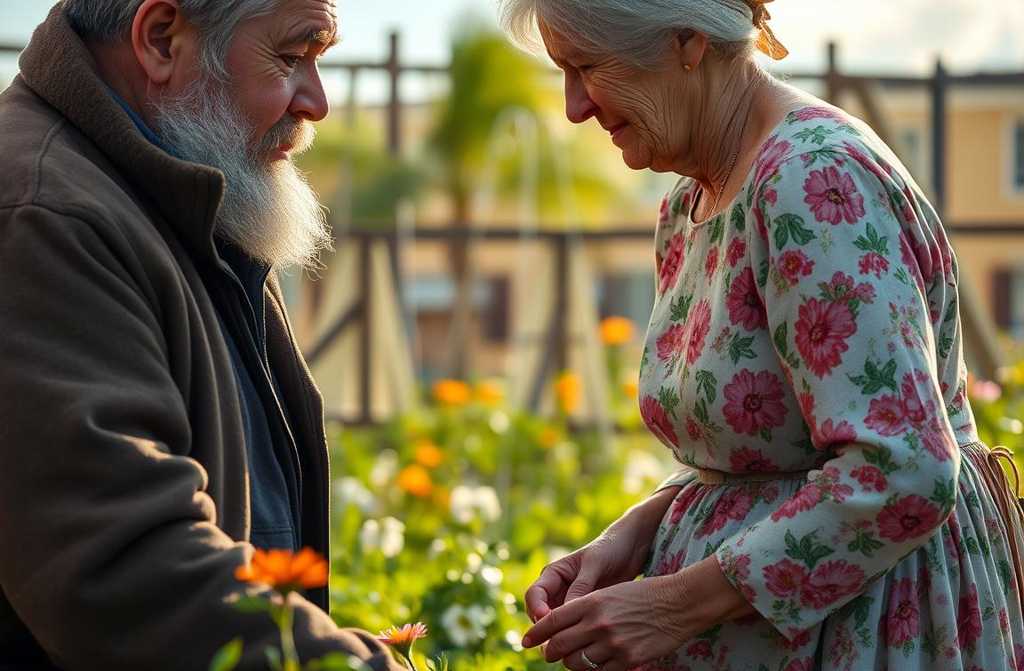
But not as I knew her. Her silver hair was neat, her flowery dress clean, sandals on her feet, a shawl over her shoulders. Amber beads around her neck.
«May I join you?» she asked, smiling.
«Come in, Mary,» Walter said warmly.
I was stunned.
We drank, ate, talked. Mary spoke of her liferaised in an orphanage, widowed young, two children shed brought up alone, scattered now across the country. Forty years on the railways. A hard life, well-lived.
Later, she and Tamara sang old songs. Walter and I listened, smoked, smiled. Sipped our drinks.
«Walter,» she said at last, «Tam told me you wont go to the seasideworried about your tomatoes. Go. Ill water them. Tend them.»
«Was it you?» I blurted. «During the flood?»
«Aye. Saw how much care he put into em. How he talked to em.» She cackled, shooting Walter a look. «Felt sorry for the poor plants!»
Walter took that holiday.
After, we listened to rock againbut only from noon till two. For Mary.