A cottage village near a small town in the Yorkshire countryside. Our place stood in a row right by the riverbank. Next door lived Valerie and Tamara, and beyond them, Grannys cottage. Naturally, there were more houses further down, but they dont concern us at the moment.
Valerie had bought the plot seven years prior, and construction began almost at once. Machines rolled in, labourers were hired, gravel was laid, piles were driven, a foundation dugthen up went the house and the shed. From May to September, the racket never ceased. By the end, an estate stood talla grand house, a well, a summer kitchen, outbuildings, a shed, and a garage. Peace? None of it. Valerie wasnt just the overseer; he tied rebar, hauled timber, mixed concrete, and wired the place himself. The folk up north are patient. They understood a man building his home meant to stay. Everyone but Granny. Every day, her shrieking filled the air.
Morning. The bus from town rolled in. First offGranny. Always first! No one called her anything else. Shed race to her cottage in a faded grey smock, a black headscarf, and scuffed shoes, clutching a worn-out shopping bag and a five-litre jug of water. We didnt drink from the riverit wasnt mountain-fed but sluggish, green with algae in summer. Most hauled drinking water from town. A few had wells, but the water stank of sulphur, no matter if it was twenty, forty, or sixty feet deep. Only good for watering plants. Those by the river ran pipes straight to itexcept Valerie. He had his own well and a pump.
But I digress.
Granny would storm into her garden and start hollering. The tractors diesel fumes, the pile-drivings racket, the labourers chatter, Valeries grand house stealing her strawberries sunlight (though all regulations were followed)there was always something. Granny was a professional complainer. Valerie was every name under the suna brute, a swine, a right bastard. The insults flowed, rich and inventive.
Valerie kept building. He tried to ignore her.
But sometimes, stepping out for a smoke by the fence, hed rumble:
*»Granny, youre like a horsefly on a hot dayeither youll have your fill of blood, or someonell swat you.»*
*»Threaten me again, you mangy dog!»* shed bellow. *»Ill burn your fancy house down! Think you can frighten me?»*
Needless to say, my summers there werent restful. I kept my visits short.
Years passed. Valerie and I never became close, but we got on. Turned out, he had two passionsBritish rock and tomatoes. Hed play his stereo softly and vanish into his massive greenhouse. He knew everything about tomatoesevery new variety, every fertiliser schedule, every trick in the gardeners almanac. Each spring, hed fumigate the greenhouse, lay down manure, top it with compost, drape the inside with fleece to shield seedlings from sunburn or frost, rig up infrared lamps.
This wasnt the south, where you just planted and watered. In Yorkshire, growing tomatoes was a battle. Open the greenhouse at dawn, shut it at dusk. If the day turned cold, keep the windward door closed. And so it went.
Ever heard a burly man whisper to his tomatoes like they were children? I have. Soft, coaxing words as he pruned and fed them. A hard man, by all accountsstrict but fair at work, yet here he was, tender as a nursemaid. But I kept that to myself.
Granny hadnt been forgotten. Rock music, it seemed, was her nemesis. No Bowie, no Queen, no Pink Floyd. Every afternoonsometimes into the evening if she stayed overnighther commentary on the musicians «racket» and the listeners taste rang out.
Valerie seethed but never engaged. When pushed too far, hed down half a pint of bitter, growl, switch off the music, and retreat indoors. The volume had been reasonablefine for me, fine for others. Just not Granny. The half-pints became daily. A drop in the bucket for a man his size, but it wore on him.
Then came the flood. Rain lashed down for weeks. The moors soaked up what they could, but the river swelled, dragging logs, fences, dog kennels, shedschaos. Folk marked the rising tide with stakes. Word spread that low-lying roads near the marshes were underwater. People fled, fearing their cars would drown. Buses stopped running. Those without transport walked. Not panic, but close. The streets emptied.
Valerie held out till the last minute, then bolted in his Land Rover. Halfway to town, he rememberedhed seen Granny in her garden the day before. He turned back.
*»Go on without me, you devil!»* she barked. *»Ive moved my things to the roof. I wont abandon my homeitd be looted!»*
Some cottages were swallowed. Ours stayed dry, the water stopping just shy of the plotsa mere six inches short. For a week, we didnt know. Valerie and I rang each other. He was beside himself. Not for his house or gardenhed forgotten to open the greenhouse. Under the blazing sun, his tomatoes would fry.
When the waters receded, we returned. Valerie brought a bottle of whiskywe drank.
*»Steve, I dont get it,»* he said. *»I came back. The greenhouse was watered, the doors open. I know I left them shutI was in a rush. Asked around. Everyone left.»*
*»Except Granny.»*
*»Except Granny,»* he echoed, eyeing her cottage. *»But were at each others throats!»*
*»Except Granny,»* I said again.
*»Cant believe it.»* He knocked back another swig.
*»Except Granny.»*
He left in silence, deep in thought.
Granny caught the first bus back when the roads cleared. She returned the next day, hauling buckets of waterher little pump mustve been washed away. She slipped, soaked herself, but never cursed.
Valerie left and came backI heard his engine.
Granny caught the evening bus. That night, banging and sawing came from Valeries place.
*»Neighbour,»* I said the next morning, *»who were you wrestling with last night?»*
*»Bought pipes and fittings yesterday. Ran a line from my pump to her plot. Saw her crawling along the bank»*
Weeks later, Valerie invited me over for the first tomatoes of the seasonand a barbecue. Seven sharp. I brought whisky and a couple of bottles of homemade wine.
*»Shall we wait for the food, or have one now?»* I asked.
*»Give it fifteen minutes,»* he said.
*»Who for? Toms already here.»*
*»Youll see.»*
A knock at the gate. In walkedGranny.
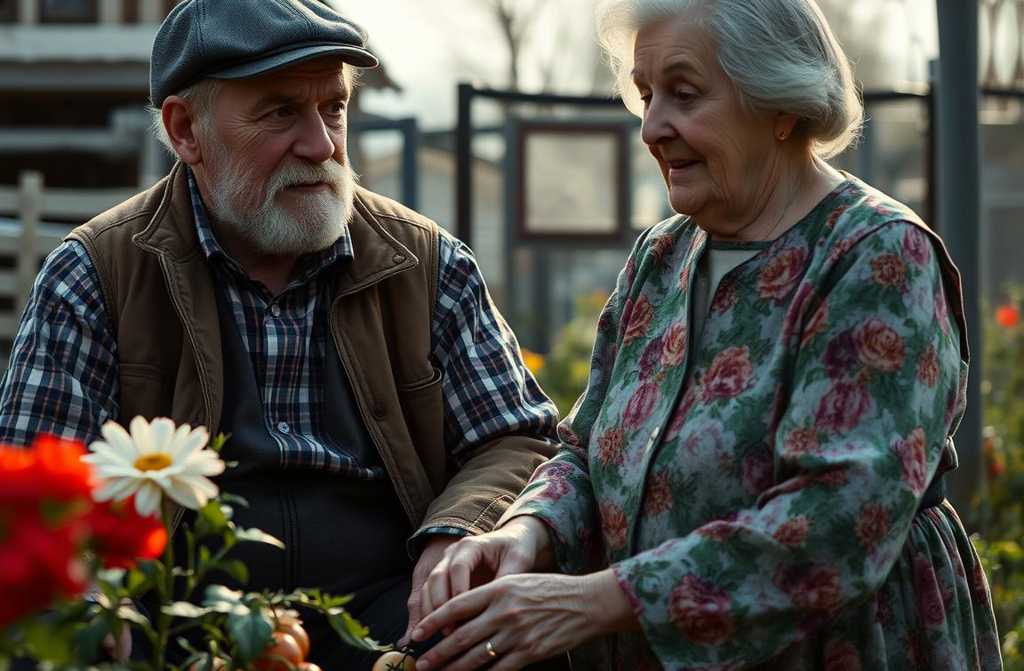
But not as Id ever seen her. Silver hair neatly pinned, a floral dress, smart sandals, a shawl draped over her shoulders. Even a string of amber beads.
*»Mind if I join you?»* she smiled.
*»Come in, Mary Stephenson,»* Valerie said warmly.
I was floored.
We sat late into the evening, eating, drinking, talking. Mary spoke of her lifethe orphanage, raising two children alone after her husband died, her decades on the railways. Then she and Tamara sang old songs.
Valerie and I listened, smoked, sipped our drinks. And smiled.
*»Val,»* she said later, *»Tam told me you wont take her to the seasideworried about your tomatoes. Go. Ill water them, open the doors. Theyll be fine.»*
*»Was it you,»* I blurted, *»who saved them during the flood?»*
*»Course it was,»* she chuckled. *»After all his hard work, the way he talked to themlike they were babies! Felt sorry for the poor things.»* She shot Valerie a look and laughed again.
He took his wife to the seaside.
After they returned, we listened to rock againbut only from noon till two. Just for Mary Stephenson.