It was a grey, mournful day, as if even the heavens knew that our little village of Willowbrook was bearing a bitter grief. I stared out of the narrow window of my tiny cottageturnedclinic, feeling my own heart squeezed as though caught in pliers. The whole hamlet seemed hushed; dogs lay silent, children hid away, even Uncle Michaels restless cock fell quiet. All eyes were fixed on one placeMrs. Vera Hughess cottage. At her gate stood a sleek city car, foreign and gleaming like a fresh wound on the face of our parish.
Her only son, Nicholas Turner, had driven her to a nursing home. He had arrived three days earlier, slickhaired and scented with expensive cologne, far from the smell of homegrown earth. He came to me first, under the pretense of seeking advice, though in truth he craved justification.
Eleanor, he said, not looking at me but at a tin of cotton wool in the corner, Mother needs professional care. Its a medical necessity. And me? Im swamped with work, my pressures high, my legs ache Itll be better for her there. The doctors, the attention
I kept quiet, only watching his handsclean, nails trimmed. Those same hands had once clutched Veras skirt when she pulled him from the icy river as a child, had reached for the pies she baked without sparing the last knob of butter, and now were signing a sentence for her.
Nick, I whispered, my voice trembling as if it were not my own, a nursing home is not a home. Its a state institution, its walls belong to strangers.
But theyre specialists! he shouted, half to convince himself. Whats left here? Youre alone for the whole village. Who will look after her at night?
Inside, I thought: Here, Nick, the walls are familiar, they heal. The gate creaks as it has for forty years. The apple tree by the window was planted by your father. Isnt that medicine enough? Yet I said nothing. When a man has already made his choice, what can you offer? He left, and I went over to Vera.
She sat on her old bench by the porch, upright as a harp string, hands trembling on her knees. Her eyes were dry, gazing beyond the river. She tried to smile, but it came out like a sour sip of vinegar.
Eleanor, she murmured, voice rustling like autumn leaves, your sons here Hes taking her away.
I sat beside her, took her icy, rough handhands that had turned soil, washed laundry in the river, cradled a baby, sang lullabies.
Perhaps we could speak to him once more, Vera? I whispered.
She shook her head. No need. Hes decided. It eases him. He loves the city, thinks hes doing right by me.
Her quiet wisdom sank into my soul. I did not shout, I did not curse. I accepted, as I had accepted droughts and floods, the loss of my husband, and now this.
That evening, before I left, I visited her again. She had gathered a small bundlean odd collection: a framed photograph of her late husband, a soft feather scarf I had given her for her birthday, a tiny copper icon. All of her life wrapped in one linen knot.
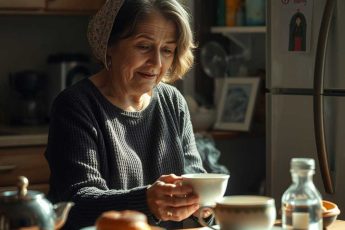
The house was tidy, floors scrubbed, the scent of thyme mixing with a cold ash. She sat at a table on which two cups and a saucer of jam remained.
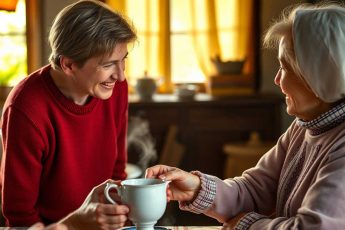
Sit, dear, she nodded. Lets have teaone last time.
We drank in silence while the old clock on the wall tickedonce, twice, once, twicemeasuring the final minutes of her life in that cottage. The quiet was louder than any outburst; it was a farewell without words, echoing in every crack of the ceiling, every speck of plaster, the faint geranium fragrance on the windowsill.
She then rose, went to the chest, retrieved a whitewrapped parcel, and handed it to me.
Take this, Eleanor. Its a doily my mother embroidered. Keep it as a memento.
I unfolded it: blue cornflowers and scarlet poppies stitched upon a white field, edged with such delicate trim that my throat clenched.
Vera, why? Put it away Dont tear your heart for me, I pleaded. Let it wait for you. It will wait.
She only gave me a faded look, her eyes holding a universal sorrow that told me she could not believe.
The day of departure arrived. Nicholas fidgeted, stuffing Veras bundle into his boot. Vera stepped onto the porch in her best dress, the same feathered scarf. The village women, those brave enough, gathered at the gate, dabbing tears with the edges of their aprons.
She scanned each cottage, each tree, then turned to me. In her gaze I saw a silent question: Why? and a plea: Do not forget.
She entered the car, upright, without looking back. Only when the vehicle rolled forward, kicking up a cloud of dust, did I glimpse her face in the rearview mirror, a single stingy tear tracing her cheek. The car disappeared around the bend, while we all stood watching the dust settle like ash after a fire. The heart of Willowbrook seemed to stop that day.
Autumn passed, winter swept in with its drifts. Veras cottage stood forlorn, windows boarded, snow piling to the porch, untouched. The village felt orphaned. Occasionally I would wander past, halfexpecting the gate to creak, for Vera to appear, adjust her scarf, and say, Good day, Eleanor, but the gate remained mute.
Nicholas called a few times, his voice heavy, saying his mother was adjusting, the care was good. Yet in his tone I heard a yearning, as if he had locked himself, not his mother, into that institutional ward.
Then spring camethe sort that only a countryside knows, when the air smells of thawing earth and birch sap, when the sun is so gentle you want to press your face to it and squint with happiness. Streams sang, birds went mad with song. One day, while I was hanging laundry, a familiar car pulled up to Veras cottage.
My heart lurched. Was this a cruel jest?
The car halted, and Nicholas stepped out, thinner, slumped, a whisker of grey at his temples where none had been before. He opened the back door, and I froze.
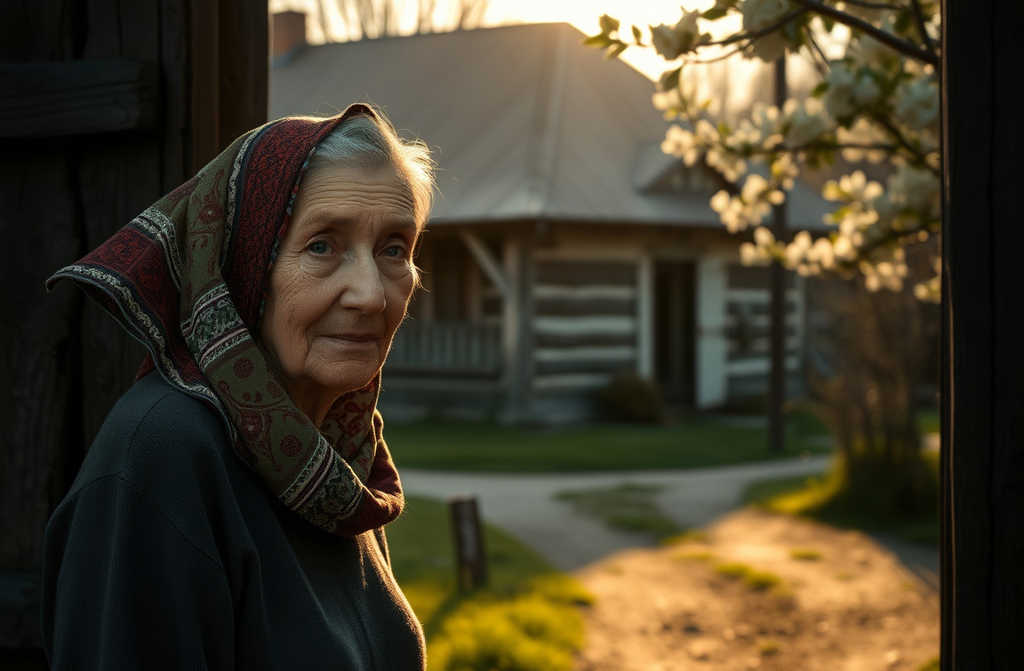
Supported by his arm, Vera emerged. She wore the same feathered scarf, squinting against the bright sun, breathing as though each inhalation were a sip of fresh air.
I, forgetting myself, hurried to them, my legs moving of their own accord.
Eleanor Nicholas looked at me, guilt and joy battling in his eyes. I couldnt. She faded there, like a candle in the wind. She stared out the window, silent. I came back and she looked at me as if she didnt know me. Ive realised, foolish old man, that it isnt the walls or the scheduled injections that mend a soul. The very earth does.
He swallowed hard.
Ive arranged work so Ill be here every weekendlike a fixed point. Ill be there myself, and Ill ask the neighbours to help. Together we can manage. She belongs here, not there.
Vera brushed her hand along the rough bark of the gate, as if caressing a familiar face. Nicholas unlocked the windows, lifted the planks. The house sighed, alive again.
She stepped onto the porch, paused on the threshold, closed her eyes. I saw her lashes tremble. She inhaled the scent of her home, a fragrance no substitute could match, and then she smiledtruly, not bitter, not forced, but the pure smile of someone returned from a long, frightening journey.
By evening the whole village had gathered at her cottagenot with endless questions, but simply to be. Someone brought a jug of milk, another a warm loaf, a jar of raspberry jam. They sat on the bench, chatting about seedlings, weather, how the river had burst its banks that year. Vera sat among them, frail and weatherworn, yet her eyes shone. She was home.
Late that night I sat on my own porch, sipping peppermint tea, watching the light glow from Veras windows. It was not merely a bulb; it felt like the heart of our village beating againsteady, calm, content.
Now, when I think back, I wonder what truly matters for our elders: a sterile ward with clockwork care, or the creak of a familiar gate and the chance to touch the apple tree your father planted.