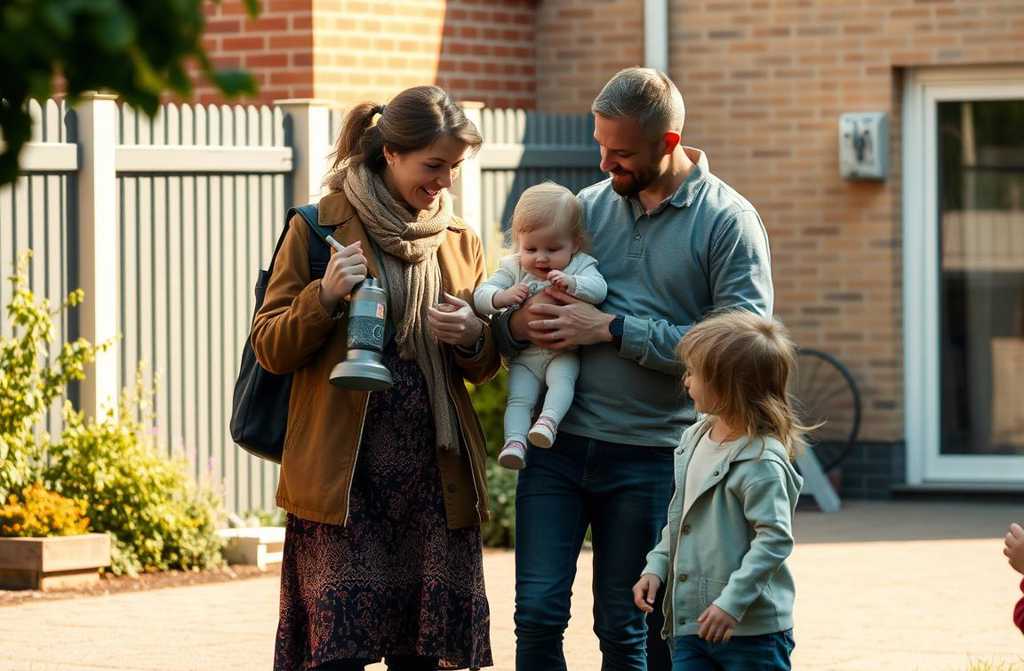
The courtyard tucked between four Victorian terraces had always run by its own unspoken code. In May, when the lawns by the windows had already been mowed and the asphalt still bore the faint glisten of a recent drizzle, life there drifted to the slow rhythm of the long daylight hours. Children chased a battered football across the play area, adults hurried to the bus stop or the corner shop, lingering in the stairwells and on the bench outside the flats. The air was heavy, warm and damp English spring, reluctant to hand the day over to summer.
It was on a bright morning that a white van bearing the logo of a mobilenetwork operator turned into the yard. Men in highvisibility jackets unloaded crates and steel frames, drawing little attention. When a crowd gathered around the little transformer box and barricades went up near the climbing frame, the first onlookers edged closer. The workers erected the mast in quiet coordination, as if following a strict manual, answering no questions until the housing association arrived.
In the residents WhatsApp group, usually reserved for leaking pipes or missed bin collections, a photo appeared: What are they putting by the playground? Anyone know? Within half an hour the thread filled with alarm.
An antenna! Can they really put it so close to our homes? typed Emily, a mother of two.
Did anyone ask us first? replied her neighbour on the ground floor, linking an article about the alleged dangers of radiation.
That evening, when the crew finally packed up and the steel tower stood stark amid the greenery, conversations flared anew. Parents gathered on the bench by the entrance. Emily held her phone with the chat open, while her friend Charlotte stood beside her, armwrapping her little girl.
I dont want my children playing here if that thing is going to stay, Charlotte said, nodding toward the mast.
At that moment Sam, a lanky lad from the third flat with a laptop tucked under his arm the local IT whizz stepped forward. He had listened in silence, then said calmly:
Its just a standard basestation, nothing to worry about. All within the limits set by the regulators.
Are you sure? Emily asked, her eyes wary. What if your child gets ill tomorrow?
There are standards and measurements. We could invite specialists to carry out an official check, Sam replied, voice even.
His friend Andrew nodded:
I know people who deal with this sort of thing. Lets sort it out calmly.
But calm was gone. In the stairwell the debate lingered into the night: some recalled tales of electromagnetic harm, others demanded the equipment be removed at once. Parents banded together; Emily spun up a separate chat for a protest group and posted a short petition against the installation. A notice hung in the hallway: Health threat to our children!
The IT crowd countered with facts, posting excerpts from the Health and Safety Executive guidance and the Housing Act, assuring everyone of the legality and safety of the work. The correspondence grew hotter: some urged calm and trust in experts, others called for an immediate halt until explanations were given.
The next day two small factions assembled in the courtyard: parents with printed leaflets and the techies with regulations and links to official sites. Children darted between them, some scooting on wet pavement, others playing tag among the lilac bushes.
Were not against broadband, Charlotte protested. Why were we presented with this out of the blue?
Because the procedure is that the management company decides with the consent of a majority at a meeting, Andrew retorted.
There was no meeting! We never signed anything! Emily snapped.
Then we must formally request the documents and commission independent measurements, Sam suggested.
By dusk the dispute moved back to the chat: parents shared worrying news stories and sought allies in neighbouring blocks; the IT folk urged reason and offered to arrange a meeting with the installers engineers and an independent laboratory.
That night the windows were flung wide, voices from the yard carrying into the darkness. The spring air lingered, giving the children the impression of endless holidays.
On the third day a fresh flyer appeared: Joint meeting of residents and experts on basestation safety. Below it were signatures from both groups and the housing association.
At the appointed hour almost everyone turned up: parents cradling children and folders of paperwork; the techies armed with printouts and phones; representatives of the housing association and two men in crisp lab coats displaying the laboratorys crest.
The experts patiently explained the measurement process, pulling out devices, showing certificates and inviting all to watch the readings in real time. The group formed a semicircle around the mast; even the teenagers paused their games and joined the adults.
The detector shows the field level here and over by the playground all well below the permissible limits, the specialist narrated, strolling along the grass.
Can we check right by the windows? Emily asked, unwilling to give up.
Of course. Well cover every spot that worries you.
Each measurement was accompanied by a tense silence, broken only by the chatter of starlings in the shrubbery behind the garages. Every reading fell beneath the risk threshold; the expert logged the results and handed out printed copies on the spot.
When the final laboratorysigned sheet landed in the hands of the protest group and the IT team, a different kind of quiet settled over the courtyard: the argument had been stripped down to raw data, yet emotions still lingered.
The evening air grew a touch dryer as the days humidity faded, though the pavement still radiated the days retained warmth. The crowd around the mast thinned; some families hurried home, babies yawned, teenagers lingered on the swings, listening as adults discussed the findings. Fatigue mixed with relief: the numbers finally made sense to everyone.
Emily stood beside Charlotte, both clutching the printed report. Sam and Andrew whispered with the experts, occasionally glancing toward the parents. The housing manager waited nearby, silent but present, a reminder that the matter was not entirely closed.
So its all clear then? Charlotte asked, eyes fixed on the paper. Did we worry for nothing?
Emily shook her head. Not for nothing. We had to see for ourselves. Now we have proof.
She spoke calmly, as if reminding herself that the anxiety had been justified.
Sam stepped forward, gesturing toward the bench beneath the spreading lilac bush. Around it gathered those who wanted not only the experts conclusions but also a plan for the future. Andrew was the first to break the hush:
Perhaps we should set some rules, so no one ever puts us in this position again.
A parent echoed: And any changes in the yard should be discussed beforehandbig or small, even a new playground.
Emily looked at the neighbours seated nearby. Their eyes held the weariness of the dispute and the desire for improvement.
Lets agree: if anything is to be installed or altered, its posted in the common chat and a notice is hung by the stairways. If the issue is contentious, we call a meeting, vote, and invite specialists.
Sam nodded. And we record the results of any checks and keep them accessible to all, so rumours have nowhere to hide.
The laboratory expert carefully packed away his gear and reminded them briefly: Should new concerns arise about radiation or any other risk, you may request repeat measurements. Its your right.
The housing manager added: All documents concerning the mast will be available at the office and by email. Decisions will only be taken after resident consultation.
Gradually the conversation mellowed. Someone recalled the old sandpit at the end of the block that had long needed a new surface. Neighbours began discussing how to raise funds for its refurbishment; the mast debate had quietly morphed into a broader dialogue about the courtyards future.
Children, meanwhile, squeezed the last minutes of freedom from the day: older ones zipped on scooters along the fence, younger ones fussed around the flower beds. Emily watched them with a sigh of relief the tense atmosphere of the past weeks had finally ebbed. She felt tired, yet that fatigue now seemed a fair price for the certainty she had won.
Under the streetlamps the courtyard glowed with a soft yellow light. Evening life did not stop immediatelydoors slammed, laughter rose from the bins, teenagers plotted tomorrows plans. Emily lingered beside Charlotte:
Its good we stood our ground
Charlotte smiled. Otherwise Id never have slept properly. Now at least well be the first to know if anything else shows up.
Sam said goodbye to Andrewboth looking as if theyd just passed a hard exam. Andrew waved to Emily:
If you need more articles on safety, I can send themjust to keep the peace.
Emily laughed. Lets stick to how we change the hallway lights. That flickering has been on for ages.
A teenager shouted from the playground: Mum! Can we have five more minutes?
Emily waved them on, letting them continue. In that instant she felt part of something larger than a mother or a chatgroup activist she was a resident of a courtyard where people could reach agreement without bitterness.
When the last parents called their children inside, it became clear that the days dispute over the mast had ended, but other questions remainedtrust among neighbours, how to coexist, how to listen. Yet a new order, informal yet accepted by all, had taken hold. The resolution had been hardwon: fear gave way to facts, and facts made room for fresh agreements.
Beneath the lilac branches Emily lingered a moment longer, inhaling the scent of blossom. That evening her courtyard seemed both familiar and renewed. She knew many more debates and joint projects lay ahead, but the crucial thing was that now they knew how to hear each other.