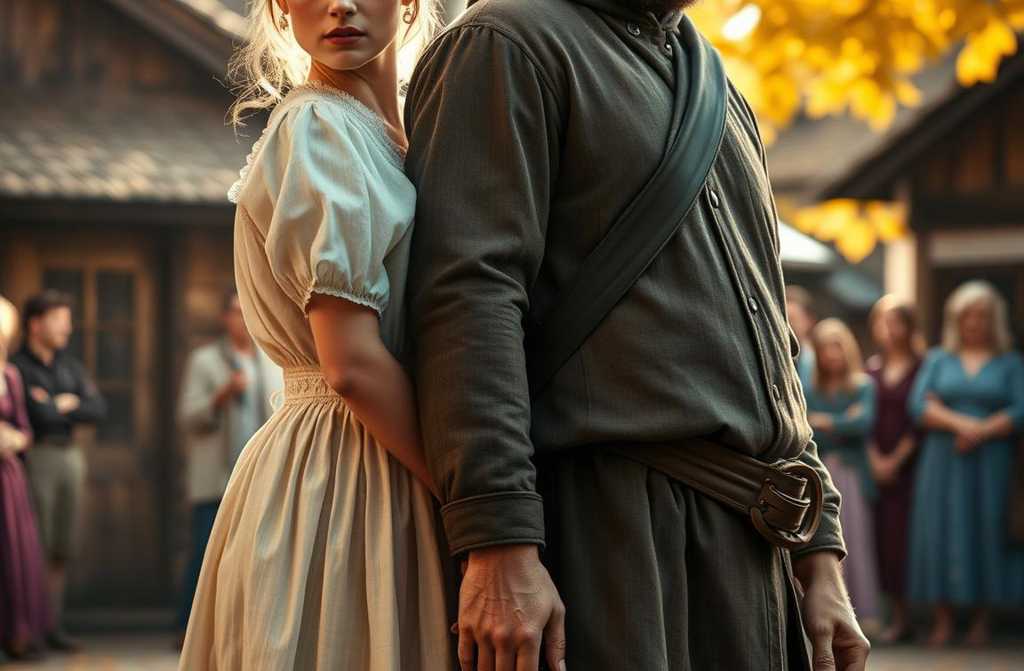
It was Lydia the postwomans wedding day.
Oh, what a wedding it was Not a celebration, but pure heartache. The whole village had gathered outside the parish hall not to rejoice, but to judge. There stood our Lydiaslight as a reed, in a simple white dress shed sewn herself. Her face was pale, her eyes wide and frightened, yet stubborn. Beside her was the groom, Stephen. Folks called him «The Convict» behind his back. Hed returned a year earlier from a long stretch awaynobody knew exactly why, but the rumours were dark. Tall, grim, and quiet, with a scar running down his cheek. The men greeted him through gritted teeth, women hid their children, and dogs tucked their tails when he passed. He lived in a crumbling cottage on the outskirts, working the hardest jobs no one else would touch.
And this was the man our quiet Lydiaan orphan raised by her auntwas marrying.
When the registrar pronounced them man and wife and said the usual, «You may now congratulate the newlyweds,» not a soul in the crowd moved. The silence was so thick you could hear a crow caw from the old oak.
Then, from that silence, Lydias cousin Paul stepped forward. Hed treated her like a younger sister since her parents passed. He glared at her, his gaze icy, and hissed loud enough for all to hear:
«Youre no sister of mine. From today, Ive none. Dragging our name through the mud with thisthis wretch. Dont ever set foot in my house again.»
With that, he spat at Stephens feet and stalked off, the crowd parting like sheep before a wolf. Lydias aunt followed, lips pressed tight.
Lydia didnt moveonly a single tear trailed down her cheek, untouched. Stephens jaw clenched, fists tightening. I thought hed lunge, but instead, he took her handgentle, as if afraid she might breakand said softly, «Lets go home, Lydia.»
And they walked. Just the two of them, against the whole village. Himtall and shadowed; hersmall, in that white dress. Poisoned whispers followed, but my heart ached watching them. *God, how much strength will it take to stand against all this?*
It had started small, as these things do. Lydia delivered posta quiet girl, easy to overlook. One autumn, in the thick of the mud season, a pack of strays cornered her at the edge of the village. She screamed, dropped her heavy sack, letters scattering in the filth. Then, out of nowhere, Stephen appeared. No shouting, no stickjust a step toward the lead dog, a ragged brute, and a low mutter. The dog tucked tail, and the pack slunk off.
Wordless, Stephen gathered the sodden letters, shook them clean, and handed them back. She looked up, tear-streaked, and whispered, «Thank you.» He only grunted and walked away.
After that, she watched him differentlynot with fear, but curiosity. She noticed what others ignored. How hed fixed old Marys fencethe one whose son had vanished in the citywithout being asked. How hed pulled a neighbours calf from the freezing river. How hed tucked a shivering kitten inside his coat. He did it all in secret, as if ashamed of kindness. But Lydia saw. And her quiet, lonely heart reached for hisjust as scarred, just as alone.
They met by the far well at dusk. He listened while she talked, his rough face softening. Once, he brought her a wild orchid picked from the marshes where even men feared to tread. That was the moment she knew she was lost.
When she told her family shed marry him, the uproar was deafening. Her aunt wept; Paul swore to break Stephens bones. But she stood firm. «Hes good,» she kept saying. «You just dont know him.»
Life was hard. Work was scarceno one would hire him steady. Lydias post wages barely kept them fed. Yet their tumbledown cottage was always clean, strangely warm. He built her bookshelves, fixed the porch, planted flowers under the window. Evenings, hed come home black with toil, and shed set a plate of hot stew before him without a word. In that silence lay more love than any grand speech.
The village never accepted them. The shopkeeper «accidentally» shorted Lydias change; children hurled stones at their windows. Paul crossed the road to avoid them.
Then came the fire.
A windy night, black as pitch. Pauls barn caught first, flames leaping to the house. The village rallied with buckets and shovels, but the blaze roared higher. Then Pauls wife screamedtheir youngest, little Maggie, was still inside.
Paul lunged for the door, but the porch was already a furnace. Men held him back»Youll die, fool!»while he howled in helpless terror.
Then Stephen shouldered through the crowd. Hed arrived late. Without a word, he doused himself with water from a barrel and plunged into the inferno.
The crowd held its breath. Beams cracked; the roof collapsed. No one expected him to return.
Thensmoke parted. Stephen stumbled out, charred and swaying, Maggie wrapped in a wet blanket. He handed her to the women and collapsed.
The girl lived. Stephen didnt. Not fully. His burns were savage. At the clinic, delirious, he kept whispering, «Lydia Lydia»
When he woke, Paul was on his knees beside the bed. No wordsjust his forehead pressed to Stephens hand, shoulders shaking. That silent bow said more than any apology.
After that, the village thawed. The scars stayed, but they were marks of courage now, not shame. Men repaired their cottage. Paul became closer than kinfixing their steps, bringing hay for their nanny goat. His wife, Helen, brought pies and cream. They looked at Lydia and Stephen with guilty tenderness, as if making up for every cruel word.
A year later, Maggie was bornLydias double, fair and blue-eyed. Then came little Jack, Stephens spitting image, minus the scar. A solemn lad, always scowling.
The cottage, once a ruin, brimmed with laughter. Stern Stephen melted around his childrentossing them in the air, carving wooden toys with those rough hands.
Once, I dropped by to check Lydias blood pressure. The scene in their yard couldve been a painting: Stephen, huge and soot-streaked, crouched to mend Jacks tiny bicycle while Paul held a wheel. The boysJack and Pauls laddug in the sandpit together. Peace hung over them like a blessing.
I watched, eyes stinging. There stood Paul, whod cursed his sister, shoulder-to-shoulder with the «convict» hed despised. No anger, no pastjust quiet work and children playing. As if the wall between them had never existed.
Lydia stepped onto the porch with two mugs of cold cider. She caught my eye and smiledsoft, radiant. In that smile, as she gazed at her husband and brother, then the children, was every hard-won joy. She hadnt been wrong. Shed followed her heart against the world and found everything.
Now, their house blooms with geraniums. Stephen, grey but sturdy, teaches Jack to split logs. Maggie, nearly grown, helps Lydia hang washing that smells of sun and wind. They laugh over some shared secret, and the road ahead stretches bright.