The ambulancestyle cab pulled up outside the council flats just after nine in the crisp September morning, the lingering mist still hugging the courtyard. George Whitaker, fiftytwo, scanned the narrow steps, then tightened his grip on the pair of walkers waiting beside the landing. His right hand still lagged from the stroke hed survived, but the thought that every movement would now be monitored cut deeper than the ache in his shoulder. James, his son, was already ahead of the driver, helping his father rise, then stepping back to give him space.
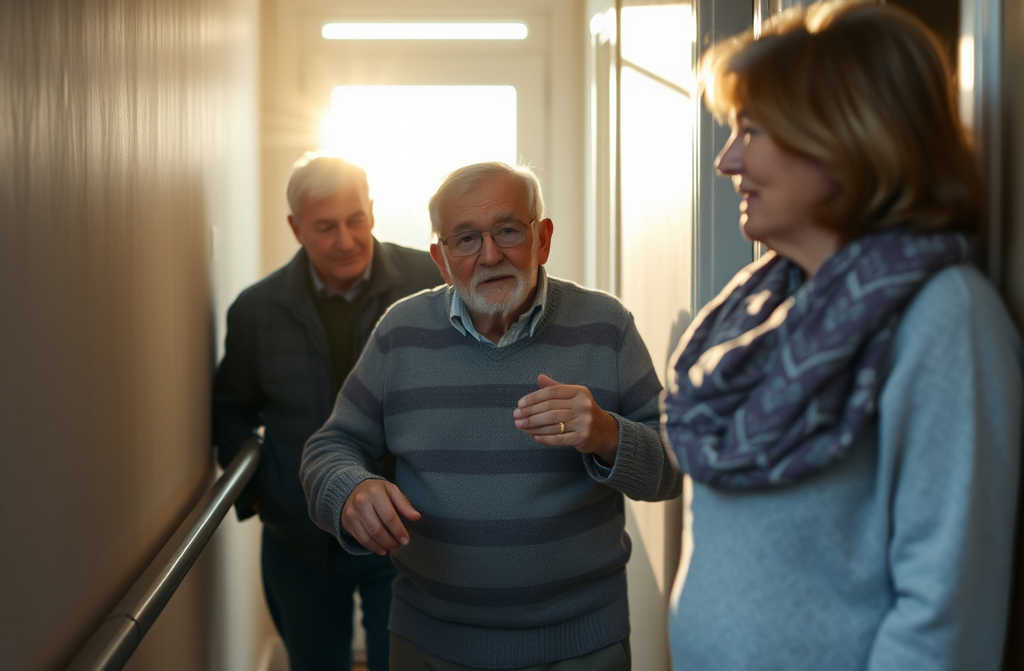
The hallway smelled of fresh paint and wet mop, as if a cleaner had just finished scrubbing the tiles. Ethel examined every motion George madewatching for a stumble, a shiver, a tug on the neck wound from his catheter. On the secondfloor landing a new stool bolted to the railings waited. Sit for a minute, she said, her tone more command than request. He lowered himself, feeling his weight shift onto his palms, and caught a fleeting glance from James. The boy nodded. Take it easy, well manage.
Inside, the flat greeted them with familiar scentsmorning coffee, slightly stale bread. At the threshold George noticed the changes: the carpet gone, replaced by a rubber mat with bright ridges, the doorways widened with plastic trims. Ethel guided him to the sofa, slipped a finger into the cuff of a bloodpressure cuff, and recorded the numbers as if watching a clock. Pressures fine, but you need to drink water straight away, she announced. George gave a muted nod while James shuffled the walkers to the window, positioning them so his father could reach without assistance.
The first test was the walk to the bathroom. The corridor stretched longer than any ward, though it was only seven steps. His left foot angled slightly, his hand searching for the wall. Ethel moved beside him, pressing her chest against his back, matching each breath. When he reached the toilet and lowered himself carefully, Ethel stood in the doorway. Call if you need anything. Jamess voice drifted from the kitchen, the clink of mugs signalling he was already preparing breakfastunlike the usual mothercontrolled routine.
Morning unfolded into a series of tiny tasks. Ethel took glucose readings, filled out a thick logbook, and transferred the physiotherapy schedule onto it. In an hourfirst exercises, then tablets, then rest, she recited, sounding like a nurse on duty. James, waiting for a lull, whispered to his father, Do you want to try getting to the window on your own? George found himself reaching for the sill with his weaker right hand. He managed only half the motion, but the mere attempt sparked a quiet flame inside, a spark that his old life had fed daily and the hospital had nearly smothered.
In the days that followed the flat became a makeshift ward. Ethel set an alarm for every two hours, even checking at night whether Georges leg had swelled. By lunch she plated a bland but proper soup; come evening she played breathingexercise videos, counting aloud over his shoulder. James returned from work and first cleared away empty pill packets, feeling as if his mother had turned the house into a pharmacy. He suggested a short walk up the stairs while the neighbours lift was out of service, but Ethel snapped, Too early. Well start when the doctor says its safe. Those words hung over any urge he might have had to act.
Sunday breakfast broke the tension. George tried to steady a spoon in his right hand; the oatmeal trembled, a few drops splashed onto the tablecloth. Ive got it, Ethel said, taking his wrist. He flinched, his face hardening. James gently stopped his mother. Let him try; otherwise his muscles wont fire. The spoon slipped again, hitting the plate with a soft clang that froze the room. George felt a spasm in his wrist, but the pain faded faster than his anger. Ethel lifted a napkin, wiped the table, and said firmly, First we learn without spilling, then She trailed off, eyes fixed on James, who stared out the window where the first yellow leaves clung to the wires.
That evening James brought two elastic resistance bands for arm and shoulder work. He showed a video titled Home Rehabilitation on his phone, featuring a man his age pulling a band seated. Ethel halted at the doorway. Well get formal physiotherapy through the NHS, private kits are a gamble. The argument flared, softened, and flared again. George, exhausted by hearing himself discussed as a patient without a voice, turned to the window, trying to catch the scent of wet earth as the groundskeeper watered the courtyard.
On Tuesday a neurologist from the regional NHS centre summoned George for a review. The visit was covered by the NHS, and a specialised accessible taxi lifted him onto a platform. The doctor outlined the recovery window: The first six months are critical. Home exercises are vital, but they must follow safe protocols. You can receive outpatient physiotherapy under your NHS cover, with some sessions done remotely. George noted how effortlessly the specialist wove independently and under supervision together. Ethel nodded, asking about risks, while James logged the schedule on his phone.
After the clinic the three of them scattered like rays. Ethel drove to the pharmacy for a new cuff, George and James took a slow twolap walk around the nearby park. Breathing was hard, yet each step without walkers sparked a fleeting joy. Returning home they found Ethel rearranging medications by day of the week. Youre exhausted today, well skip the massage, she announced, turning off the television just as a football match was on. James snapped, A proper walk in fresh air beats your 24hour watchtower. His voice cracked; George saw his sons fists clench.
Night was restless. At three a.m. Georges throat was dry. Too weary to call his wife, he rose, braced himself on the windowsill, took a step and lost his balance. The hallway wall caught his fall, but an elbow strike sent a sharp pain through his arm. The sudden thud woke everyone. Ethel bolted up, flicked on the lights, pressed ice to the bruise, whispering through tears, This is what happens when you act on your own. James stood pale, repeating quietly, Im sorry, Dad. By morning Ethel tightened the rules even more, while James guided his father to the window and handed him an empty cup for grip training.
Weariness bred resentment. George felt the homes warmth turning into a regimented watch. In seven days he saw his wife smile only oncewhen a neighbour delivered a jar of pickles. James lingered longer at work, fearing another clash. The silence in the house was no longer peace; it rang like a taut wire in the wind.
On the tenth of September, rain hammered the streets, washing the last colour from the leaves and confining everyone to rooms. The kitchen filled with the aroma of roasting turkey; the oven door hissed with steam. Ethel laid out pills on a saucer, never looking at her husband. James asked his father to try walking to the window unaided. No, Ethel snapped. James rose louder, You cant keep him under a glass dome. The words struck the walls like rain on a windowsill.
George stood. A step, then another. His hand trembled on the back of a chair. Ethel lunged to catch him, but he turned his head, voice hoarse yet determined, Let me. James stepped back a halfpace, showing he was there but not hovering. Ethel froze in the kitchen, gripping the saucer with both hands. The chair slipped, the leg buckled, and George stumbled. James managed to steady him. The clash of voices rose: See! Ethel shrieked. James burst, Were suffocating him!
Finally James grabbed his phone and dialed the rehab specialist the centre had recommended. A video call flickered onto the kitchen screen: a woman in a white coat, headset on. I hear the tension, she said, addressing the whole family without asking. George recounted the fall, the feeling of being trapped. Ethel mentioned his pulse. James asked for a stepbystep plan. The therapist explained that independent attempts were necessary, but they must be surrounded by safety netshandrails, insurance, clear goals. Familys role isnt to replace movement but to safeguard it. Divide duties: Ethel monitors blood pressure and meds, James handles walking drills and finemotor tasks. George sets daily goals and tracks progress, she summed up. She scheduled a home visit for the following week and daily telereports.
The call cut off, rain still drumming the windowsill, but the air felt lighter, as if a window had been cracked open. Ethel placed the saucer down and sat beside George. James slid the elastic band toward his father. George clenched the fabric with his weakened hand, feeling a gentle resistance. He realised there was no turning back to passive surrendereither move forward together or sink again in fear.
In the days after the video, the flats atmosphere shifted. Ethel stopped obsessively checking readings every halfhour; James became more attentive without hovering. Their interactions settled into a pragmatic rhythm.
The next morning, before George had even risen, Ethel had already put the kettle on for tea. A new schedule hung on the fridge, detailing medication times and the exercises George should do. She focused on gathering the correct doses. James, meanwhile, checked the weather to pick the safest time for a walk.
George stared at the elastic band on the tablea reminder of the hurdles ahead, yet a symbol of his willingness to meet them. His left arm moved a little easier after daily drills prescribed by the therapist.
The first solo walks were hard but hopeful. George left the entrance, walkers in front, James beside him, offering a steady hand without impeding. The fresh morning air of a suburban English town lifted his spirits, and he managed a few steps farther than he had thought possible.
Evenings saw Ethel preparing more varied meals, delighting the family. One night, watching her needlework, George suddenly realised how long it had been since hed taken pleasure in simple things. A desire to create something of his own sparked within him.
Interest in life returned slowly, like a stream filling after a dry spell. George sensed that reclaiming his former self was achievable if broken into real steps: walks, exercises, finemotor work. He set tiny daily goals and pursued them relentlessly.
Though full recovery remained distant, each modest triumph fueled his resolve, bolstered his familys pride, and kept everyone engaged in his care.
In the end, arguments faded as the family understood that their husband and fathers path to a full life lay in united effort and mutual respect. Georges growing independence inspired all, proving that together they could conquer the challenge, and that every small victory paved the way for greater progress.