The Striped Guardian of the Square
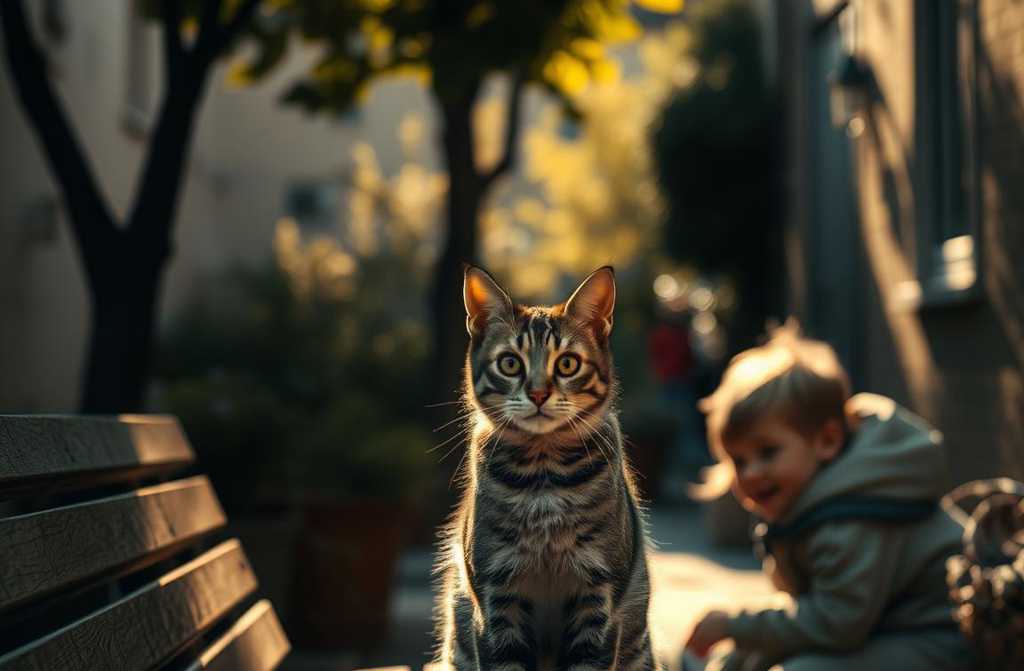
In this square, everything was out in the open: windows faced each other, children knew not just their neighbours’ names but their habits too, and the adults kept track of who left and returned home at what time. By late September, the grass still clung to its green, though the mornings left it flattened under heavy dew. Come evening, the square filled with voicesboys kicked a football between the kerbs, while girls set up a «shop» on the bench beneath the old chestnut tree. Moving smoothly between them, as if following a well-memorised route, was the cat: a large, tabby creature with white patches on her paws and chest. She belonged to no one, yet everyone knew herMittens, or simply, the Cat.
The children treated her like a living talisman, offering scraps of ham from their lunches, stroking her back, or whispering secrets into her ears as the wind rustled around them. The women were fond of her toosome left bowls of food by the front steps, others invited her into the porch during bad weather. Even newcomers soon noticed something amiss if the Cat was missing from the daily bustle.
But there was one familya boy named Oliver, his mother, and fatherwho saw her differently: wary, almost irritated. His mother often said aloud:
«Its dangerous! Who knows what germs shes carrying? Stray animalsyou never know where theyve been!»
His father would silently agree with a glance or a sigh, rarely weighing in on animal matters. Their concern was simple: cleanliness first, their child shouldnt risk catching something «from the street.»
Oliver stole glances at the Cat when he could. If his mother noticed, hed look away or pretend to be busy with his toy cars. But the moment his parents were distracted, hed follow her to the flowerbeds or wait for her by the sandpit.
Evenings changed the square. The sun dipped quickly behind the rooftops, the pavement cooling underfoot. Children lingered, clinging to summers last echoes, though the air grew sharp with autumns bite, tugging at sleeves and collars.
The Cat knew every person in the squareresponding only to certain voices or footsteps. If Oliver called her softly from behind the bushes, shed approach cautiously. If Mrs. Eleanor tapped a spoon against a bowl by the door, shed appear faster than any other stray in the neighbourhood.
Life carried on predictably: schoolchildren vanishing around the corner with backpacks slung over shoulders, toddlers playing in the sandpit under grandparents watch, and come evening, the whole square gathered again under the glow of the ground-floor windows.
Occasionally, Olivers mother tried to convince the other women of the dangers of strays:
«No one knowswhat if shes sick? If only she were a proper pet…»
But the women just shrugged:
«Shes harmless! We keep an eye on her.»
«Without her, wed be overrun with mice!»
The conversation always fizzled out, leaving opinions unchanged.
Then came an evening in late September. The day had been damp after rain, the pavement still drying, puddles reflecting window frames between the paving stones. The chestnut leaves had yellowed noticeably, some already swept into piles beneath the swings.
Oliver was playing near the house with two older girls and one of their little brothers. The Cat lounged on the warm concrete edging by the front stepsher favourite spot as the evening chill set in.
Then, from the direction of the garages, came a deep, sudden bark. Then another. The children froze by the swings; even the adults by the door turned at the same moment.
Around the corner lunged a doga big black mongrel with a torn collar, hackles raised. It moved fast, sharply, as if searching for someone among them.
Oliver froze, then stepped behind the older girl.
«Dont worry, itll go away…»
But the dog was closing in too quickly. The children backed toward the house, calling for the grown-ups. Olivers mother was first to rush out:
«Come here!»
She sprinted across the rain-damp grass toward him. His father was in the kitchen, oblivious.
Then, without warning, the Cat sprang into action. She darted forward, low to the ground, straight at the dogso fast even the adults were stunned. The dog twisted away from the children, bared its teeth, and charged after her, past the sandpit and through the bushes along the garage wallvanishing beyond the streetlights glow.
The boy was safe. The dog was gone, chasing its striped quarry into the dark.
Olivers mother clutched him tightly, feeling his heart hammer beneath his jacket.
«Its alright… Its alright…»
But no one saw where the Cat had gone after that dash through the bushestoo quick even for the sharpest eyes.
As dusk settled, the square grew quiet. The children searched for her near the steps, the benches, the bushes she frequented. Boys peered under cars; adults shone phone torches along the flowerbeds, calling her name.
Under the thick lilac bush, where leaves gathered after the wind, Oliver spotted her firstthe tabby flank, the stiff posture, the white patch of her belly trembling in the dewy grass. She breathed heavily, blinking slowly, eyes half-lidded. The children gathered; adults knelt around her. No one dared touch her at first, fingers unsteady as Mrs. Eleanor carefully lifted her, wrapped in a coat to avoid the wound.
Inside her flat, neighbours crowded in. Olivers mother held him back but couldnt look away. His father stood aside, searching for nearby vet clinics on his phone.
The Cat lay curled on an old towel, a shallow but long gash along her side, fur matted with blood and damp. The women fetched iodine, bandages, and cotton wool; someone set out a bowl of water. As they cleaned the wound, others whispered about clinics and whether any were open so late.
Oliver watched wide-eyedhed never seen adults so focused on another creature. Even his mother, usually strict about strays, now held the Cats paw gently to steady her.
«Hold her tight… Just be careful…» she murmured to herself.
The room smelled of wet fur and antiseptic. Outside, night had fallen. Olivers father slipped into the hall, returning with a clean bedsheet, spreading it beside the towel.
«The vet can see her first thing tomorrowno appointment needed,» he said quietly.
«Thank you…»
For the first time, his mothers voice held something newa quiet acknowledgment that this stray cat needed their help. The crisis had bound them faster than words ever could.
«Lets take her home tonight and go to the clinic early,» he suggested.
«Yes. Thats safest.»
They lifted her, towel and all, onto the sheet and carried her to their flat.
The night was restless. Oliver lay awake, listening for any sound from the next room. His mother checked on the Cat repeatedlyadjusting the towel, refreshing the water.
Morning came before dawn. The kettle hissed in the kitchen; his father sliced bread silently. The Cat lay still, eyes half-open as Oliver reached to stroke her head. Her ears twitched, and she gave a soft mewalmost like gratitude.
The vet visit was quick. Mrs. Eleanor joined them. The wound wasnt life-threatening, the vet said, but needed care and rest. They left with antiseptic instructions, a soft-food diet, and a leaflet on stray first aid»just in case.»
Back home, duties were shared: his mother kept the space clean, his father brought food and water, and Oliver helped change bandages under watchful eyes. Neighbours visited too, bearing treats or hand-drawn cards.
Evenings passed quietly, the flat humming with a calm that follows shared trials. Mittens improved dailyeating from Olivers hand, tolerating strokes, even testing the limits of her new refuge.
Within days, she was healing faster than expected. The wound dried, her appetite returned, and her gaze regained its sharpness.
One crisp autumn evening, his mother opened the window wide to air the room. Mittens hopped onto the sill, paused by her water bowl, and stared outsideas if memorising the squares every scent.
«Maybe… we should let her go. She wont stay forever.»
There was no fear or judgement nowjust the softness of releasing an old friend.
His father nodded. Even Oliver understood without explanation.
Mittens leapt from the sill, landing lightly on the dry grass below, vanishing into the lilac shadows where shed been found.
By morning, the square was alive again, everyone searching for their striped guardian. When she reappeared near the sandpit at noon, children rushed to greet her; women smiled across the square, sharing something wordless but important.
Even Olivers family treated her differently now. His mother left food by the steps, his father noted her arrivals from the kitchen window, and Oliver no longer hid his affection.
The Cat remained the squares free-spirited guardianunchanged, yet now treasured. No one argued about strays or germs anymore. Theyd all witnessed a small miracle: how one tabby cat had united a neighbourhood, saving something fragile in this vast world.