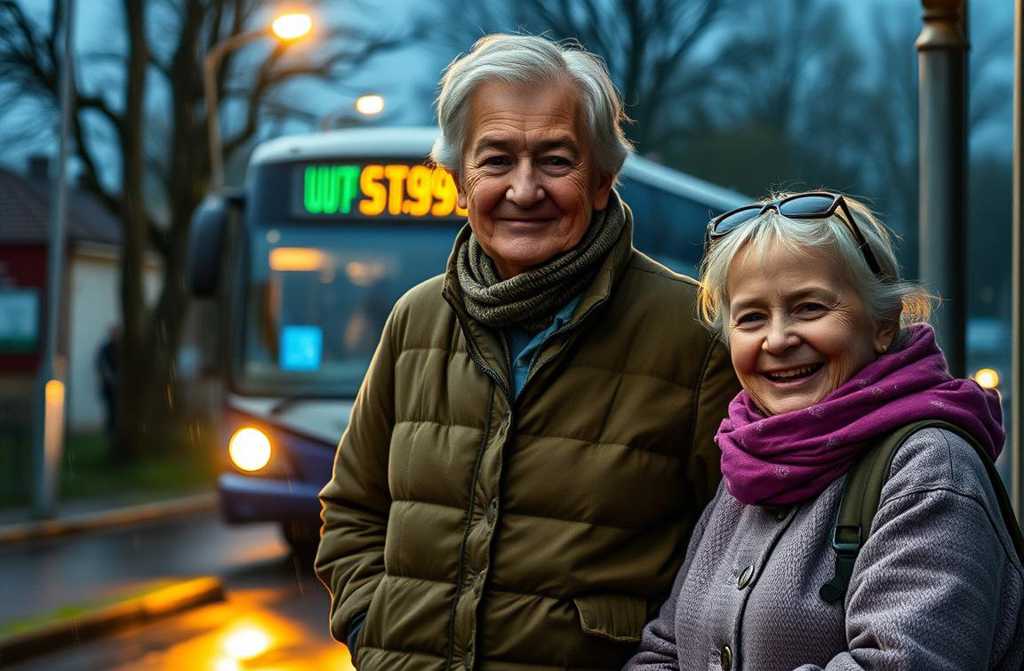
The evening sky over Willowbrook darkens quickly, as if someone has turned the lights down. The street lamps on HighStreet flick on at six, and the damp tarmac reflects their glassy globes dimly. At the bus stop, where leafstained marks linger on the benches, the usual faces gather: a handful of schoolchildren with backpacks, two seniorsMargaret Smith and Arthur Jonesand a couple of younger adults. Everyone waits for the last service that each night carries them to the surrounding villages.
A fresh notice hangs on the timetable board, printed in a stark, large font: From 3November2024 the 19:15 evening bus is cancelled due to lack of profitability. District Council. The crowd reads it almost at the same moment, but no one says a word aloud. Only sixthformer Oliver whispers to the girl beside him:
How will we get home now? Its a long walk
Margaret adjusts her scarf and shivers. She lives in the next village, a halfhour ride away by bus. Walking would take at least two hours on the cracked road, and the darkness is frightening. The bus is her only link to the pharmacy and the health centre. For the pupils it means getting home after clubs before night falls. Everyone knows this, yet no one complains straight away. The discussion begins later, after the initial shock passes.
At the corner shop, forever scented with fresh bread and raw potatoes, voices grow louder. Shopkeeper Linda slices a salami and asks the regulars quietly:
Heard about the bus? How will you manage now My sister also returns late each eveningwhat’s she to do?
The seniors exchange brief remarks. Someone remembers the neighbours old Austin.
Maybe someone can give a lift? Who has a car?
It quickly becomes clear that none of the few cars can cover everyone. Arthur sighs:
Id drive, but I havent left the house in ages. My insurance even lapsed.
The pupils stand aside, glancing at their phones. In the class group chat they already debate who can stay over if the bus never returns. Parents type short, tense messagessome have night shifts, and theres no one to collect the children.
Near seven oclock the air turns noticeably colder. A fine drizzle falls without pause, and the streets glisten under the lamps. A small crowd gathers by the shopsome wait for a lift, others hope for a miracle or a kind truck driver. After six, traffic thins to almost nothing.
Local activist Susan Clarke posts online: Friends, the bus has been cancelled and people are stranded! Lets meet tomorrow evening at the council officesthis needs solving! Comments spring up fastsome propose organising shared rides, others vent at the council, and a few recount nights spent in the market town because of bad weather.
The next day the debate continues on the schools front steps and in the pharmacy. Some suggest writing directly to the operator, hoping the decision will be reversed. The bus driver merely shrugs:
They told me the evening service isnt viable Fewer passengers this autumn.
Attempts at arranging lifts are shortlived: a few families agree to rotate taking the children, but that solution doesnt suit the elders. One evening Oliver and his friends wait half an hour at the stop in the rain, expecting a friends mother to collect everyone, only for her car to break down en route.
Meanwhile the number of stranded people risespupils are joined by retirees after clinic visits and women from nearby hamlets. All find themselves stuck between home and Willowbrook because the timetable now has an empty slot.
At night shop windows fog up with moisture; inside, those with nowhere to go huddle for warmth. Linda lets them linger until closing, after which they must step outside and hope for a passing vehicle or call an acquaintance for a nights shelter.
Growing irritation gradually turns into anxiety and fatigue. Chats fill with lists of those most in need of transport: younger schoolchildren; elderly Mary Thompson with sore legs; a woman from the third house who has poor eyesight Those names repeat more often each evening.
One night the bus stations waiting room fills earlier than usualstill no bus. The air smells of damp clothes; rain drums on the roof. Pupils try to do homework at the luggage table, while retirees sit with their shopping bags. By eight oclock it becomes obvious: no one will get home on time tonight.
Someone proposes drafting a collective petition to the district leader immediately:
If we all sign, they have to listen!
People start writing down their detailssurnames, village addresses; a notebook appears for signatures. Voices are lowexhaustion outweighs anger. When the youngest pupil, Elsie, bursts into tears fearing shell have to sleep there alone among strangers, a shared resolve suddenly clicks.
Together they compose the petition: they ask for the evening service to be reinstated at least every other day, or for an alternative that helps those who rely on the bus. They list the number of residents per village, stress the routes importance for children and seniors, and attach a signature sheet right there in the waiting room.
By eightthirty the collective request is ready. They photograph it on a phone to email the council and print a copy for the clerks desk the following morning.
No one argues any longer about whether to fight for the route or wait for private helprestoring the bus is now a matter of survival for many families.
The day after the petition is sent, the morning frost lays a white net over the grass by the depot, and the glass doors still bear yesterdays handprints and shoe marks. The same faces gather in the waiting room: someone brings a thermos of tea, another shares fresh news from the chat.
Discussion is hushed but tense. Everyone waits for the councils reply, aware that such issues are not solved quickly. Pupils scroll through messages; the seniors speculate on how theyll travel if the bus stays cancelled. Linda brings a printed copy of the petition to remind everyone: they have done everything they can.
Evenings bring the group back to the stop or the bench outside the chemist. Talk now also covers organising adult volunteers to escort children or renting a minibus for tough days. Fatigue shows in every movement; even the most energetic speak softly, as if saving strength.
In the local chat, updates appear almost daily: someone calls the council and receives evasive answers; another shares a photo of the crowded waiting room with the caption Waiting together. Susan posts progress reports on how many people are forced to seek lifts or spend nights in the market town.
It becomes clear the problem exceeds one village or family. Social media posts beg for likes and shares so the authorities see the scale of the hardship.
The councils silence weighs heavier than any storm. Residents trade worrieswhat if officials still deem the route unprofitable? What will those who cannot afford to wait an extra hour do? Streetlights cast a yellow glow through frosted windows; the streets are nearly empty as everyone avoids unnecessary outings.
A few days later the council finally replies: the petition is under review, and a passengerflow survey will be conducted. They ask for confirmation of the number of people in each village, the school club schedules, and the healthcentre opening times for the elderly. Teachers compile student lists with addresses; pharmacy staff help gather data on patients from surrounding hamlets.
The waiting becomes a shared concern for the whole district. Even those who previously cared little about the bus now follow the outcome, realizing it affects every second household.
A week after the petition, the frost thickens; mornings see the pavement glazed with ice. A modest crowd gathers outside the council offices, clutching copies of the petition. Schoolchildren with backpacks and retirees in warm coats stand together.
At noon the door opens, and the secretary hands out a letter from the district leader. It states that the route will be partially restored: an evening service will run every other day according to an approved timetable until the end of winter; passenger numbers will be monitored with special registers; if load factors improve, daily service may return in spring.
Emotions run mixedjoy, relief, and lingering weariness after a week of anxiety. Some break down in tears at the council entrance; children hug each other in celebration.
A new timetable is posted beside the old cancellation notice; phones snap pictures and forward them to neighbouring villages. In shops people discuss the changes:
At least somethings moving! I was scared Id have to walk the whole way
Every other day is better than nothing. Let the officials see how many of us need it!
The first restored run takes place on a Friday evening. A thick fog blankets the road as the bus emerges slowly from the mist, headlights cutting through the November gloom.
Pupils claim front seats, retirees settle near the windows, and brief congratulations pass between them:
See? We did it together!
Now we just have to keep it going!
The driver greets everyone by name and checks the new passenger register carefully.
The bus rolls on at a measured pace, fields of wheat and lowlying cottages with smoking chimneys passing by. People look ahead more calmly than beforeas if the hardest part of the journey has already been walked together.
Margarets hands still tremble with excitement long after she steps off the bus at home; she knows that should anything happen again, the neighbours who signed the petition will be there.
Life in the district returns to its usual rhythm, but each passing glance now feels a little warmer. On the bench by the stop, plans for future trips are discussed and thanks are given to those who took initiative that rainy night.
Late that evening the bus slows at the central square of Willowbrook; the driver waves to the children at the school:
See you the day after tomorrow!
That simple promise sounds sturdier than any topdown decree.