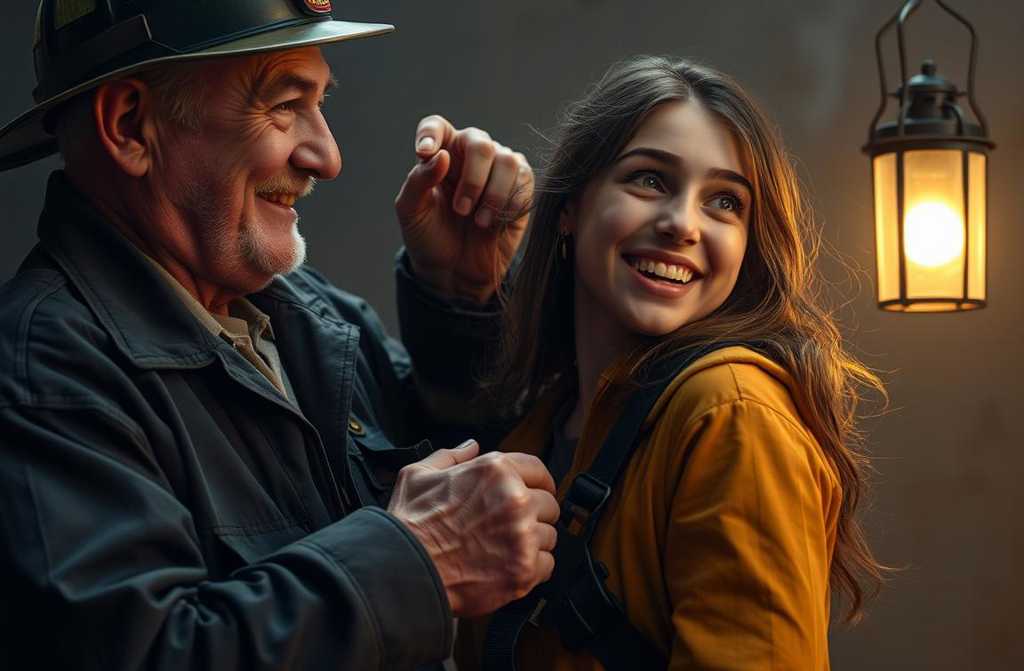
Victor Colin Kellett accepted the offer from the local education department without hesitation, yet without excuses. At sixtythree, he had spent thirty of those years in the national fire service; now he draws a modest pension of about £7,500, picks up a nightshift security job, and spends his days trying to decide why he should run a new afterschool club.
On a crisp September Tuesday he stepped into the schools sports hall for the first time: scuffed linoleum with faded markings, a row of machines along one wall, and a folding table piled with firehose reels, helmets and two coiled fireprotective jackets. Eight teenagers milled aboutthree girls and five boys; the youngest looked about fourteen, the oldest was gearing up for his GCSEs. They snapped selfies and laughed at a homemade poster that read, Fire isnt our enemy, but were not its mate either.
The deputy headteacher, a prim woman with the council crest stitched onto her blazer, introduced the mentor. Everyone, this is Victor Colin Kelletta genuine firefighter. Victor gave a quiet nod. Since hed stopped answering emergency calls, the word firefighter felt foreign; the rank lingered only in archived orders, while the instinct to react to a siren still pulsed in his veins.
He began simply: he asked each pupil to state their name, age and why they were there. I want to save people, Being a firefighter sounds cool, Itll look good on my university application, came the rapid replies. One voice stood outAgnes, a slim yearnine studentwho said, Im curious about how smokeproofing works. I want to study safety engineering. Victor noted to himself that one of the eight already had a concrete skill in mind; the rest were still drawn to the uniform and applause.
The first lesson lasted an hour. He demonstrated how to lift a fireprotective jacket with both hands, smooth and steady, so the cuff wouldnt rip, then asked them to unroll a hose the full length of the changing room. The boys sprinted eagerly, but the hose tangled, and a chorus of laughter filled the space. Victor didnt shout; he walked over, untangled the loops and then challenged them to repeat the task silently and against the clock. The timer stopped at four minutes thirty seconds, and the group realised even a game demanded concentration.
A week later training moved to the disused playground of the former community centre on Willow Lane. They had dismantled the drying tower for the jackets, leaving only a concrete ramp that was perfect for running up with backpacks full of extinguishers. The morning was cool, the grass glistening with frost. Victor made sure everyone secured their straps before giving the signal. The first ascent went smoothly; on the second, the boys legs felt heavy, two of them perched on the low wall to catch their breath.
This is still without the breathing apparatus on your backs, Victor reminded them as they recovered.
Nothing we cant handle, grinned Dan, a senior, wiping his forehead with his hoodie sleeve.
For warmup he told a short story: a fire in a warehouse ten years earlier, ceiling temperatures hitting three hundred degrees, cardboard stacks collapsing. We were hauling two hoses while a gust blew through the open doors like a pipe. Fifteen minutes later the masks were steaming from the inside. He spoke evenly, but the pause after the numbers made the teens listen intently.
By the end of September the youngsters knew what a GDS link was, why a doublelayered undergarment mattered, and why you never run if your helmet has fallen off. One day Victor staged a dark drill: lights out, a smoke machine humming, a mannequin hidden somewhere. The task was to locate the victim and carry them to the door. After three minutes a rope snagged, Yaroslavs torch went out, and the team lost its bearings. They had to be shepherded back to the wall and guided out one by one.
When the drill ended, the youngest, Val, asked, Victor, what if there had been real fire?
Then youd be wearing the breathing sets, Victor replied. And youd have only ninety seconds to locate anyone.
October crept in unnoticed. Maple leaves at the fire station turned golden, the sun set earlier, and by five oclock the air was already chilly. One Friday the volunteer crew was allowed onto the active fire station grounds: they climbed the watchtower, received decommissioned breathing sets without cylinders, and the floodlights were switched on.
When darkness fell, Victor gathered the teens in a circle. A draft between the garage and the depot made the air feel sharp. The adolescents sat on the concrete; Dan leaned against a hose coil.
There are things you wont find in any textbook, Victor began. Ill tell you one story. If after hearing it you decide this isnt for you, Ill understand.
He recalled a January night in 2016: a ninestorey block, fire raging on the fifth floor. Smoke choked the stairwell, the lights went out. We reached the floor with only eight minutes of air left in our masks. In the corridor we found a woman with a twoyearold child. We carried them to the safe landing, but the air in our sets ran out, the alarms blared. The infant was handed to medics, but he didnt survive the night. Victors voice stayed steady, though a sting of guilt brushed his ribs. He rarely spoke the full tale aloud; usually a single line, a child died, sufficed.
Bare birch branches creaked in the wind. Agnes hugged her knees; Dan stopped twirling the hose; Val lowered his head as if listening to his own heartbeat.
Why are you telling us this? asked Yaroslav.
Because you need to know that not every rescue ends up on the front page. Sometimes you return home emptyhanded and wonder whether it was worth it, Victor answered, switching off the floodlights. A grey dusk settled over the training area, a distant lantern at the gate marking the way out. The cold sharpened the decision each of them would someday have to make.
The weekend passed without drills; each teen mulled over what theyd heard.
On Monday Victor arrived at the school well before the bell. A low, heavy sky hung above, a thin sheet of frost clung to the pavement. At the spare fireexit, where a concrete staircase rose to the fourth floor, he laid out two practice hoses. The stopwatch slipped from his pocket into his palm, its cold metal ticking like an old station alarm.
The stairs creaked as Agnes appeared, wearing an old fleece jacket over a plain firefighters coat. She nodded silently and clipped the carabiners onto her belt. The others followed. Counting reached six; Yaroslav and Val were missing. Victor didnt ask why, gave them a minute to warm up, and prepared to speak.
Just as the second elapsed, hurried footsteps echoed down the corridor. Val burst around the corner, fortythree seconds late, breathing hard, a helmet in hand. Yaroslav trailed, rubbing his eyes as if fighting sleep. The group was whole again, and the tight knot in Victors chest eased.
Made your decision? he asked quietly.
Yes, Dan replied. We want to keep going. We have more questions now than before.
The first task was a climb with the hose, then a descent. The width of the passage allowed only two people side by side. Agnes and Yaroslav led, carrying the coil while the other secured it; Dan and Val were second, followed by the younger lads and Natasha, who closed the chain. Victor pressed the start button; the timer buzzed.
By the second landing the boys muscles felt like lead. On the third platform Val dropped the hose; the strap cut into his wrist, but he pulled it free. Victor watched without intervening: without real fire, a slipped piece of gear is just a lesson in calculation. The first pair reached the top in one minute fiftynine seconds; the whole group in four minutes twenty.
They descended, sat on a bench of helmets, and their breathing steadied.
Ask me anything, Victor offered.
Dan looked up. How do you live after those calls that end in loss?
Victor remembered the smell of melted wiring, the siren wail, the ambulance door slamming. I still wake up at night. In the early years I blamed myself: why didnt I get the child out sooner? Then I realised that clinging to guilt keeps you from climbing the next rung. This job isnt about heroics; its about choosing, day after day, to step forward even when you know you might be late.
He paused, then steered the conversation back to practice. Two more climbs. Whoever carries the hose secures it, and vice versa. Aim for under five minutes.
This round Val kept the hose steady; Agnes corrected the knot from behind and gave short commands. They finished in three minutes fiftyeight seconds. Victor suppressed a smile, noting the errors: keep the hose tighter against the thigh, avoid jumping on the turn, tuck hair under the hood, tighten laces. Simple details, but without them you dont survive.
When the lesson ended, Agnes handed him a notebook. Regulations say a volunteer crew needs at least sixteen hours of practice to qualify for citywide drills. We have eleven left. Can we make it?
Victor looked at the tidy column of times. We will. Not by rushing, but by discipline. Tomorrow we work on knots, the day after on darkcorridor navigation. Friday well do stairmarches at the station.
He walked home through a drizzly rain. The fivestorey council block he lived in smelled faintly of fried chips wafting up the stairwell. Behind his door, silence greeted him. He turned on the radio; the background chatter kept memories at bay. A pension of just over £7,000 didnt allow luxuries, but he could afford fireproof gloves for the teens. His nightwatch wages covered the rest, if he found a discount. Small things, but such details keep a volunteer crew afloat.
Early Friday morning frost crusted the puddles. The stations perimeter was lit by street lamps and the scent of wet coal from the boiler. The watchtower loomed as a dark silhouette. Victor checked the carabiners and handed out brandnew gloves.
Where did they come from? asked Natasha, eyeing the bright orange patches.
A sponsor, Victor shrugged, though the sponsor was his own two night shifts.
The drill ran under the stopwatch. The first pair reached the third floor in one minute fortyfive, the second a couple of seconds slower. At the finish line Dan tapped the display: 1:52 a new record.
The teens leaned on the rail, cheeks flushed, eyes bright with focused confidence rather than bravado. Victor felt a familiar sting of guilt ease, as if someone had loosened a tightened strap.
Look at those numbers, he said softly. Its not glory. Its work. Want more? Go for it, but always remember the cost.
From below the depot gates, a fuel tanker rumbled out for a pump check. The youngsters instinctively glanced at the vehicle, and Victor realised that in their minds the allure of patches and hashtags was already giving way to the reality of a real call one day.
He turned off the stopwatch and slipped it back into his jacket pocket. The crunch of ice under his boots, the low rumble of the engine, and his breath forming mist created a symphony of duty that they were only just beginning to hear.
Fiveminute break, he announced. Then another run, and home. From Monday we start using the breathing sets.
The teens smiled faintly, a silent agreement passing among them. As they walked down, they whispered about how many hours each needed for the qualification. Victor lingered, watching them go, feeling a steady warmth in his chest: truth hadnt shattered the teens; it had helped them step out of illusion and into purpose.
He touched the pocket where the stopwatch lay, its metal warmed by his hand. A new record would be set, the click would echo again. One day hed pass the timer to another mentor. For now, the important thing was clear: time marches on, and together they learn to fill it with deeds that matter.
The sun, a pale disc behind the garage roof, trembled on the horizon. Victor took a step toward the group. Ahead lay more work, more lessons, and the quiet certainty that doing the right thing, even when unseen, is the truest kind of heroism.