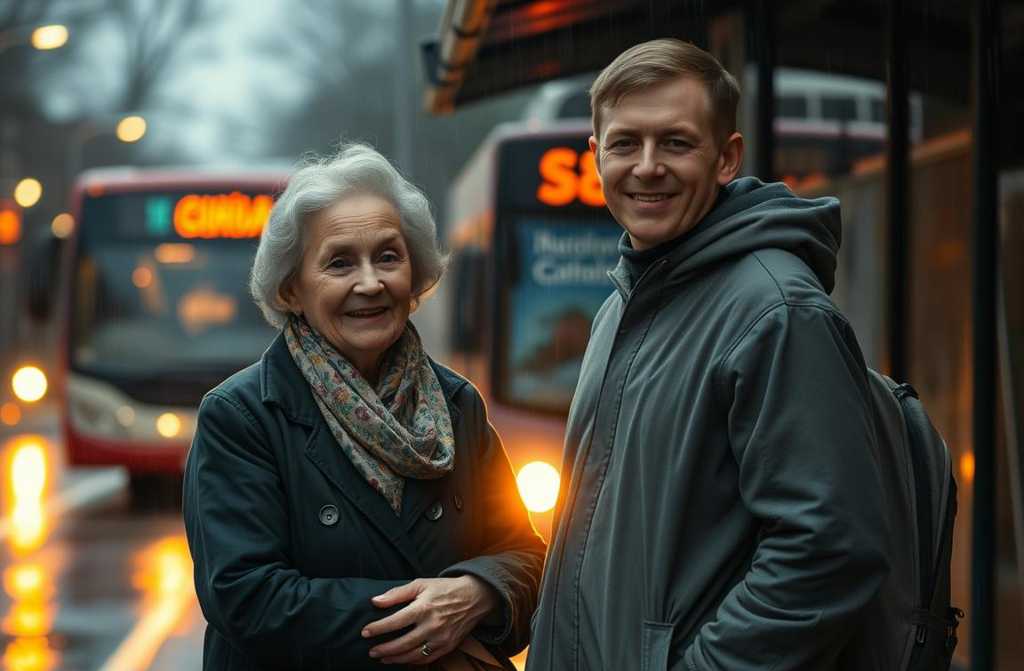
The evening sky over the market town was darkening fast, like someone had just dimmed the lights. At six oclock the streetlamps flickered on, and the wet pavement caught the glow of the glass lanterns. By the bus stop, where the benches still showed the dark stains of leafspillage, the usual faces were already gathered: a few schoolkids with backpacks, two older folk Helen Smith and George Brown and a couple of younger folks. Everyone was waiting for the last bus that each night took us out to the surrounding villages.
A new notice was stuck on the timetable glass, bold and plain: From 3November2024 the 19:15 service is withdrawn due to unprofitability Council. People read it almost at the same time, but nobody said a word out loud. Only Tom, the sixthgrader, whispered to the girl beside him:
How are we getting home now? Its a long walk.
Helen tugged at her scarf and shivered. She lives in the next village, about a halfhour ride away. Walking would be at least two hours over a cracked lane, and in the dark it feels dreadful. For her the bus is the only link to the pharmacy and the clinic. For the kids its the chance to get back after clubs without being out all night. They all knew that, but no one complained straight away. The chat started later, once the initial shock settled.
At the corner shop always smelling of fresh bread and raw potatoes the talk got louder. Emma, the shopassistant, was slicing sausage and asked the regulars in a low voice:
Heard about the bus? What are we supposed to do now My sister gets home at night too whats she to do?
The older pair exchanged glances, throwing short comments back and forth. Someone remembered the neighbours old Vauxhall:
Maybe someone can give us a lift? Whos got a car?
But it quickly became clear: even with all the cars, there wouldnt be enough space. George sighed:
Id give a ride, but I havent been out in ages. And my insurance has lapsed.
The schoolchildren lingered on the edges, eyes flicking to their phones. Their class chat was already buzzing: who could crash at whose house if the bus never came back? Parents typed short, tense messages some have night shifts and theres no one to collect the kids.
Around seven the air grew noticeably colder. A fine drizzle kept falling, making the roads glisten under the lamps. A small crowd gathered by the shop some hoping for a lift, some just wishing for a miracle or a friendly truck driver to stop. After six, traffic had all but died down.
Sarah Clarke, a local activist, posted on the community page: Friends! The bus is cancelled and people are stranded. Lets meet tomorrow evening at the council office we need a solution! Comments piled up fast a few offered to organise carshares, others vented at the council, and some shared stories of nights spent in the town centre when the weather turned bad.
The next day the debate moved to the school playground and the pharmacy. Someone suggested writing straight to the bus company maybe theyd rethink the decision? The driver just shrugged:
They told me the evening run isnt profitable Fewer passengers now that autumns on.
Attempts at arranging lifts were shortlived: a few families tried rotating whod take the kids, but that didnt work for the elderly. One rainy evening Tom and his mates waited half an hour at the stop for a friends mum who promised to collect them all, only for her car to break down on the way.
Meanwhile the number of stuck people grew pensioners after clinic appointments, women from neighbouring hamlets all caught between home and the town centre because the timetable line was blank.
Evening saw shop windows fog up with damp, while inside those with nowhere to go huddled for warmth. Emma let them stay until closing, then they were left to wait on the street for any passing vehicle or to call someone they knew for a nights shelter.
Soon irritation turned into anxiety and fatigue. Chats listed those who needed transport most: younger pupils, frail Mary Jones with bad legs, a lady from the third house with poor eyesight Those names kept coming up night after night.
One evening the waiting room at the bus depot filled up earlier than usual the bus still wasnt there. The air smelled of wet clothes, rain drummed on the roof. Kids tried doing homework at the luggage tables, pensioners sat with their shopping bags. By eight it was clear nobody would get home on time.
Someone suggested a joint petition to the council right then:
If we all sign, theyll have to listen!
People wrote down names, villages, even pulled out a notebook for signatures. Voices were low tiredness weighted more than anger. When the youngest girl started to cry, scared of spending the night alone among strangers, a shared determination rose.
Together they drafted the appeal: restore the evening service at least every other day, or find another way to help those who rely on it. They listed how many people lived in each village, stressed the routes importance for children and seniors, and attached the list of signups made right there.
By half past eight the petition was ready, snapped on a phone and emailed to the council, with a printed copy left for the secretary the next morning.
No one argued any longer whether to fight for the route or wait for private help the bus had become a matter of survival for dozens of families.
The following morning was especially frosty. A white sheet of frost lay on the grass by the depot, the glass doors still bearing yesterdays fingerprints and boot prints. The same faces turned up: someone brought a thermos of tea, someone else shared the latest chat news.
Talk was now hushed but tense. Everyone waited for the councils reply, knowing such things dont get solved overnight. Kids kept checking their phones, elders guessed how theyd manage if the bus never returned. Emma arrived with a printed copy of the petition a reminder that theyd done everything they could.
Evenings still found the group on the bench outside the pharmacy, now talking about organising adult volunteers to accompany kids or renting a minibus for tough days. Fatigue showed in every movement; even the most energetic spoke softly, as if saving their strength.
The community page buzzed almost daily: someone called the council and got vague answers; others posted photos of the empty waiting room with the caption Waiting together. Sarah posted updates on how many people were still scrambling for lifts or sleeping over in the town centre each week.
It became clear the issue wasnt just one village or one family. Posts begged for likes and shares so the council could see how big the problem was.
The councils silence felt heavier than any rain. People worried the officials might still deem the route unprofitable. What would those who cant afford to wait even an hour do? Windows glowed yellow in the night, streets were empty everyone tried to avoid unnecessary trips.
A few days later an official reply arrived: the petition had been accepted for review, a passengerflow survey would be carried out. They asked for confirmed numbers per village, school club schedules, and clinic hours. Teachers compiled student lists with addresses, pharmacy staff helped gather patient data from nearby hamlets.
The whole district now shared the worry of the decision. Even those whod previously shrugged off the bus started asking what would happen the route mattered to everyone.
A week after the petition, the frost thickened, the road crusted with ice. A small crowd gathered outside the council building, clutching the petition copy, schoolchildren with backpacks, pensioners in warm coats.
At lunchtime the secretary handed out a letter from the council leader. It announced that the evening service would run every other day until the end of winter, with passenger numbers being monitored; if the load stayed up, daily runs could return in spring.
Feelings were mixed joy, relief, and the tiredness of a weeks worry. Some broke down in tears at the council entrance, kids hugged each other in triumph.
A fresh notice went up on the bus stop beside the old cancellation flyer, quickly photographed and sent to friends in surrounding villages. In the shops people chatted:
At least well have something now! I was halfexpecting to walk all the way
Every other days fine lets show the council how many of us actually ride!
The first restored journey happened on a Friday evening; thick fog hung over the road, the bus emerged slowly from the milky mist, headlights cutting through the November gloom.
Kids scooted to the front seats, pensioners settled by the windows, exchanging quick cheers:
Look at that we did it together!
Lets keep it going!
The driver greeted everyone by name, checking the new passenger register.
The bus rolled on, fields and low roofs flashing past, chimneys puffing smoke. Folks stared ahead more calmly now, as if the hardest part of the road had already been travelled together.
Helens hands still trembled with excitement long after she stepped off at home she knew that if anything went wrong later, the neighbours whod signed that night would have her back.
Life in the district fell back into its usual rhythm, but every glance now seemed a little warmer. On the bench by the stop they talked about future trips and thanked those whod taken the initiative on that rainy night.
When, late that night, the bus slowed by the central square, the driver waved at the school kids:
See you in a couple of days!
And that simple promise felt steadier than any topdown order.