Quiet Escape
The shade of the towering oak has already draped half of the bench. I close my eyes, pressing my face against the last slant of autumn sun. The park is almost empty; only a brisk wind sweeps bundles of amber leaves down the pathways. I reach for my bag, fingers finding the cool plastic of my phone. No new messages, no missed calls. Probably still at university, I think, without a hint of alarm.
I pull out a novel and try to read, but the words blur. My thoughts stubbornly drift back to this mornings conversation. At breakfast, my daughter Poppy had been oddly distant, her gaze slipping away.
Mom, you have no idea what this is! Just six months. Its Paris!
I know, I replied dryly. And I can see exactly where it will lead. Youre going to quit university.
No! Ill come back and finish everything!
No one ever truly returns, Poppy. Every just six months ends up staying forever.
The argument stalled, Poppy slammed the door and left. It was an ordinary fightone of many lately. Yet today something hung in the air, a quiet, unfamiliar weight.
I glance at the phone again. Half past five. Poppys classes should have finished an hour ago. I dial her number. Number temporarily unavailable, the screen reads. I wave it off, but a cold, tightening worm of worry already coils inside me.
I gather my things and walk toward the flat, unable to sit still any longer. The apartment greets me with an uneasy hush. I wander through the rooms as if seeing them for the first time: a shelf laden with Poppys picture books, a battered sticker on the wardrobe door, a photograph on the chest of drawersPoppy and I laughing on a seaside, her sunkissed face split by a toothwhite grin. All of this has been my world, built around that child, solid and unshakable.
The phone stays silent.
Unease swells into a quiet, total panic. I call Poppys friends; their answers are evasive, as if they know nothing, or pretend not to. My last hope is James, Poppys boyfriend. He answers after the fifth ring.
Anne, good afternoon.
James, where are you and Poppy? Her phone isnt answering.
A strained silence follows.
James?
Shell tell you everything herself, he says, his voice flat.
What? Where is she?
At the airport.
The world didnt crumble, but it froze. The usual soundsthe hum of traffic outside, the ticking hall clockdropped away. I slowly sink into the chair by the telephone table.
Which airport? My voice sounds distant, flat.
Heathrow. Her flight to Paris is in two hours. Im flying with her, so dont worry. She was scared to tell you, thought shed explain once shes settled.
I cant recall what I said in response. I hang up, stare at a single point, and feel a hollow emptiness fill my head, my heart, my flat. Its the moment Id feared for monthsnot a shouting match, not a slammed door, but a quiet, tidy departure.
I drift into Poppys room. Everything is immaculate, almost antiseptic. I fling open the wardrobe; its halfempty. The green sweater, the warm cardigan, the wheeled travel bag are missing.
A wave of powerless, crushing rage crashes over me. How could she? Quietly, stealthily, with deception! I snatch the first thing I can reacha worn stuffed bear, one eye a button, its fur frayed. I raise it to fling it against the wall, but my hand wont obey. My fingers loosen, and I press the bear to my chest, burying my face in its faded plush, still faint with the scent of childrens perfume.
Anger turns to despair. I collapse onto her bed, curling into a ball. Was it all for nothing? All those sleepless nights, the endless worrying, fighting for her future here, at home? It feels utterly futile.
Suddenly I leap up, rush to the phone. Taxi, get me a cab now.
I scramble through the flat, searching for keys, a bag, something to wear. In my head a mantra repeats: Just make it, just make it. My hand finds the coat James left hanging by the front door. I pull the collar over my nose, inhaling the familiar, comforting smell of his woolonly to feel that same paralyzing thump in my chest. I grab my old overcoat and fling the flat door open without locking it.
In the taxi I sit mute, pressed against the seat, watching the city blur pastLondons lights indifferent, billboards flashing, traffic streaming. Somewhere out there, my daughter is on her way, perhaps already soaring. I picture Poppy at the sleek glass terminalpale, frightened, no longer my little girl but someone else entirely.
What should I say? I think, clenching my fists. Beg? Shout? Scold her like when she ran onto the road as a child? Or fall to my knees and weep?
The cab pulls up at the airport entrance. I pay frantically, tumble out, and push through the crowd. Voices in a tangled chorus of accents swirl around me. I scan the sea of hooded girls and backpacks, searching for Poppys silhouette. My heart thuds against my throat.
Then I see her, not in the throng but already beyond the security gates, back to the guard, documents in hand. James stands beside her, whispering something in her ear. She turns, smilesa bright, liberated smile that feels like the final drop of water in a cracked vase. I realize I cannot, will not, break this moment, cannot become the embodiment of reproach.
I stand frozen by the glass, like a fish in a bowl, helpless and mute. Poppy passes through security, takes a few steps, thenwithout warningturns. Our eyes meet through the thick, unbreakable pane.
Her smile fades instantly, replaced by shock, fear, guilt. She mouths something, but I hear only the movement of her lips: Mum
I do not shout back. I lift my hand very slowly, not to call her, not to stop her, but simply to wave, a quiet farewell.
I fumble for my phone. My fingers shake, barely managing to type. I watch Poppy, still staring at me, reach into her backpack for her own phone.
One message appears: two wordsBon voyage!
I see her read it, her face contort, she leans her forehead against the cold glass and breaks downcrying not from fear nor joy, but from a sudden, deafening comprehension of the price of this escape.
I turn and walk away, never looking back. My spine is straight, as if a steel rod runs beneath my coat. I have done the hardest thing a mother can dolet go. And that letting go feels more terrifying than any argument ever could.
The driver, seeing the pallor frozen on my face reflected in the rearview mirror, says nothing. We ride in a silence broken only by the distant hum of the night motorway. I stare out the window, but see nothing but one image: my daughters tearstained face on the other side of an invisible wall.
The airport doors swing open into that same stillness I left a few hours ago, now final. I step inside, shrug off my coat, hang it up.
I walk to the kitchen, flip the light on. My hand reaches for the kettle, but stops. I cannot drink. I cannot eat. I cannot breathe.
Instead I go to the fridge. Among the magnets from StratforduponAvon and Poppys crayon drawings, a sticky note clings with a list of passwords. I peel it off, find the line Poppy, VK. The password is simple, like all the ones I ever inventedher cats birthday, five years ago.
I sit at the desk, open my laptop. I never would have looked at her social media before, but now everything has turned upside down. A strangers account, a strangers life. I log in.
The first thing I see is a new profile picture: Poppy and James, smiling in front of an airplane window. Caption: Were off! My heart contracts into a knot of icy pain.
I scroll through the feed: photos of packed suitcases, screenshots of tickets, all posted for friends, for classmatesexcept me. I am the only one left out of this jubilant secret.
Later I find a recent chat with James.
Are you sure you wont tell Mom?
Shell freak out. Better wait until everythings settled.
What if she
Shell get through it. Shes strong.
I close the laptop, push it away as if it were scorching. Strong, the word sits like a bitter joke in my throat.
I move to the window. Beyond the glass, nightlit London sprawls, millions of lights flickering. Somewhere high above, a plane cuts through the dark sky, carrying my little girl. The same girl I once taught to tie her shoes and read syllables.
I dont cry. Tears come when you expect sympathy; here, in this silence, theres no one to sympathise with me.
I turn off the kitchen light and slip into Poppys room, lie facedown on the madeup bed, the pillow still scented with my shampoo.
One thought loops endlessly: Why did I treat her that way? Where did I miss the sign? I toss and turn, hunting for the moment when everything went offtrack.
And then I recall a trivial exchange a month ago. We were clearing dishes after dinner, and Poppy, staring out at a plane streaking across the sky, said softly, Do you ever feel tiny and trapped up there, too?
What are you on about? I replied, wiping a plate. Just finish the washing, not philosophy.
She sighed and never mentioned it again.
I close my eyes. That wasnt the moment. It was later, or earlier. I scramble through fragments of conversation, the tired look in her eyes at dinner, the sudden closedoff when she put on headphones and drifted away.
I missed not a moment, but the person. The Poppy who grew into someone else while I, Anne, was busy scrubbing the stove and ironing shirts, believing that solid walls were love itself.
Sleep finally claims me, clothed only in the streetlamps glow spilling onto the bed.
Morning brings a persistent knock at the door. My heart lurks: Shes back! Shes changed her mind! I stumble, open it.
A courier stands with a massive bouquet of white chrysanthemums and an envelope.
Anne? he asks. For you.
I shut the door, hands trembling, break the seal. Inside is a card, the printed words:
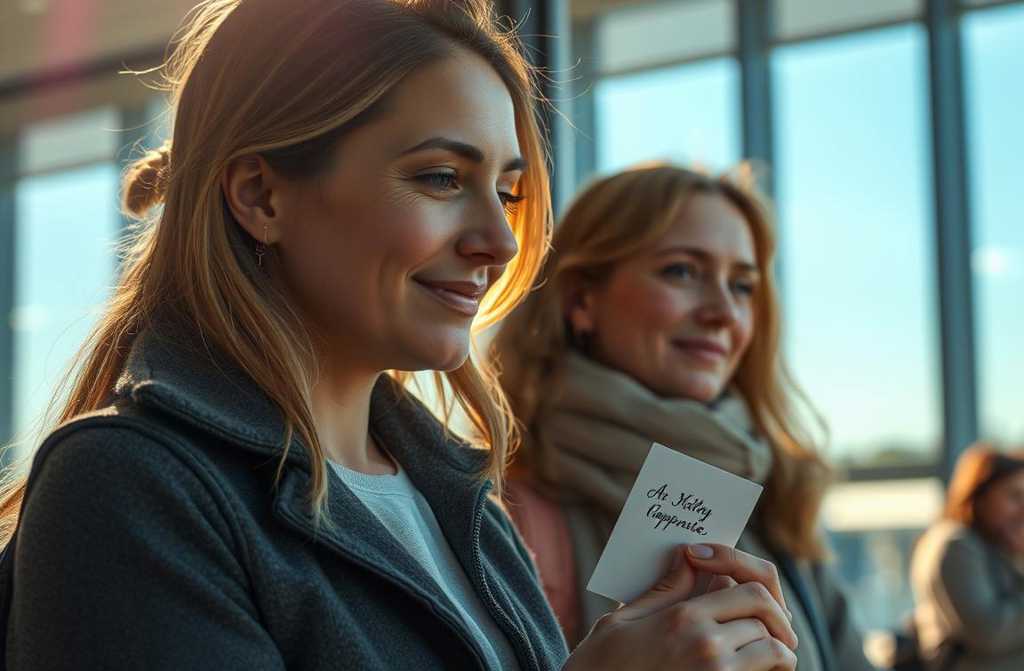
Mum, Im sorry. I couldnt look you in the eye. I was scared youd see me as the disappointment you think I am. Im not running away from you; Im trying to catch up with myself. You always said I could do anything. So here I am, trying. Thank you for everything. Youre the most precious thing I have. I love you. Your Poppy.
I press the card to my chest and collapse onto the hallway floor. At last the tears comequiet, bitter, endlessly solitary. No longer raging, just a crushing, universal sorrow and a tender ache for the girl on that plane who fled in silence, terrified of disappointing me.
I sit among the white petals, weeping for both of us: for a mother who learned too late that walls can be prisons, and for a daughter who felt the only way to be free was to escape.