A Stepmothers Motherly Heart
The wedding bells had only just faded, and the family had gathered togetherlaughing, dancing, and celebrating. No one could have guessed it would be their last reunion. Only the grooms mother, Edith, sat with a frown. She took an instant dislike to her frail, delicate new daughter-in-law, Emily. «Pretty enough, I suppose,» Edith muttered, «but what good is beauty if she cant lift a bundle of firewood, carry a full bucket, or stack a hayrick? Ive worked these fields all my life, thought my boy would marry someone sturdy. Instead, hes brought home a burden.» Edith stewed in her resentment, and Emily couldnt miss the older womans silent fury.
James reassured his young wife but warned her his mother wouldnt go easy on her. «Shes never had patience for the slight or frail,» he said. «Her strength is in her hands, her broad back, her quick strides. She could wrestle a drunken man into bed single-handed. When she hitched a horse, even the stable lads stepped aside. She walked behind the plough with a straight spine, her strong hands gripping the handles, turning the earth into gleaming furrows. At haymaking, shed stack a rick in an hour while others fumbled half a day and barely managed a heap.»
Perhaps God had given her a mans strength and taken a womans tenderness. Emilys own mother, Margaret, hadnt wanted her daughter to marry into this either. They lived nearby, and Margaret had seen Ediths brute forcereplacing roof beams alone, walking the plough, stacking hay. What sort of daughter-in-law could possibly please her? And if anyone tried, Edith would only laugh them into submission.
But Emily refused to listen. She knew her own mind and believed her mother-in-law would soften with age, content to dandle grandchildren while she and James ran their own household. «I wont lose the man I love over Ediths temper,» she thought.
No one guessed war loomed on the horizonnot happiness for the newlyweds, but separation and tears. Six months after the wedding, it began. Those months felt like a trial. James doted on Emily, shielding her from work, which only stoked his mothers ire. «What sort of man wont let his wife lift a bucket?» Edith grumbled. «Always cuddling, always kissing. Takes after his useless father, not me.»
Ediths own mother had brought her to a widower, Thomas, whose wife had died of measles. Theyd lived in povertya leaking thatch roof, no horse, no help. In Thomas, her mother saw escape from hunger and cold. «Better a quiet drunk than spinsterhood,» shed decided.
Thomas, worn down by grief, took one look at Edithher sharp features, towering frame, broad shouldersand sighed. «Shell do as a housekeeper.»
For weeks, neither spoke. Only Thomass little boy clung to Ediths skirts, begging to be held, smiling up at her. In time, she became a fine housekeeper but never loved her husband. Thomas offered no tenderness, and Edith found no joy in marriageonly in her bond with the boy.
She grew into motherhood, if not wifehood. She taught James patience, work, discipline, hugging him fiercely when he obeyed. But she wasnt gentlehis back knew the whip, his backside the belt. She never asked twice. After his father died, they mourned little. Edith smoothed the sheets and said, «I never wanted to be a stepmother. I tried to be your mother.»
Her smile softened her harsh face, her eyes warm, her voice rough but kind as she hugged him. «Youll marry a strong, strapping lass one day. Well build a new housesave me a corner, wont you? Someones got to keep things in order.»
James smiled, thinking, *My beautiful, kind, strong mother. Ill never fail her like Father did.*
Time flew. The wedding passed; war followed, trampling everything in its path. Edith stood hollow-cheeked after seeing James off, her apron pressed to her face as she wailed. Emily approached silently, laying a hand on her shoulder, tears in her own eyes. Edith looked up. «Dont comfort me. Pray. Beg God not to snap his thread. Without him, Ive no reason to live.»
The waiting was agony. To Edith, Emily was uselesscarrying half-buckets of water, struggling with dough, fumbling at milking. When she lifted the iron pot from the hearth, Ediths heart lurched. «Useless girl. Shouldve stayed unmarried. Now youre my burden.»
But Emily saw no maliceonly fear masked as scolding.
One morning, Edith noticed Emily nibbling pickled cucumbers between bouts of nausea. Shed known that craving herself, though her own pregnancies had ended in lossher husbands roughness, her refusal to rest. Now hunger crept closer, though Edith had hidden flour, sugar, salt in the loft. War cared nothing for her preparations.
Emily weakened daily, barely able to eat. Edith pressed rye bread with butter, salted cucumbers, sweet tea into her hands. «Sit still if you cant work.»
James wrote often, his letters beginning: *»Dearest Mother and Beloved Wife.»* Edith kissed the page, weeping, but forbade Emily to mention the pregnancy. «I lost mine, and Im strong. Youre a wispdont risk his sanity. Wait till the babes born.»
Emilys belly swelled, though she ate little. Her dizzy spells worsened. She dreamed of James returning to meet his son.
Letters stopped. Each day, they told themselves: *Tomorrow.* Edith withered, her spine curling, ribs stark under her dress. She lived on crusts and milk, watching Emilys belly with dread.
The birth came at night, a storm ripping at the roof. The midwife refused to stay. Edith hitched the horse, bundled Emily into the cart, and drove through the gale. «Save them,» she begged the midwife.
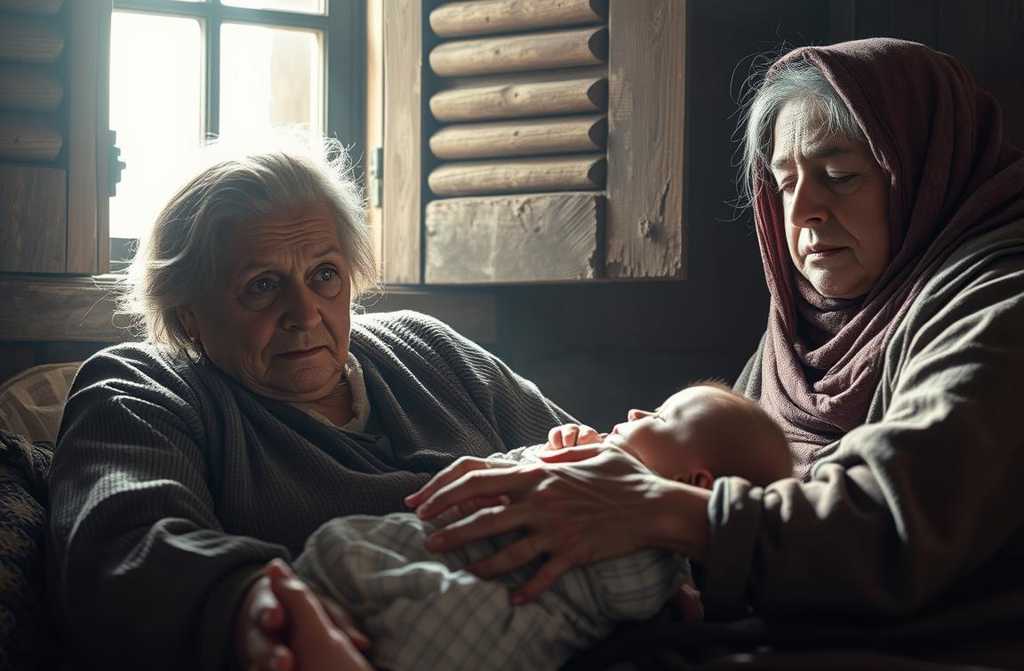
For hours, life and death wrestled. Then a crya sturdy boy in Emilys arms. Weak from blood loss, she clung to life. Margaret offered to take her home, but Edith stood like a scolded child. Emily met her gazegratitude in one, pleading in the other. «Ill stay with the mother who saved us.»
Joy straightened Ediths spine. She cut up Thomass shirts for baby clothes, used her burial linen for nappies. «No need to dress fine for the afterlife,» she said.
Emily didnt resent her. The woman whose stride once terrified her now seemed a fortress. Often, she thanked Edith, whod wave her off. «Nonsense. Youre no burden.»
Still no word from James. The postmistress shook her head from afar. Emily grew stronger, mastering chores, even milking with confidence. «No letter means no death notice,» Edith said.
ThenVictory Day. No funeral notice meant James lived. Ivan played near the house; Emily dug the garden; Edith lay ill, musing, *My strengths gone. But my girls a treasureclever, gentle. I knew it from the start.*
Men returned. Still no James. One summer afternoon, Ivan crashed into a soldiers legs. The man lifted him, heart pounding. «Show me where you live.»
James staggered home, clutching his son. Edith wailed; Emily rested her head on his chest. «We never doubted youd come back.»
«I knew,» he said. «My boy was waiting.»
Edith watched her family and thought happiness wasnt just a feelingit could be held, touched. *This is happinessmy son and his family. whole and safe in my arms. She wiped her eyes with the back of her hand, then rose unsteadily, her old joints protesting, and shuffled to the cupboard. From beneath a folded blanket, she took out a chipped mugJamess fathersfilled it with milk, and set it before him. Drink, she said, her voice thick. Youre home now. Thats all that matters. And for the first time in years, her hands trembled not from anger or grief, but from quiet, unshakable joy.