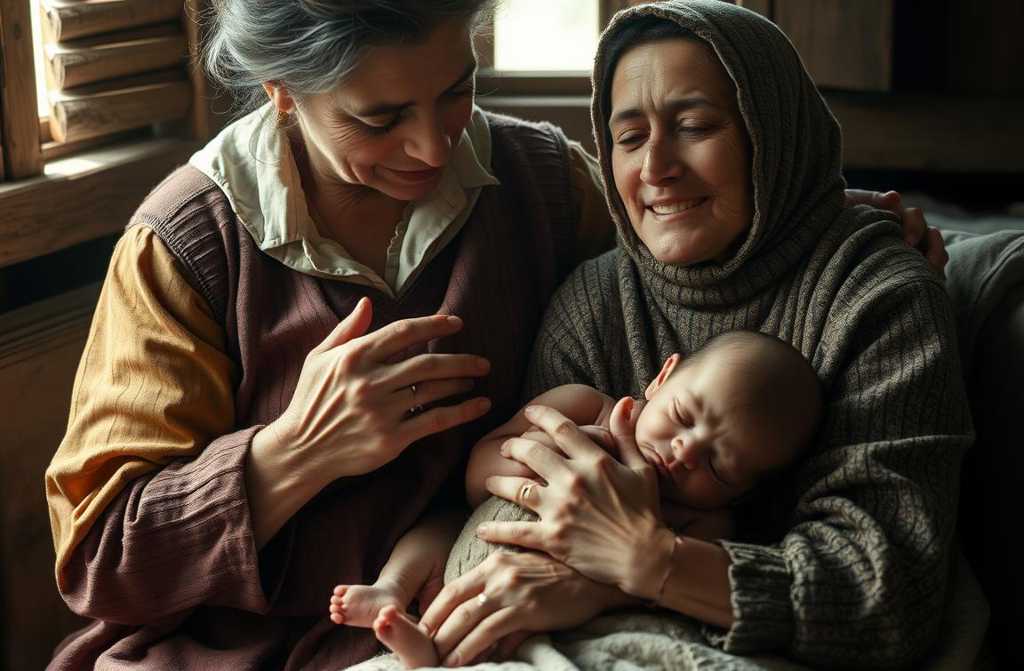
The Stepmother with a Mothers Heart
Not long ago, the wedding bells had rung. Not long ago, the family had gathered, singing, dancing, making merryno one could have guessed it would be their last reunion. Only the mother-in-law sat glum-faced. She had taken an instant dislike to the delicate, slender bride. «Aye, pretty enough, Ill grant her that,» she muttered. «But what good is beauty if she cant lift a bundle of firewood, haul a full bucket, or stack a hayrick? Can she even hold a pitchfork? Ive worked the land all my life, thought my lad would fetch a sturdy girl, not a wisp of a thing. A burden, not a helpmeet.» Prudence chewed over her grievances, simmering, and her bitterness did not escape Marys notice.
Michael soothed his young wife but warned her his mother would show no mercy. «Shes no patience for the weak or slight. Strength is all to herstrong arms, broad back, quick stride. She once floored my drunken father with one hand. When she hitched the horses, even the stable lads kept their distance. Ploughing, she walked upright, hands firm on the handles, the earth turning glossy under her grip. In haymaking, shed stack a rick in an hour while others laboured half a day and still made a sorry heap.»
God had given her a mans strength, it seemed, and taken a womans softness in exchange. Marys own mother had been reluctant to let her marry. Late enough as it was by the years, shed no wish to yoke her daughter to Prudences rule. Living nearby, Tabitha had marvelled at the womans unnatural mighthow she changed the rafters single-handed, thatched the roof, walked the plough, stacked the hay alone. What manner of daughter-in-law could ever please her? Who could keep pace? And if one tried, Prudence would laugh her to scorn.
But Mary wouldnt listen. Knowing her own mettle, she reckoned the old woman would soften with age, mind the grandchildren while she and her beloved ran the farm their own way. «Prudence is one, were twowell gentle her,» she thought. «Ill not lose the man I love for her sake.»
None knew war was coming, that joy would turn to parting. Six months after the wedding, it began. To Mary, those months felt like probation. Michael doted on his wife, which only vexed his mother. «What sort of man is this? Wont let her lift a pail, forever cuddling and cooingtakes after his fool of a father, not me.»
Prudence had been wed to a widower whose wife died of measles. She and her mother lived in want, the thatch leaking, the cow dead, no horse, no help, the master gone. Her mother saw the match as salvation from hunger and cold. Better a timid, drunken widower than spinsterhood, she reasoned. He had a cow, a horsewhat more was needed?
Worn down by grief, Frederick was glad of any replacement. Eyeing the girls rough features, tall frame, and broad shoulders, he gave his verdict: «Aye, shell do as mistress.»
For two weeks, neither spoke. Only the little boy clung to his new mothers skirts, begging to be held, smiling. In time, Prudence made a capable housewifebut love for her husband never came. Nor did he show her tenderness. Her joy lay solely in the boys affection, and his love for her.
She grew into motherhood, if not wifehood. For hours shed talk to her son, schooling him patiently in labour, explaining, demonstrating, rewarding obedience with fierce hugs and kisses. There were beatings, toothe strap across his backside, the belt. She never asked twice. A prank might earn him a thrashing that left even her aghast. Then shed weep, repentant, and theyd forgive each other.
Michael grew handsome, kind, quick to help, devoted to his mother. When his father died, neither mourned overmuch. Prudence squared her shoulders and told him, «I thank God for you, lad. I never meant to be a stepmotheronly a mother.»
Her smile fought the harsh lines of her face and won. Her whole countenance softened, her gaze warming, eyes alight with kindness. Laugh-lines creased her cheeks, her lips curving sweetly. Strong hands with broad palms gripped his shoulders; pressing his head to her breast, she soothed him in her rough, gentle voice: «Time flies, son. Youll be a man soon, wed some strapping lassoh, a fine, strong girl! Well build a new house. Youll spare your old mum a corner, eh? Someone must keep order, though your wife will be brisk enough. Still, Ill have my uses.»
Michael listened, smiling, thinking, «My bonny motherkind, strong, the best of women. Ill never fail her as Father did, shadowing her steps, sullen and silent. What more did he want?»
Time did fly. The wedding came, then war, trampling all in its path. Prudence saw her son off, shoulders slumped, head bowed, apron pressed to her face as she wailed. Mary crept up, laid a hand on her arm, weeping too as she tried to comfort her. Prudence lifted her head: «Comfort yourself, girl. Pray God snaps no thread of his life. Michaels my whole life. Without him, Ive no reason to live.»
The waiting days were bitter. Prudence found no help in her daughter-in-law. Mary struggled with water pails, carried scant firewood, kneaded dough with frail fists, fumbled milking the cow. When she heaved the great pot from the oven, Prudences heart lurchedsure the weakling would spill it.
«Ah, clumsy mite! Youd best have stayed unwed. Your mothers well rid of you. A millstone round my neck, not a daughter-in-law!»
Yet Mary saw no malice in her eyesonly fear, chiding born of dread. What choice had she? She couldnt go home, not with her belly swelling.
One morning, Prudence noticed Mary looked peaked, nibbling pickled cucumbers to quell nausea. She herself had miscarriedtoo strong by half, her husband unsparing, herself unspared. Worked like a horse, forgetting she was a woman, let alone with child. But pickles? She knew that sign.
Hunger crept in slow but bold. Prudence had hidden flour, salt, sugar in the atticagainst the rainy day war would devour entire.
Mary weakened daily, too faint to hold a spoon. All she ate came back up. Prudence fed her pickled apples, buttered rye bread sprinkled with salt: «Eat, girl. Bread and salt mean strength.» Then sweetened tea: «Sit still, if youre useless.»
Michael wrote often, always beginning: «Dearest Mother and Wife.» Prudence melted at those words, kissing the page, clutching it to her heart, keening. She forbade Mary to mention the child.
«Im hale, yet lost my babes. Youre a wraithlikely to miscarry. Wait till its born. Youre wasting away while Im out all hours. At least eat at home! Lift nothingIll manage. Keep from underfoot.»
Mary ate little, yet her belly swelled. Dizziness and sickness plagued her, dark circles merging with her blue eyes. Sometimes she forgot Michael might die. She dreamed the war would end, that shed greet him with their sonshe longed for a boy. Once she asked Prudences wish.
«A healthy babe,» came the reply. «Like my ladsweet-natured, kind, and strong. No offence, girl, but youre frail. Your hips are narrowhow will you birth it? Yet fear not. God gives strength when needed. Pray hard, and pay your dues after. Never mind meIve strength in reserve. Just mind the child.»
Michaels letters dwindled. Prudence knelt, praying: «Lord, take my strength, my courage, my soulgive them to my son. Spare him. Forgive my hiding this childIve no faith in the girl. Aid her in her hour.»
No letters came. Hiding tears, each hoped tomorrow would bring word. Prudence withered, her back bowing, her frame swimming in her dress, once-mighty bosom sunken, ribs stark beneath the cloth. Mary saw she ate but crusts, drank a mug of milk, then laboured all day. Silent at home, prayerful, eyeing that great belly with dread.
The birth pangs came at night. Tiny, trembling Mary called for Prudence. The midwife, begged to stay, refused. A gale tore at the roofsnature itself seemed frantic. Two miles there and back for the midwifehow leave Mary alone? The house stood isolated; cries would go unheard. The winds howl cowed even brave Prudence, but she harnessed the horse, bore Mary out, wrapped her in furs, and raced to the midwifes.
«Save them,» she begged, falling to her knees. «Ill pray for you all my days.»
No words could describe that birththe peril, the pain. Death and life grappled, snarling. Death leered, life rallied; death gripped lifes throat, life struck back. Five hours thustill a newborns cry choked death, and life shone in the young mothers eyes. A sturdy boy lay on exhausted Marys breast. Blood loss left her frail; the midwife made no promises.
Marys mother would have taken her home. Prudence stood grey and shrunken, head bowed like a chastened childa helpless, meek old woman. Mary met her gaze: one glance held thanks, surrender; the other, hope, entreaty. «Ill live with the mother who saved uswhere my husband will return.» Joy straightened Prudences back. It might have been she whod given birth.
She rose nightly to the babes cries, fearing Mary would sleep too sound. Home from work, chores done, she rushed to the cradle. She cut up her husbands shirts for little John, used her death-shroud linen for swaddling. «They judge by deeds, not dress, in heaven,» she told Mary. «No need to primp yetits early days. Youre still feeble. Bairns need strong arms, and yours are weak.»
Mary took no offence. Shed once feared Prudenceher stride, her glare, her voice. Yet those great hands were gentle, her eyes sly and tender, her walk just a walk. Mary knew her for a bulwark, and thanked her often, till Prudence waved her off: «Och, away with you. Youre no burdena joy, rather. And you, Johnny, suck hard. Grow strong, lest your daddy find you too weak to hug.»
Still no word from Michael. The postmistress shook her head from afarnothing. Mary grew sturdier, nursing well, milking deftly, wielding pots like a seasoned cook. She filled out, seeming taller. «No letters better than a telegram,» Prudence said. Seeing that head-shake, her heart eased: no black-edged missive meant hope lived.
Victory came, bringing jubilation. So much grief, so many deadyet no telegram for Michael. Death had passed him by. Soon hed come home.
John played near the house; Mary gardened; Prudence lay abed, ailing. «Wheres my strength gone?» she wondered. «Meet my lad, hand oer the farm, sit on the bench with my grandsonthats all I ask. Ah, but my girls a treasure. Knew it from the firstspirit of gold, deft and tender.» She chuckled at her own cunning.
Men returned; still no word of Michael. One midsummer day, John scuffed in the dust, watching it rise, then bumped into a soldiers knees. Tears threatened till the man smiled down.
«Show me your home, lad. Wheres your mother?»
Clutching the boy, Michaels heart raced. Needles seemed to pierce it; his legs shook, yet he held that small form tighter. Swallowing hard, he near flew to the house. Prudence and Mary stood spellbound, then the old woman wailed aloud, while Mary laid her head on his chest: «We never doubted you lived.»
«I know,» he said. «Our son met meknew his dad would come. I wrote nonewas in reconnaissance.»
Prudence watched her family, thinking happiness could be touched, held, named: «Youre my joy, sonyou and yours. She reached out, her calloused hand cradling the babys head, then pressed it to her chest where her heart beat slow and sure. «Aye,» she whispered, «well do fine. All of us.» The sun dipped low, casting gold across the yard, and for the first time in years, the house was filled not just with work, but with song.