She fled to the countryside and finally found peace.
Anne hurriedly packed her belongings, her hands trembling, tears welling in her eyes. After twenty years of marriage, her husband announced he was leaving her for a younger, sprightlier womannothing like Anne, who was weary from work, perpetually occupied with household chores and the upbringing of the children.
The children were grown. Her son studied in another city and visited only rarely; her daughter had married and moved in with her husband. Anne was left alone in a spacious flat that suddenly felt empty and alien.
She threw her possessions into a suitcase without bothering to sort them. What did it matter? All she wanted was to run, to hide from the pain and humiliation.
The phone rang as she zipped the suitcase. The callers name on the screen was Clare, and Anne sighed. She did not feel like speaking to anyone.
Hello, she answered reluctantly.
Anne, love, Ive just heard How are you? Clares voice sounded worried.
Fine, Anne replied curtly. Im packing.
Where are you off to?
I dont know, Anne admitted honestly. I cant stay here any longer.
Dont you have that little cottage up in the village? The one your grandmother owned? Why not go there?
Anne froze. Indeed, she owned a cottage in the hamlet of Brambleton, a modest thatchroofed house inherited from her maternal grandmother. They had visited it when the children were small, then stopped. George, her husband, always complained that the village was dull, preferring seaside holidays.
Clare, youre a genius! Anne exclaimed. Thats where Ill go!
Is it habitable? Does it have heating?
Theres a stove and electricity. Thats all I need.
An hour later Anne was on the commuter train heading toward Brambleton, about fifty miles north of Londona world apart from the city.
The village greeted her with quiet and the scent of lilacs. The grandmothers cottage sat on the edge of the lane, surrounded by ancient apple trees. She struggled to push open the creaking gate and step onto the overgrown yard.
Grass rose to her knees, the porch sagged, a window was shattered. Anne let out a heavy sigh. What would she do here? She was a city dweller, accustomed to comforts.
A hoarse voice called out, and a stooped old woman with a wooden stick emerged from behind the house.
Good day, Anne said, flustered. Im the granddaughter of Mary Thompson. This is her house.
The Thompson house? the old woman squinted, studying the stranger. And you are Anne?
Yes, Anne answered, bewildered. And who are you?
Im Mabel, a neighbour. We were friends with your grandmother. Why have you come?
I intend to live here, Anne said, surprisingly firm.
Live? Mabel shook her head doubtfully. Its abandoned, needs repairs. And what will you do? Youre from the city, I presume?
Ill manage, Anne replied stubbornly and walked toward the cottage.
The key she found in her bag, turned the lock, and she stepped inside. Dampness and dust filled the air. Old furniture lay under a veil of cobwebs, a stove in the corner, a table, two beds. Yellowed photographs lined the walls, one showing a youthful, radiant grandmother.
Anne sank onto a bed and wept, finally allowing herself to release the grief that had been building for years. She sobbed loudly, pouring out her anger and hurt.
When the tears dried, a strange calm settled over her. In this ancient house she felt shielded from the world; no one could see her sorrow, no one would judge her.
The next morning she awoke to birdsong and bright sunlight streaming through the window. She washed her face with cold water from a bucket and stepped out into the yard.
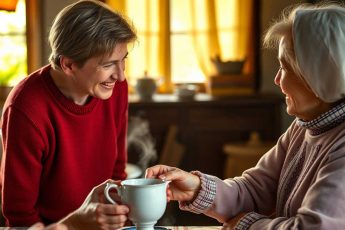
Morning, Mabel, called a familiar hoarse voice. Mabel stood at the fence, a bundle of bread and a jug of milk in her hands.
Morning, Anne replied.
I thought youd be hungry. Brought you some milk, bread, and a few potatoes. The shop is a fair walk.
Thank you, Anne said, touched.
Manners of neighbours, Mabel waved a hand. Are you really staying here?
Yes, Anne nodded. I just dont know where to begin.
Start with cleaning, Mabel suggested, pulling out rags and a broom.
Together they spent the day clearing cobwebs, scrubbing floors, airing rooms. By evening Anne collapsed from exhaustion, but for the first time in years she felt satisfaction in the work she had done.
Tomorrow well check the stove, Mabel said as she left. May comes on a fickle foot.
Anne nodded, beginning to understand that village life meant constant labour, a thought that oddly soothed rather than frightened her.
In the following days the stove was repaired, the broken window glazed, the porch steadied. Anne learned to cook over the stove, draw water from a well, tend a small garden. Her hands grew calloused, her back ached, but her body adjusted to the toil.
One evening Rose, who worked at the village library, stopped by.
Anne, meet Rose, Mabel introduced. Shes the librarian, thought shed say hello to the newcomer.
Pleasure, Anne smiled.
Where did you work in the city? Rose asked.
An accountant, Anne replied.
Education? Rose pressed.
Economics, Anne shrugged. What of it?
Our school lacks teachers, especially for maths. Might you give it a try, even temporarily?
Anne hesitated; teaching had never crossed her mind, yet the idea intrigued her.
Ill consider it, she said.
Within a week she stood before a class of fifteen village children, their ages ranging from six to thirteen. The school ran a mixedage program, letting one teacher handle several levels.
Good morning, children, Anne began, voice a little shaky. Im Miss Anne Thompson, and Ill be teaching you mathematics.
The pupils stared cautiously. Anne took a deep breath and started the lesson. To her surprise, the children were eager, asking thoughtful questions. By the end of the hour she felt a lift she hadnt known in years.
Thus Annes life in Brambleton began to fill: teaching, gardening, conversations with neighbours. Her son sent occasional messages, her daughter called now and then. Anne replied simply, All is well here, and meant it.
The city seemed distant, its flat, its office, its husband, now just memories that no longer hurt. They belonged to a past she had left behind.
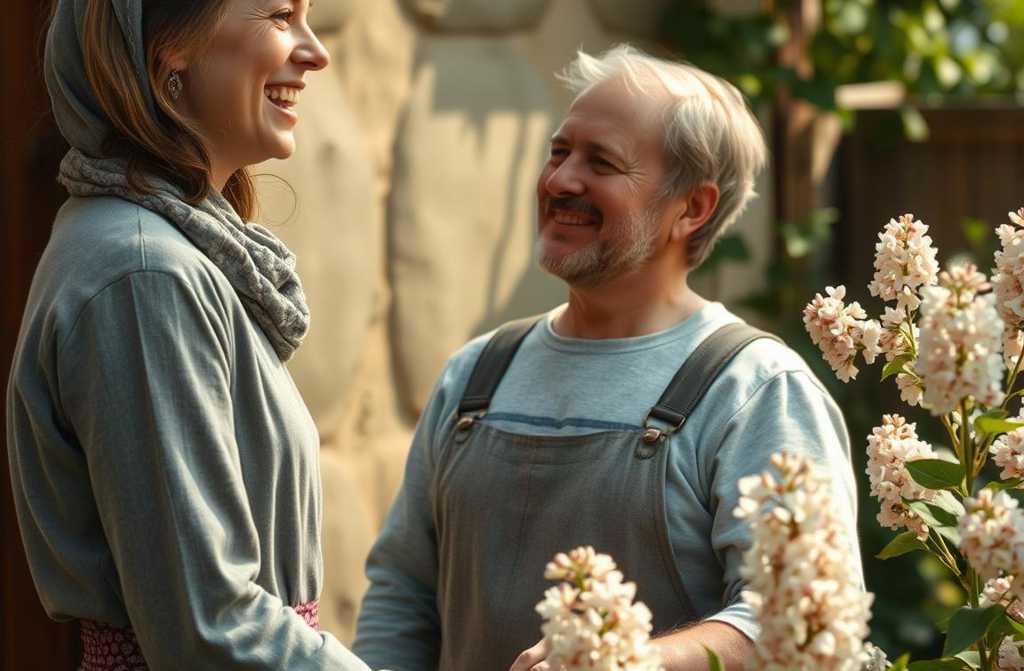
One evening Thomas, a sturdy farmer with a broad smile and a full beard, knocked on her door.
Miss Thompson, may I come in? he asked, shifting from foot to foot.
Please, Thomas, do come in. Would you like some tea?
Id like that, he said, entering.
They sat at the table, sipping tea with a spoonful of honey, and Thomas spoke of his farm, his plans for the future.
Anne, Im in need of a hand with the books, he finally said. The farm is expanding, paperwork piles up, and Im no good with numbers. Could you help?
Anne thought it over. The offer was unexpected but tempting; she missed professional work.
Ill think about it, she replied.
Do think soon, Thomas nodded. The season is starting, theres much to be done.
A few days later she accepted. Mornings were spent at the school, afternoons at Thomass farm, evenings in her garden.
Thomas later offered his tractor to help with the overgrown plots.
Its too much for one person, he said, rolling up his sleeves. Let me give you a hand.
He arrived the next day, turned the soil in hours, and together they planted potatoes, onions, carrots. While they worked they argued lightly, laughed, and shared stories.
The fence is in ruins, Thomas observed, eyeing the yard. Well need a new one.
I have no money for a fence, Anne sighed.
Neighbourly, Thomas grinned, I have timber and tools. Youll just have to keep me fed.
She agreed, smiling at his straightforward generosity. The whole village turned out to help: Mabel with her son, Rose with her husband, and others pitched in. By sunset they had erected a sturdy fence and held an impromptu celebration in Annes yard.
Heres to a new home! Thomas raised a glass of homemade cider.
To new lives! Rose added.
Anne looked at the simple, openhearted people surrounding her and felt she had finally found her placeamong nature and honest folk, the life she had long been missing in the city.
One autumn, her former husband George arrived in his polished car, stopping at the gate while Anne was tending the garden.
Anne, he called, may I come in?
She straightened, dabbed her hands on her apron, and nodded. George stepped onto the lawn, eyes scanning the humble surroundings with surprise.
You live here? he asked.
Yes, she replied plainly.
But you have a flat in London, with all the comforts
I like it here, Anne shrugged.
George examined her anewsunkissed skin, a lighter frame, a confident gait, a spark in her eyes.
You lookdifferent, he remarked.
I am different, she said, offering him tea.
They sat on the verandah, sipping tea with a dollop of homemade jam, and George spoke of his new life, lacking the fervour it once held. Anne listened politely, feeling none of the old sting.
Ive realized I love you, Anne. I was wrong to leave, he confessed.
Anne looked at him, astonished. Those words would once have set her heart racing, but now she felt only calm.
George, Im grateful for your words, but I will not return, she said softly. My home is here.
But this is just a village! he exclaimed. Theres no theatre, no restaurants, no shops!
There is a real life, Anne answered evenly, and real people.
Our marriage lasted twenty years, he sighed.
It ended when you left, Anne replied without accusation. If you hadnt gone, I never would have found myself.
George stared, bewildered by the selfassured woman before him, a far cry from the Anne he once knew.
Are you happy here? he finally asked.
Yes, she said simply. I am happy.
When George drove away, Thomas arrived with a bucket of apples from his orchard.
Anne, fresh apples for you! he called. Antonias best!
Thanks, Thomas, she smiled. Could you help me pull the carrots? One pair is a handful.
Of course, he replied, eager.
They worked side by side, the sun turning the sky pink as it set, the air fragrant with apples and autumn leaves.
Who visited you in that city car? Thomas asked.
My former husband, Anne answered.
What did he want?
He wanted me back in the city.
Thomas paused, holding a carrot.
And you? he asked, feigning indifference.
I declined, Anne said, smiling. Im content here.
Thomas beamed and returned to the work. Their silence was comfortable, a quiet understanding between two people who knew each other without words.
Later that evening, as Thomas prepared to depart, he turned to Anne.
Theres a concert at the village hall on Saturday, then dancing. Would you like to come with me?
Annes eyes lit up at his shy smile.
It would be my pleasure, Thomas, she replied.
On Saturday she donned her best dresssimple yet elegant. Thomas arrived, bouquet of wildflowers in hand.
You look beautiful, he said, handing her the flowers.
The concert was heartfelt, villagers singing folk songs, reciting poems, then dancing. Thomas invited Anne to a waltz. His steps were clumsy yet earnest, his arms strong and gentle around her.
Anne, Im a simple man, without city airs, he whispered, eyes locked on hers. Ive grown quite fond of you.
Anne saw the sincerity in his gaze and felt the same affection rising.
I like you too, Thomas, she whispered back.
They swayed until the music faded, and Thomas escorted her home, taking her hand at the gate.
May I come tomorrow? he asked.
Please do, she answered, heart fluttering.
She stood at the window, watching his sturdy figure disappear down the lane, and realised, at last, that she was truly happyperhaps for the first time in her life.
Winter settled over the village, snow blanketing Annes cottage. Each morning Thomas cleared the paths; evenings were spent sipping tea, talking, planning.
Rose once remarked, You and Thomas make a fine pair. Whens the wedding?
Anne blushed, Were just friends.
Ah, friends who look at each other with lovers eyes, Rose teased.
In spring Thomas proposed simply, without fuss.
Will you marry me, Anne? I love you.
She smiled, Ill marry you, Tom. I love you too.
The whole village attended the ceremony. Annes son and daughter arrived, initially shocked, but seeing their mothers joy they embraced her choice.
Youre happy, Mum, her daughter whispered, hugging her.
And Anne truly was. She had found her placein a tiny English village, among honest folk, beside the man she loved. The happiness was plain, genuine, free of pretence.
Each morning she rose with a smile, eager for the day ahead. Teaching, farming, household chores, evenings by the fire with Thomasall gave her life purpose.
Sometimes she recalled her former city lifeits rush, its empty chatter. How could she ever have called that happiness?
Now she knew: happiness is being where you belong, doing what you love, surrounded by people who truly cherish you.
She had gone to the village to escape pain and disappointment, and she discovered love, selfrespect, and lasting contentment.