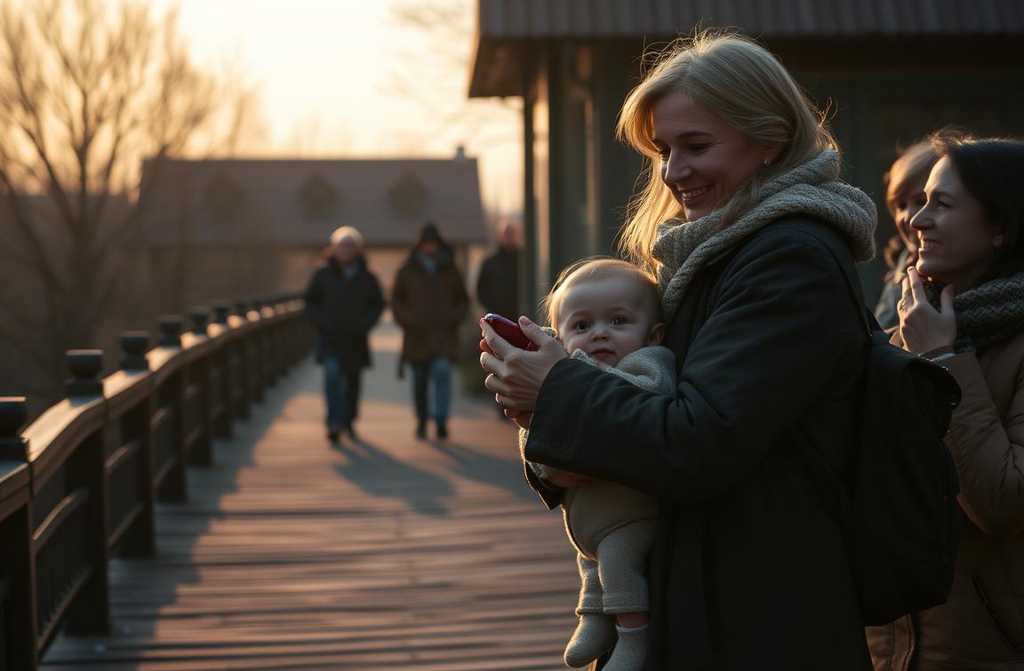
April 12 Diary
The mornings over the Avon are still cloaked in a thin frost, and the old wooden footbridge groans under each step. In Littleford the day starts as usual: schoolboys with satchels slung over their shoulders dash across the bridge to the bus stop, waiting for the number12 to the academy; MrsMargaret Jones, frail but steady, steps carefully between the loosened planks, a canvas bag of milk in one hand and a wooden cane in the other. Behind her a threewheeled cycle lumbers slowly; on it rides little Tim, about five, eyes fixed on the gaps so he doesnt wheel into a hole.
At dusk the shop bench fills with a handful of villagers, trading remarks about egg prices, the latest thaw and how each family survived the winter. The bridge links the two halves of the village the fields and the old churchyard on the far side, the main road that leads to the market town beyond. Occasionally someone lingers by the water, watching the lingering ice that has yet to melt from the rivers centre. The bridge is a constant, never a topic of conversation; it is simply part of the scenery and daily routine.
This spring, however, the boards began to creak louder. Old George Brown was the first to notice a new fissure near the railings; he ran his hand along it and shook his head. On his way home he overheard two women at the corner shop:
It’s getting worse God forbid it collapses.
Come off it! It’s stood for decades.
Their words hung in the chilly March air.
The next morning was damp and overcast. A notice under a clear plastic sheet was stapled to the signpost at the junction: Bridge closed by council order due to unsafe condition. Pedestrian and vehicular access prohibited. The signature of the parish council chairman was unmistakable. Someone had already tried to peel back the corner of the notice, seeking confirmation that it was genuine.
At first no one took it seriously. Children ventured toward the river on the familiar path, only to turn back when they saw a red tape and a sign reading No entry. MrsMargaret stared at the tape over her glasses, then slowly turned and walked along the bank looking for a detour.
Around ten people gathered on the shop bench, reading the notice aloud in a quiet circle. William Clarke was the first to speak:
What now? The bus stop is across the bridge Who will fetch groceries?
And if someone needs to get into town urgently? This is the only crossing we have!
Their voices trembled with worry. Someone suggested walking on the remaining ice, but the sheet was already pulling away from the bank.
By lunch the news had spread through the whole village. The younger folk phoned the district council, asking whether a temporary ferry or a makeshift crossing could be arranged:
They said we must wait for an inspection what if its urgent?
The reply was a string of official phrases: inspection completed, decision made for the safety of residents.
That evening the village hall held a meeting. Almost every adult was there, bundled up against the damp wind blowing off the river. The room smelled of tea from a thermos, and a few people brushed fog from their glasses with the cuff of their jackets.
The conversation started low:
How will the children get to school? The walk to the main road is miles.
Supplies will have to come from the town side
Debate erupted over whether we could repair the bridge ourselves or construct a temporary plank walkway beside it. An older memory surfaced of how we once patched flooddamaged holes together.
Nicholas Clarke volunteered:
We can submit an official request to the council. We need permission, at least for a temporary footbridge!
Lucy Parker backed him:
If we all sign up, theyll give us the goahead faster. Otherwise well be waiting months
We agreed to draft a collective petition, listing those willing to lend a hand or provide tools.
Over the next two days a threeperson delegation rode to the district centre to meet the council officer. He received us briskly:
By law any work over a river must be authorised; otherwise the council bears responsibility. But if you present a signed meeting minute
Nicholas handed over a sheet thick with villagers signatures:
Here is the resolution of our meeting. Please allow a temporary crossing!
After a brief discussion the officer gave verbal consent, on condition that we follow healthandsafety guidelines. He promised a sack of nails and a few boards from the housing department store.
By the following morning the whole village knew the green light had been given; there was no point in waiting any longer. Fresh signs now hung on the old bridge, and beside the water lay the first new boards and a pack of nails secured through the councils supply. Men gathered at the bank before dawn: Nicholas, grim in his old woollen sweater, was the first to pick up a spade and start clearing a path to the water. Others followed, some with axes, others with rolls of wire. The women were not idle they carried steaming tea in thermoses and a box of cotton gloves for anyone who had forgotten theirs.
Where the river still held a thin sheet of ice, the ground nearer the bank was already soggy. Boots sank into the mud as we laid boards directly onto the thawed earth, dragging each piece to the edge. Everyone knew their role: some measured spacing so the walkway wouldnt drift, others held nails between their teeth and drove them in silently. Children lingered nearby, collecting twigs for a fire, begging not to be in the way but eager to watch.
From a bench opposite, the elders observed. MrsMargaret wrapped herself tighter around her shoulders, gripping her cane with both hands. Tim shuffled up beside her, watching the work intently and repeatedly asking how much longer it would take. She smiled through her spectacles:
Hang on, Timmy Soon youll be able to cross the bridge again.
A shout rang out from the riverbank:
Careful! That board is slippery!
When the drizzle grew heavier, the women spread an old canvas over the work area, creating a drier spot. Under it they set up an impromptu table with thermoses, a loaf of bread wrapped in wax paper, and a couple of tins of condensed milk. We nibbled between hammer blows and spade sweeps; no one pushed anyone, yet everyone kept pace. Several times a board shifted or a support sank, forcing us to readjust. Nicholas muttered to himself, while William suggested:
Ill hold it from underneath thatll be steadier.
Thus we continued some offering advice, others lending muscle.
Around noon a council maintenance officer arrived, a young man with a folder tucked under his arm. He inspected the temporary structure carefully:
Dont forget the handrails especially for the children.
We nodded, and a few more boards were fetched for side rails. The paperwork was signed right there on a damp clipboard, ink smearing on fingertips, as those officially joining the effort added their names.
By sunset the structure was almost complete: a long strip of fresh boards stretched across the old bridge, supported by temporary piles and braces made from cut timber. Nails protruded here and there, and the tool box lay halfempty. The first to test the new walkway were the children: Tim stepped cautiously, hand in an adults, while MrsMargaret watched each wobble.
We all paused to watch the first villagers cross. At first they moved slowly, listening to the creak of the planks, then with growing confidence. On the far side someone waved:
It worked!
A collective breath was released, as if a spring had finally loosened.
That evening, those who stayed late gathered around a small fire beside the river. Smoke curled low over the water, the scent of damp wood and burning branches warming our hands better than any tea. Conversation drifted slowly:
Would be nice to have a permanent bridge someday.
For now this will do at least the kids can get to school.
Nicholas stared pensively at the water:
If we pull together, we can handle anything that comes next.
MrsMargaret thanked everyone quietly:
Without you lot I wouldnt have dared to walk alone.
Night fell and a light mist rolled over the river; the water still ran high after the recent floods, but the grass along the banks grew greener each day. Villagers drifted home, discussing plans for a communal cleanup at the hall or repairing the school fence.
The next day life slipped back into its familiar rhythm: children crossed the new walkway to the bus stop, adults lugged grocery bags across the river without fear of being cut off from town. By weeks end the council returned to inspect the temporary crossing, praised the villagers workmanship, and promised to speed up the full reconstruction of the old bridge.
Spring days lengthen, birds sing along the riverbank, and the splash of water against the new supports is a comforting backdrop. We greet each other a little warmer now, each of us aware of the value of shared effort and neighbourly support.
Ahead lies the next stage debates over fixing the road or building a playground near the school. That will be another conversation. One thing is clear: when we come together, theres little we cannot achieve.