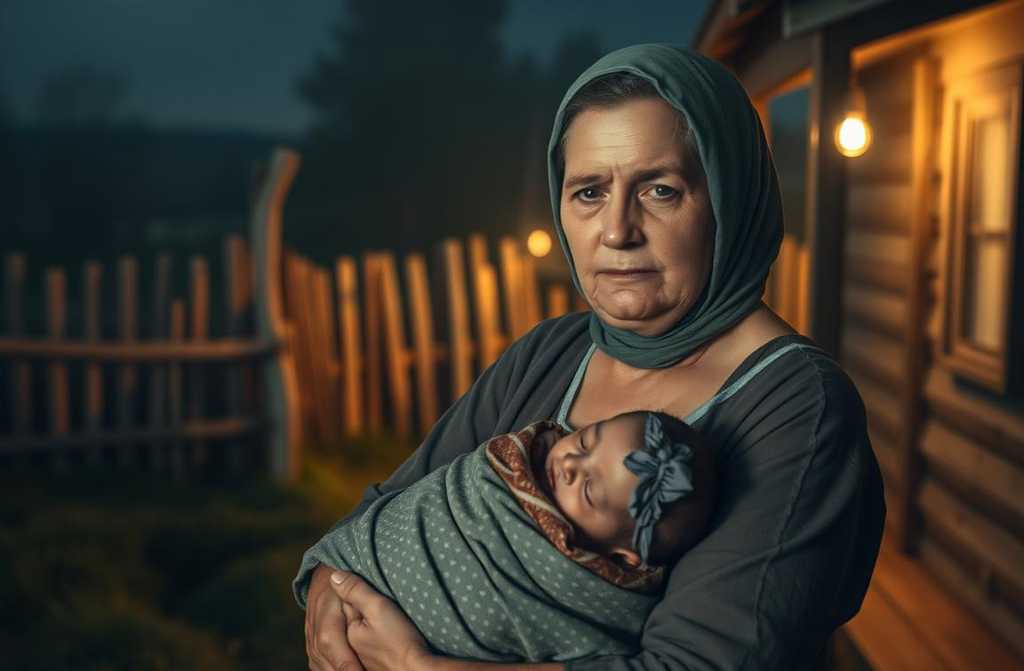
Margaret knew at once when she tugged at the scrap of cloth poking from the bush. It was an old, faded baby blanket, and she pulled harder. Then she frozethere, nestled in the corner of the blanket, lay a tiny child.
At dawn, Margaret had a strange dream: her son, Alfie, stood on the porch, knocking at the door. She jolted awake, stumbled barefoot across the floor, and rushed to open it.
Silence. No one. Shed had such dreams often, always deceiving her, yet each time she flung the door wide. Now she did the same, peering into the empty night.
The quiet and the dimness of the hour wrapped around her. Trying to calm her restless heart, she sat on the porch step. Then, in the stillness, an odd sounda squeak, a rustle.
That neighbours kittens got itself tangled again, Margaret thought, heading to free the little creature from the gooseberry bushes, as shed done many times before.
But it wasnt a kitten. She understood the moment she tugged the scrap of cloth sticking out from the bush. The rag was an old, patterned baby blanket, and she yanked it harder.
Then she went stillthere, on the blankets edge, lay a small child. The babe was naked, likely having wriggled free while lying therea boy. His belly button, still fresh, showed he was just days old.
The child could no longer even cry, soaked through, exhausted, and clearly starving. When Margaret lifted him, he let out a faint whimper.
Without thinking, she clutched him to her chest and dashed inside. She found a clean sheet, swaddled him, tucked him under a warm quilt, and heated milk. She scrubbed a bottle, found an old teat from spring, when shed nursed an orphaned lamb. The boy sucked greedily, then, warm and full, fell asleep.
Morning came, but Margaret barely noticed, lost in thought over her discovery. She was past forty, and the village youth already called her Auntie.
Shed lost her husband and son in the war, one after the other, and had been left utterly alone. Shed never grown used to solitude, though lifes bitter truths reminded her daily, until she learned to rely only on herself.
Now, she was adrift, unsure what to do next. She gazed at the childsleeping softly, as all little ones do.
Then it struck hershed ask her neighbour, Agnes. Agnes, stout and steady, had always had an easy life: no husband, no children, no war losses, no heartbreak. She lived for pleasure.
Her men came and went, none ever kept or cherished if they displeased her. Now Agnes stood on her porch, draped in a shawl, stretching under the morning sun. She listened to Margarets tale, then said plainly:
Whyd you want that trouble? And she turned inside. Margaret caught the flicker of a curtainanother suitor had stayed the night.
Why? Aye, why? Margaret whispered.
She returned home, prepared the child, wrapped him snugly, packed food, and walked to the roadside to hitch a ride to town. The wait was shorta lorry bound for the city soon stopped.
Hospital? the driver asked, nodding at the bundle.
Hospital, Margaret replied tersely.
At the orphanage, as they processed the foundling, she couldnt shake the guiltthis wasnt right, not by her conscience. The gnawing in her chest wouldnt ease.
And the hollowness inside! Shed felt it when news came of her husbands death, then her sons.
Whats the boys name? the matron asked.
Name? Margaret paused, then said, surprising herself, His names Alfie.
Lovely name, the matron said. Weve too many Johns and Marys here. Some parents died in the war, but yours? No telling whod abandon a babe. Men are scarcefolk ought to cherish children, not cast them off! Shameful!
The words werent meant for her, yet Margarets heart ached. She returned home at dusk, lit the lamp, and thereAlfies old blanket. Shed never tossed it, just set it aside. Now she took it, sat on the bed.
Fingering the damp fabric absently, she sat awhile, thoughts blank. Then her fingers brushed a knot in the corner.
Inside was a grey scrap of paper and a plain tin cross on a string. Unfolding the note, she read:
Kind woman, forgive me. Ive no use for this childmy lifes a tangle. By tomorrow, Ill be gone. Dont abandon my son. Give him what I cannotlove, care, protection.
Below was the boys birth date. Then Margaret brokeweeping, wailing, as if mourning the dead. The tears came in floods, though shed thought herself drained of them long ago.
She remembered her wedding, the joy she and her husband had shared. Then Alfie camehappiness anew. The village women envied hershe glowed with it.
Why wouldnt she? A beloved husband, a cherished son. And her men had adored her. Just before the war, Alfie finished driving school, promised to take her out in the new tractor the farm pledged to give him.
Then came the calamity. In August 42, the death notice for her husband arrived; in October, her sons. And so ended Margarets joythe light snuffed out.
She became like the rest, like nearly every other woman in the village. Starting awake at night, rushing to the door, staring into the dark.
That night, sleep eluded her. She paced outside, listening, waiting. At dawn, she returned to the city.
The matron recognised her at once, unsurprised when Margaret declared shed take the boy backher lost son willed it.
Very well, the matron said. Take him. Well sort the papers.
Wrapping Alfie in the quilt, Margaret left with a different heartthe old weight and emptiness gone, replaced by something new: happiness, love. If fate meant her to be happy, she would be. And so it was.
Her empty house greeted her with photographs of her husband and son on the wall.
But this time, their faces seemed changednot solemn or sorrowful, but gentle, approving, as if lit from within.
Margaret held little Alfie close, feeling stronghed need her care for years to come.
Youll help me, she told the photographs.
Twenty years passed. Alfie grew into a fine man. Every girl dreamed of him, but he chose the one his heart settled onhis dearest, after his mother, of course. Her name was Rose.
One day, Alfie brought Rose home to meet her, and Margaret knew thenher boy was a man now. She blessed them both.
They wed, built their nest, and children came. The youngest son they named Alfie, and Margarets family flourished.
One night, she woke to noise outside and, out of habit, went to the door. Opening it, she stepped into the yard. A storm approached, lightning flickering in the distance.
Thank you, son, Margaret whispered into the dark. Now Ive three Alfiesand I love you all.
The great oak by the porch, planted by her husband when Alfie was born, stirred. A flash of lightning cut the skybright as Alfies sunlit smile.