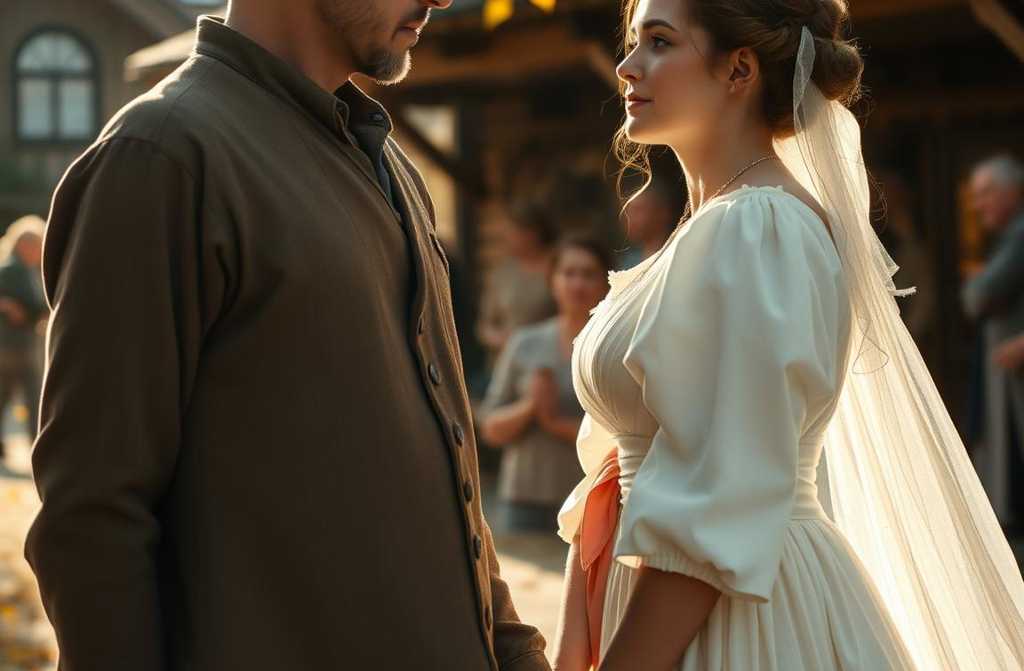
It was the day of Lydia the postwomans weddingoh, what a wedding it was. Not a celebration, but a bitter sorrow. The whole village had gathered outside the parish council not to rejoice, but to judge. There stood our Lydia, slender as a reed, in a simple white dress shed stitched herself. Her face was pale, only her eyes wide, frightened, yet stubborn. And beside herher groom, Stephen. Stephen, who the villagers called «the Convict» behind his back. Hed returned a year earlier from a place not so distant.
No one knew exactly what hed done time for, but the rumours were worse than the last. Tall, brooding, a man of few words, with a scar running down his cheek. The men greeted him through gritted teeth, the women hid their children from him, and the dogs tucked their tails between their legs at the sight of him. He lived on the outskirts in his grandfathers crumbling cottage, keeping to himself, taking the hardest jobs no one else would touch.
And it was this man our quiet Lydiaan orphan raised by her auntwas marrying.
When the registrar had pronounced them husband and wife with her clipped, «You may congratulate the newlyweds,» not a soul in the crowd stirred. The silence was so thick you could hear a crow cawing in the poplar tree.
Then, from the crowd, stepped Lydias cousin, Paul. Hed thought of her as a little sister since her parents died. He walked right up to her, fixed her with an icy stare, and hissed loud enough for everyone to hear:
«Youre no sister of mine. From today, I dont have one. Shacking up with God-knows-who, bringing shame on the family. Dont you dare set foot in my house again.»
With that, he spat on the ground at Stephens feet and stalked off, cutting through the crowd like a knife. And behind him, tight-lipped, went her aunt.
Lydia didnt move. Just one slow tear rolled down her cheek, and she didnt even wipe it away. Stephen glared after Paul like a wolf, jaw clenched, fists tight. I thought hed lungebut instead, he turned to Lydia, took her hand gently, as if afraid shed break, and said softly, «Lets go home, love.»
And they walked. Just the two of them, against the whole village. Himtall and grim, hersmall, in her little white dress. Poisoned whispers and scornful stares followed them, and I swear, my heart clenched so tight I could barely breathe. Watching them, I thought, *Lord, how much strength will they need to stand against all this?*
It had started small, as these things do. Lydia delivered the posta quiet, unassuming girl, always in her own world. Then one autumn, in the thick of the mud season, a pack of strays cornered her at the edge of the village. She screamed, dropped her heavy bag, letters scattering in the dirt. And out of nowhere, Stephen appeared. No shouting, no swinging sticks. He just stepped up to the alpha, a great shaggy beast, and muttered something low and rough. And would you believe itthe dog tucked its tail and backed off, the whole pack slinking away.
Stephen silently gathered the muddy letters, wiped them clean as best he could, and handed them back. Lydia looked up at him with tear-filled eyes and whispered, «Thank you.» He just grunted, turned, and walked off.
From that day, she saw him differently. Not with fear, like the rest, but with curiosity. She noticed what others refused to seehow hed fixed old Marys sagging fence without being asked. Just turned up, worked all day, and left. How hed pulled a neighbours calf from the river after it stumbled in. How hed tucked a shivering kitten inside his coat and carried it home.
He did it all in secret, as if ashamed of his own kindness. But Lydia saw. And her quiet, lonely heart reached for hisjust as scarred, just as alone.
They started meeting by the far well at dusk. He mostly listened while she chattered about her little news. And sometimes, his stern face would soften. Once, he brought her a wild orchid, picked from the marshes where no one dared go. That was when she knewshe was lost.
When she told her family she was marrying Stephen, the uproar was deafening. Her aunt wept. Paul swore hed break Stephens legs. But she stood her ground like a tin soldier. «Hes good,» she kept saying. «You just dont know him.»
And so they lived. Hard, scraping by. No one would hire him steady. Lydias post wages were pennies. But in that tumbledown cottage, it was always clean, somehow warm. He built her bookshelves, fixed the porch, planted a little flowerbed under the window. And every evening, when he came home grimy and spent, shed set a plate of hot stew before him without a word. In that silence was more love than any grand speech.
The village never accepted them. The shopkeeper «accidentally» short-changed Lydia. Kids threw stones at their windows. Paul crossed the street if he saw them.
Then came the fire.
A windy, pitch-black night. Pauls barn went up first, the flames leaping to the house in seconds. The whole village came running with buckets and shovels, but the fire roared, a pillar of heat shooting into the sky. Then Pauls wife, clutching their baby, screamed, «Maggies still inside! Shes asleep in her room!»
Paul lunged for the door, but the porch was already ablaze. The men held him back»Youll burn, you fool!»as he howled in terror.
Thats when Stephen shouldered through the crowd. Hed been one of the last to arrive. Face unreadable, he scanned the house, locked eyes with Paul for half a secondthen doused himself with water from a barrel and strode into the inferno.
The crowd gasped. An eternity passed. Beams cracked, the roof caved. No one thought hed come out. Pauls wife collapsed in the dirt.
Thensmoke parted. A blackened figure staggered forward. Stephen, hair singed, clothes smoking, cradling Maggie wrapped in a wet blanket. He stumbled, collapsed, handing her to the women before passing out.
The girl was alive, just choked with smoke. But StephenGod, he was a mess. Burns everywhere. As I bandaged him, he kept whispering one name: «Lydia»
When he woke in the clinic, the first thing he saw was Paulon his knees. Im not joking. Paul didnt speak, just shook, rough tears tracking down his stubbled cheeks. He took Stephens hand and pressed his forehead to it. That silent bow said more than any apology.
After the fire, the dam broke. Slowly, then all at once, warmth flowed toward them. Stephen healed, scars lasting a lifetimebut now, they were marks of courage, not shame.
The men rebuilt their cottage. Paul became closer to Stephen than blood. Always therefixing the porch, bringing hay for their nanny goat. His wife, Helen, forever bringing Lydia cream or pies. They looked at Stephen and Lydia with such guilty tenderness, like theyd spend forever making up for the past.
A year later, their daughter Maggie was bornthe spitting image of Lydia, fair and blue-eyed. Then a son, Johnny, Stephens miniature, minus the scar. A serious little lad, always scowling.
That patched-up cottage rang with childrens laughter. And whod have thoughtbrooding Stephen was the gentlest father. Home from work, filthy and spent, the kids would clamber over him. Hed toss them in the air till the rafters shook with giggles. Evenings, while Lydia put Johnny down, hed carve Maggie wooden toyshorses, birds, funny little men. Rough hands, but magic in them.
Once, I dropped by to check Lydias blood pressure. In the yardStephen, huge and soot-streaked, crouched over Johnnys tiny bike with Paul holding a wheel. The boys, Johnny and Pauls lad, same age, building castles in the sandpit. Peaceful as anythingjust the tap of a hammer, bees humming in Lydias flowers.
I looked at them, eyes stinging. And I thought, this is what it takesnot grand gestures, but showing up, again and again, in the quiet light of day. The world had judged them harshly, but love, true and stubborn, had outlasted the venom. Lydia came out with tea, her hair loose and sunlit, and smiled at the scene. Stephen looked up, saw her, and something unspoken passed between thema lifetime of storms weathered, a thousand silent understandings. The children laughed, the hammer kept tapping, and somewhere, a crow called from the poplar tree, as if remembering, and finally letting go.