Michael Harper walked through the ancient town park, his carved cane tapping against the leafstrewn path. Autumn breathed a chill into his back, and the ground whispered with the rustle of faded gold leaves. He had returned to the town of his childhood after many years, summoned by business matters that mattered to no one but himself. The park was the same, though the trees now reached higher and the benches that had once cradled his schooldays were warped and peeling.
He came to the gazebo by the pond, the very one where his heart, accustomed to a steady rhythm, began to pound as it had when he was sixteen. The air there still carried the scent of lilac and rainladen dust. It was here that he had first taken the hand of Emily Turner.
Emily, a girl with braids and laughing eyes, could read Yeats aloud so beautifully that his breath would catch. They had lingered under that gazebo until night fell, sketching futures together. Michael, then a budding physicist, dreamed of conquering the heavens. Emily, a slender artist, longed to illustrate his books about distant galaxies. Their love felt as endless as the stars they watched.
But their paths diverged. Emilys practical parents saw her talent as a ticket to a better life and sent her to study at the Royal College of Art in London. Michael stayed in the provinces, enrolling at the local polytechnic. At first letters arrived in thick swarms, full of promises and yearning, then grew scarce. Her world filled with exhibitions, easels, and new companions; his with equations and lab work. In one of her last letters she wrote, Mike, everything changes. So do we. Lets not torment each other by waiting. He did not argue. Stubborn pride kept him from boarding a train to see her. He burned the letters in his fireplace and threw himself into science.
Life moved on in a steady, almost monotone tempo: a dissertation defence, a post at the research institute, a quiet marriage to a kind woman whose portrait lingered in an album after a few years, and a lingering sense of melancholy. No children came. Occasionally, when he lifted his eyes to the night sky, he remembered not the celestial bodies but Emilys eyes, and felt like an old fool.
He sighed, turning to leave, when a woman at a distant bench by the water caught his eye. She was sketching in a notebook, the wind teasing her silver hair, neatly arranged. Something clickeda tilt of the shoulder, a bend of the head.
He took a few hesitant steps, hardly believing his sight. It was her. Emily, alive, not a ghost nor a mirage, wrapped in a warm coat, wrinkles gathering around eyes that lit up as she smiled at her drawing.
Emily? he whispered, his voice trembling.
She lifted her head. Her gaze was vacant, then surprised, thenagainthe same light he had carried in his memory all his life.
Michael? Good heavens, is that really you?
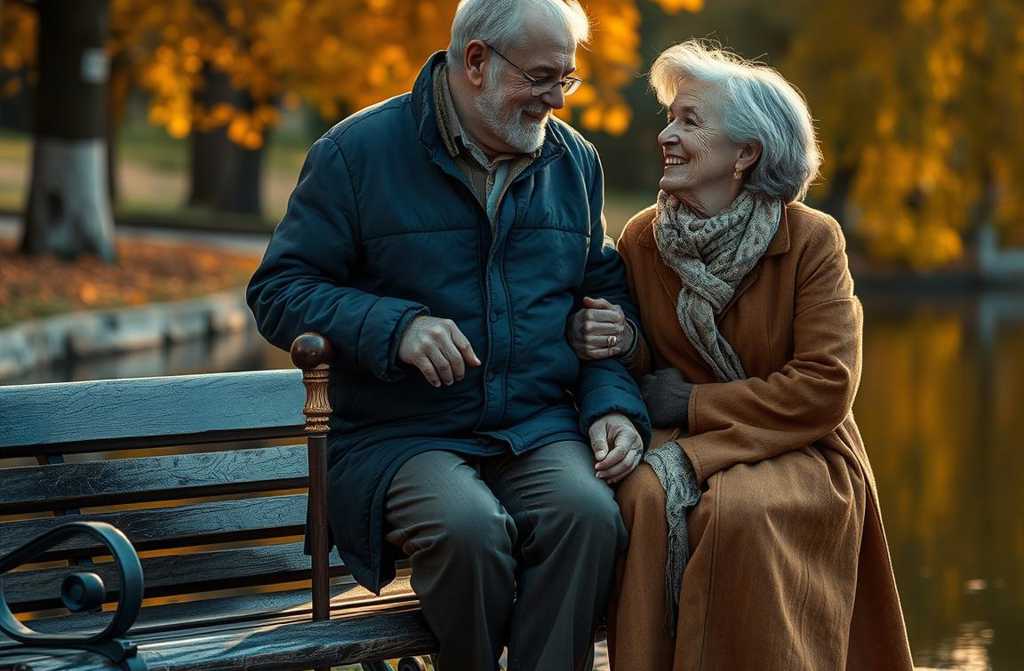
They sat on the same bench where they once kissed, talking of the years that had slipped by. Emilys life had not been a fairytale either. A marriage to a fellow artist had collapsed; the great love had turned out to be a façade. Yet she had a son, now living far away, who dutifully checks on her health and calls on weekends. She had returned to her hometown over ten years ago to care for her dying mother and stayed. She now lived quietly, painting local landscapes and teaching art to children.
Ive heard of your achievementsyour thesis, your papersthrough friends, she said, looking at the water. Ive always been proud of you.
I once found a copy of *Young Artist* at a newsstand, Michael admitted. On the cover was a reproductiona small watercolor titled Autumn Park signed M. Turner. I bought it without a second thought, as if it were treasure. It still sits in an old folder with my most important documents.
He fell silent, then could no longer hold back.
Ive always regretted, Emily. Regretted not coming back then, not trying to restore what we lost. Not finding you to say to say that your Autumn Park means more to me than any painting in the National Gallery.
She turned toward him, and there was no blame, no resentment, only a quiet, wise sadness.
We were young and foolish, Mike. We thought love had to be loud and everlasting. It turned out to be quiet, like this autumn light.
He reached out and covered her hand, cold but familiar. In that instant time seemed to spring back, collapsing the forty years of separation. No grey hair, no wrinkles, only him, her, and an endless conversation that had been halted long ago by youthful folly.
They remained there until dusk, hands clasped, while the ponds autumn sun dimmed, its reflection shimmering in their eyestwo solitary stars finding each other again in the vast, endless sky of life.
Evening settled. Lanterns flickered along the walkway, casting long trembling shadows on the damp earth. The chill grew sharper, but neither wanted to leave. It felt as if moving would shatter the fragile magic of the night.
Lets go, Emily said, shivering slightly from the breeze. I live just nearby; you should remember. Lets warm up with tea.
They walked slowly. Michael felt his cane tap against the paving in a new, unfamiliar rhythmthe rhythm of returning home. Emilys house was a modest twostorey Victorian with high ceilings and cornices. The flat smelled of oil paints and dried herbs. In the sitting room stood an easel with a work in progress, and the walls bore sketchesmostly local scenes he knew intimately.
Nothings changed, he smiled, looking at a small canvas of their gazebo. You still love this park.
Its my most faithful friend, she replied, filling the kettle. And the most patient subject.
They sipped tea from crystal glasses in saucers, conversation flowing easily, picking up the frayed threads of the past. They recalled funny university moments, mutual acquaintances, longforgotten films and songs. Laughter echoed through the flat, light and carefree.
Yet beneath it all lingered a deeper feelingan almost tangible sense of lost time, drifting like dust motes in a lamp beam.
You know what I often think about? Emily said, placing her glass down. The night we watched a shooting star. You said youd made a wish.
And you never asked what it was, Michael recalled. You said it didnt matter, otherwise it wouldnt come true.
Now maybe I can ask. What was it?
He paused, looking at her face illuminated by the soft lamp light.
I wished that wed always be together. Simple, naïve.
Emily smiled. I wished the same. It never happened. Perhaps the stars werent in the mood.
He reached across the table, and she placed her hand over his. Now her hand was warm.
Maybe they were just waiting for us to grow wiser, he whispered.
The next morning Michael took his return ticket to the station and handed it in.
They began to make up for lost time in simple ways. He accompanied her on pleinairs, carrying a foldup stool and a thermos of coffee. He sat beside her, silently watching her confident hand bring familiar outlines to life on canvas. Occasionally shed hand him a brush: Add a cloud here. You always loved improvising with colour. He laughed, laying down clumsy but tender strokes.
They rediscovered the townweathered stone facades, the overgrown canal, the small market where apples from the nearby orchard were soldeverything became the set of an unexpected romance. Their conversations often consisted of halfsaid phrases that each understood with a single word.
A week later, while sorting books in his parents house, Michael found his old school notebook, filled with youthful, awkward poems dedicated to her.
He shyly handed it to Emily. Dont laugh.
She read every line without blinking, then looked up, eyes bright with surprise.
Theyre wonderful, Mike. Why never read them to me?
I was shy. Thought they were nonsense.
They arent nonsense, she pressed the notebook to her chest. Theyre the most precious thing Ive heard in years.
That night they curled up on the sofa under one blanket, watching the sleeping town through the window. Between them there was no youthful passiona blazing, reckless fire. Instead, a deeper, calm, comforting feeling settled, like arriving at a quiet harbour after years of stormy seas.
I dont want to go back, Michael whispered in the dark.
Me neither, she pressed against his shoulder. Ive lost so many years. I want you to stay here forever.
Outside, dawn painted the roofs and trees in soft pink. They felt no fear. Ahead lay an entire life, not the one they had once imagined under the lilacscented gazebo, but a real, earned one of their own.
Believe, always believe. Even when it seems the best chapters of life have already been turned and there is nothing left to write, the most remarkable sections often begin where we thought the story ended.
Do not stare at the past merely to drown in melancholy; use it to locate forgottenAnd as they walked hand in hand toward the sunrise, they finally understood that love, like the tide, returns not because time erases it, but because the heart never truly lets it go.