Life had never truly ended.
Arthur Penrose measured his days by the crisp sheets of a tearoff calendar that had hung on his kitchen wall since the days of ration books. Every year hed replace it, and each morning hed flip open a new page, tearing away the old.
The day that dawned was a carbon copy of the one before: a dim rise, a mug of tea, two cheese sandwiches. Thirtyeight wintersexactly the span from a fresh graduate to foremanstretched from the flats front door to the gate of the steel plant and back again. The workshop roared with the deafening clatter of presses, blueprints stared back from the bench, and the air was thick with oil and metal dust.
At home, a heavy carpeted silence waited, broken only by the flat, impartial voice of the BBC newsreader. Their children, raised in the same culdesac, had long since scattered to Manchester, Birmingham, even abroad. Sunday calls were bright but distant, like static from another world.
And there was EleanorEleanor Seymour, his wife. Once, in a different lifetime, theyd laughed together and drafted plans for later. That later had arrived, only to leave them with little to say. They occupied the same space like two wellworn chairs, familiar yet mute. Eleanor tended a windowsill of primroses, rewatched old sitcoms, visited friends. Their conversations had dwindled to grocery queries, plumber updates, bloodpressure checks.
Sometimes, watching her shoulders, her hands forever busy with cleaning or knitting, Arthur felt a pang of surprise that he could not recall the last time hed truly seen her laugh. Their life mirrored the tearoff calendarpages never changing, the same day slowly yellowing. The only place where time still moved differently was his workshop at the back of the estate.
The workshop was his sanctuary: a modest brick outbuilding on the edge of the council estate, scented with linseed oil, aged wood, and something timeless. Here time flowed not linearly but in circles, returning to its source. Shelves, cobbled together from salvaged planks, held patients awaiting resurrection: a prewar radio set, a cuckoo clock that had fallen silent for a decade, a gramophone horn that looked like a giant flower.
In that realm of hushed reverence, punctuated only by the steady rasp of a file or the hiss of a soldering iron, Arthur was not the exhausted cog he felt at the plant, nor the silent fixture of his flat. He was a creator, breathing life into what others had consigned to the dump.
Each repaired device was a small triumph over the worlds chaos, proof that something could still be mended. The calloused work of his fingers supplied the meaning that was seeping away from every other corner of his existence, like sand through clenched fists.
George was the sole person granted entry to this shrine. He didnt just walk inhe stormed into Arthurs life like a draft that fans a stubborn fire. Their friendship, forged over decades, was as reliable as the mechanisms Arthur assembled. It needed no idle chatter, no lubricating small talk. They could sit together for hours, smoking on the garage step, watching the sun dip, and the silence between them felt richer than any longwinded conversation.
Then the mechanism faltered. One Friday night, after the shift, Arthur waited for George in the garage. Seven oclock. Eight. He paced the threshold, listening to the evenings hush.
Mobile phones were anathemaGeorge called them leashes for the enslaved, and Arthur saw no need for their fuss. When George didnt appear, Arthur went home. The landline rang; Margaret, his neighbours wife, answered.
Her voice was unnervingly even, as if reciting a line:
Arthur George is feeling very poorly. The doctor just left.
What happened? Arthur blurted, feeling a knot tighten on the other end of the line.
Blood pressure spiked, possible heart attack, preinfarction, Margaret intoned. Doctor says complete rest. No excitement. Her tone was not merely caring but resoluteguarding, cutting away everything superfluous.
I could stop by for a minute Arthur began, already sensing the futility.
No! Margarets voice cracked, rising then steadied. He needs peace. And you both should calm down. No more garage tinkering. She hung up, leaving Arthur in the oppressive silence of his own flat. The message was clear: this was not just illness. It was the first stone of a wall being built around him, and that wall began with him.
Arthur drifted to his bedroom. His hand reached for a pack of cigarettes, but he stoppedMargaret could not stand smoke in the house. He sank into an old armchair by the window, staring at the darkening pane.
Two days later he could bear it no longer and went to their flat. Margaret opened the door, her face unreadable, yet she let him in.
George lay on the sofa, pale, looking a decade older. Margaret hovered, her voice tinkling like a cracked bell, drowning the quiet.
Listen, Arthur, George rasped, eyes fixed on the ceiling. The conveyors stopped. Im now just a decorative gramophoneno use at all.
They said nothing about the future. The future seemed to have stalled, pinned against that very couch. Yet when Arthur turned to leave, George clutched his hand tightly.
Dont abandon the workshop, alright? he whispered. Ill have nowhere to come.
Those words became a key, burning a fresh line of fire through Arthurs spine all the way home. The flat greeted him with the same muted hush, Eleanor at the stove, turning over a stew with a detached expression.
Hows George? she asked from the kitchen, not looking up.
Alive, Arthur replied briskly and retreated to his room, feeling a decision taking root, slow and steady, in his gut.
Months slipped by. George recovered gradually, but the spark in his eyes dimmed. Margaret tended to him with a doublehanded regimen of pills, diets, and bloodpressure checks, turning his life into a sterile prison of concern.
One evening Arthur called Georges house. Margaret answered.
Hes resting, Arthur, she said, sweet but firm. I dont want to disturb him. You understand.
He understood. He understood that his friend was locked in a sterile cell with no exit.
The next time he visited, Arthur turned his resolve into action. He lifted George, helped him into a coat, and, meeting Margarets startled gaze, said calmly,
Were going out for half an hour. He needs air, not rest.
He led George to the garage. The air there was familiarold wood, oil, the smell of their shared youth. Eleanor had not set foot inside for ages, deeming the garage a lair of junk and idle hands.
George sank onto a stool at the workbench, shoulders hunched, eyes vacanta machine turned off.
Arthur walked to a shelf and pulled down a large cardboard box packed to the brim with radio parts: resistors, capacitors, transistorsthousands of tiny, coloured cylinders like beads from an unknown tribe. He placed the box on a low bench before George.
Hands not obeying? No matter, he said. Eyes can see. Find me a 100microfarad capacitor, green with a gold stripe. Its in there somewhere.
George stared skeptically at the box, then at his uncooperative fingers.
Arthur, I
No rush, Arthur cut in. Ive got plenty to keep me busy. He turned, pretending to polish an old relay with reverent concentration.
At first George simply ran his palm over the top, sifting through the parts. His fingers trembled, nearly toppling the box. Gradually, as his gaze traced the coloured bands, his body steadied. Breath evened, tremor eased.
He forgot Margaret, the pills, his clumsy frame. His whole world narrowed to that box and the single taskspot the green cylinder with the gold stripe. There was no race, no stress, only a patient, methodical hunt.
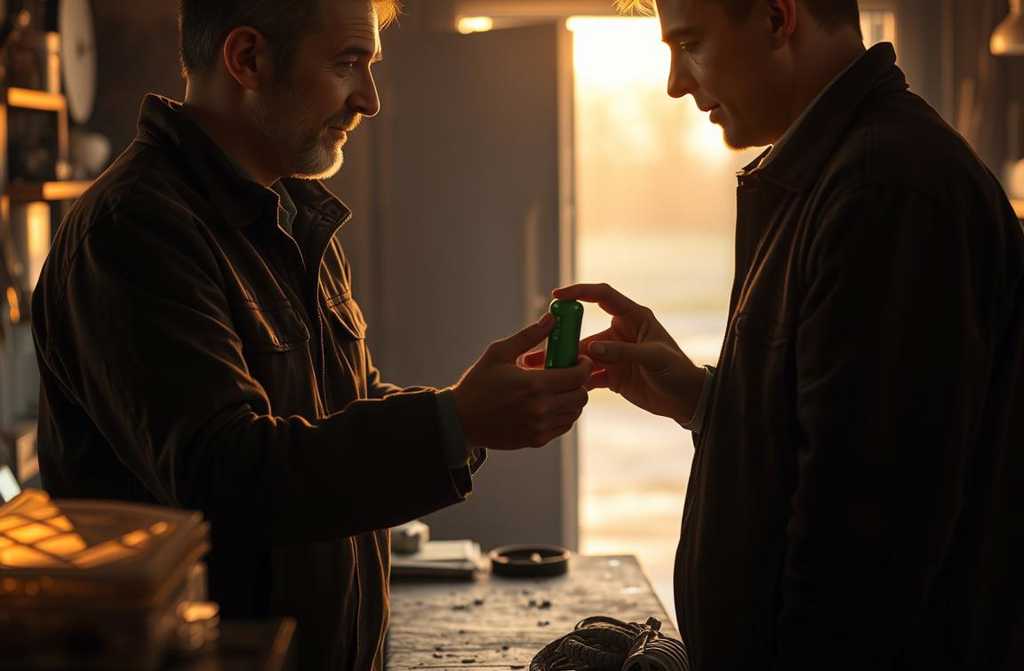
After ten minutes, Arthur finished polishing the relay and silently watched his friend. George, lips pursed, finally pinched the tiny green component between thumb and forefinger.
This looks right he handed it over, hand still shaking but movement sure. See the gold line?
Arthur took the part as if it were a precious gem.
Thats the one, he nodded. Thanks, George. Id be a blind kitten here, searching all day. He placed the component on his palm, both of them gazing at ita minute cylinder that changed nothing yet meant everything. A first, almost invisible victory: attention over distraction, order over chaos, life over slow decay.
Arthur escorted George back to his flat, helped him shed his coat at the hall.
Thank you, Arthur George whispered, relief in his voice. I feel like Ive finally gotten some fresh air.
Margaret watched from the kitchen, silent this time. She offered no comment, only a puzzled stare as Arthur stepped outside. The evening air was cool, crisp. He walked slowly, a lightness settling over him. He hadnt triumphed over Margaret, nor performed any grand heroics. He had simply restored to a friend the feeling of being needed.
He knew more small, patient steps lay ahead. The hardest one had been taken.
Tomorrow he would return to George, not with consolations but with a simple, clear plana leisurely walk to the garage, step by step, minute by minuteto show his friend that the world of unhurried work still waited for him. That he was still valuable, not as a patient but as a man whose skill and mind had not vanished.
Bit by bit, he would coax his friend back to life, not with medicines or speeches, but by returning him to the very hands that once crafted, to the smells and sounds that felt like oxygen for a choking soul. And in that slow revival, Arthur read the ultimate truth: life had not ended; it had merely paused to gather strength for the road ahead.