Sisters
In one of the cramped rooms of a massive council block in East London lived two women who were, in the eyes of everyone, a pair of perpetual nuisances. They were sisters, Edith and Margaret, and if not for the twelveyear gap between them one might have thought they were twins.
Both gaunt, with pinthin lips that were always pressed together, and with a knot of hair tied at the back of their heads, they wore identical dull grey housecoat dresses. The whole floor despised, feared and looked down on them. The younger tenants loathed the sisters because they were constantly making remarks, never seemed satisfied, and always complained about the loud music from the flat above, the latenight parties, and the teenagers who trudged home after curfew. The children kept their distance because the elderly ladies on the landing would rush to the landlords office to report the slightest infraction a light left on in the communal lavatory, a discarded wrapper in the hallway.
Nellie, the kindly neighbour from the next landing, was the opposite. Though she had no university degree, she was loved for her gentle smile and for never tattling on anyone. When the boys Vicky and Sam came home stumbling and noisy, she said nothing, and they shrugged it off. The sisters, for all their criticism, never seemed to mind; they were, after all, what the locals called old grumbles.
The children adored Nellie. She never squealed to the landlord, no matter what mischief was afoot. She would flash a sly wink, keep a quiet secret, and the noise of the block went on unabated.
Often the older sister, Edith, would step out onto the landing, purse her lips, and lecture the youngsters:
You cant be shouting like that! Someone might be trying to read a book or get some rest. Mr. Peters from the night shift is just back, and Miss Valentina over there is writing a novel, you know.
Shed point to the door where Margaret, the younger sister, indeed sat with a notebook. The whole floor snorted at her, and Nellie, ever the quiet observer, seemed to smile the widest.
Val, when will you finish that book? the old landlady would croak, laughing as she shook her head.
Val, tightening her already thin lips, said nothing, but after slipping into the sisters room she burst into tears on Margarets shoulder.
Ed, why mention the book? Theyre already laughing at us.
Let them laugh, Margaret soothed, theyre not out to hurt us. Theyre our neighbours, almost kin. Dont take it to heart.
Then the war came in 1939, and the Blitz began in September. At first the cold was bearable and the ration tickets were a novelty, but soon the block fell into a hush that was more oppressive than the prewar clamor. The sugary smell of the communal kitchen faded, the sirens wailed, and the faces in the hallway grew pale and weary. The teenagers stopped strumming guitars, the children no longer played hideandseek. A deep, unsettling quiet settled over the building, gnawing at the spirit more fiercely than any bomb.
Edith and Margaret grew even thinner, yet they kept wearing their grey coats, now hanging on them like motheaten curtains. Their vigilance turned to keeping order in a world where everything else had crumbled. Nellie ventured out only when absolutely necessary, and one day she simply vanished. She didnt return. The sisters searched the corridors for days, calling her name, but found only an empty slot where she had lived.
Spring of 1942 brought the first death in the block. Mr. Thompsons mother died, leaving the boy alone. The others felt sorry for the orphan, but war left little room for sentiment. Life trudged on, and soon the sisters took the boy under their wing. He was eleven that October; they fed him, clothed him, and kept a watchful eye over him as they had over the other children who had lost parents, fathers away at the front, mothers succumbed to rationinduced illness.
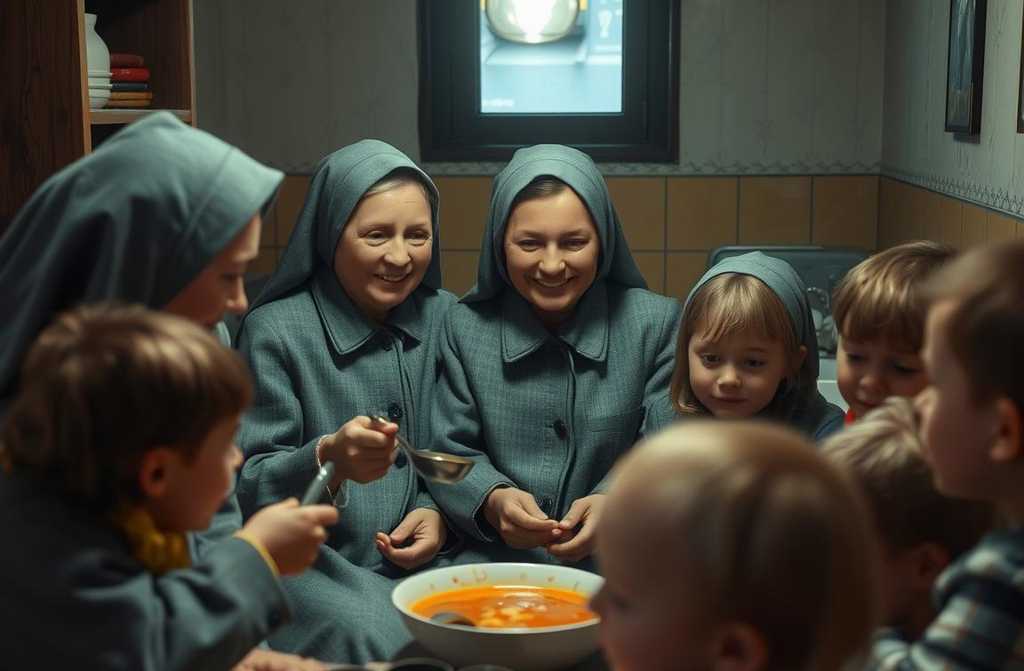
Every day the sisters boiled a pot of soup, stirring it for ages, adding whatever scraps they could find a pinch of wheat, a handful of pearl barley, sometimes a spoonful of canned meat if luck allowed. The soup was surprisingly hearty, and it became the staple for every child at the same hour each afternoon. They christened it RaggleTaggle.
Mrs. Edith, why RaggleTaggle? little Tom asked one evening, remembering how hed once called Vicky that name.
A tear slipped down Ediths cheek as she recalled a boy who hadnt been seen for months. We call it RaggleTaggle because we throw anything in there wheat, barley, a dab of gluelike broth, and if the gods are kind, a spoonful of tinned stew. Its a messy lot, but it keeps us alive.
Is that why you call it RaggleTaggle? the boy pressed.
Exactly, Margaret replied, patting his head and slipping a tiny crumb of sugar into his mouth so none of the sweetness was lost when it passed from hand to hand.
Soon the sisters gathered all the orphaned children into their little room. Living together made the cold a little less bitter, and the kids huddled together for comfort. Margaret would read a bedtime story from a halffinished manuscript shed been working on for years; the pages had long since been used for firewood, but she remembered each tale.
Grandma Val, will you tell us the story of the Snowcapped Beauty tonight? a girl would plead.
I will, Val would answer, and the tale would begin, her voice weaving a world beyond the sootstained walls.
All the children had chores: Tom tended the coal stove, Ben gathered firewood, the girls fetched water, the older boys stood in line for ration tickets, and everyone helped stew the RaggleTaggle. Songs rose each morning, with young Edward leading the chorus, and everyone was expected to join, even if they sang offkey.
One day Edith brought in a girl from the street, barely clinging to life. She wrapped the child in a blanket and placed her on a spare cot. Later Val returned with another boy, and then another, and another. By the time the blockade was finally lifting, the sisters room was home to twelve children, all of them alive against the odds.
After the war the RaggleTaggle continued to be served, now a nostalgic reminder of survival. The children grew, scattered across the country, but they never forgot the two greyclad women who had kept them fed and safe.
Edith and Margaret lived well into their nineties, each one keeping a tattered notebook of stories that they called My Dear Council Block. Every May9th, long after the war had ended, the children now adults with families of their own would gather at the sisters flat, sharing a pot of RaggleTaggle and swapping memories of those cramped days.
And the one dish that always sat at the centre of the table? You guessed it the RaggleTaggle, a soup seasoned with kindness, stubbornness, and the indomitable spirit that kept a whole block of London children alive.