April 12
The hallway still smelled of damp shoes and a jacket that had not quite dried after the rain. My son, Tom, had hung it on the lower hook, leaving the spot for his coat empty. He slipped in almost silentlyshortcropped hair, a neatly pressed dark suit, his posture rigid yet hesitant. I noticed his eyes had changed; they were no longer the hard stare of a soldier, but a wary, guarded look. I hurriedly smoothed the rug by the door and forced a smile.
Come in everythings ready. Ive let the room air out and put fresh sheets on the bed.
He gave a small nodhard to tell if it was gratitude or simple politeness. He set his suitcase against the wall, paused in the doorway, and looked at the familiar faded diamond wallpaper and the shelf laden with his childhood books. It seemed as if nothing had moved, yet the air felt cooler; the central heating had been turned off a week ago.
In the kitchen I laid out plates: cabbage soup, just as hed asked, and some new potatoes with parsley from the local market. I tried to keep my voice steady.
You could have called earlier I was expecting to meet you at the station.
He shrugged.
I thought Id get there on my own.
A heavy silence settled; the only sound was the soft clink of a spoon against the edge of his bowl. He ate slowly, almost wordlessly, answering briefly about the road, about his unitthe commander was a decent bloke. I caught myself searching for a chance to ask about his future, but I couldnt bring myself to mention work or plans directly.
After dinner I cleaned the kitchenmy hands moving in familiar, soothing motions, more comforting than any conversation could be. Tom retreated to his room, leaving the door ajar; only the back of a chair and the edge of his suitcase were visible from the hallway.
Later, he stood by the livingroom window, the faint draught from the halfopened sash reminding me of early summer: the sun lingered low, casting a gentle glow on the windowsill where a few potted herbs swayed.
The next morning I awoke before Tom. I could hear his quiet breathing through the thin bedroom wall and tried not to clatter dishes unnecessarily. The flat felt tighter; his belongings had reclaimed their old spots in the hallway and bathroom. My toothbrush, now next to his old mug, seemed oddly bright.
Tom spent most of the day in front of his laptop or scrolling his phone, only emerging for breakfast or a midday meal. I tried to keep the conversation goingtalk of the weather, the neighboursbut his replies were vague, and he slipped back into his own world after a few sentences.
One afternoon I bought fresh dill and spring onions at the market.
Look, your favourite herbs
He glanced at them, distracted.
Thanks maybe later?
The herbs wilted quickly on the table; the flat grew warmer as evening approached, and I was reluctant to open the windows for longTom had always hated draughts.
Evenings became a series of awkward pauses over dinner, the silences stretching longer than the conversation itself. He rarely praised the food; most often he ate in silence, sometimes asking to leave his plate for the next day because he had no appetite. Occasionally he forgot to clear his cup or left the bread tin open after a midnight snack.
I noticed these little changes. Once he always cleared his place without prompting. Now I felt it was awkward to chastise a grown man, so I quietly wiped away crumbs myself.
Tiny domestic mishaps multiplied unnoticed: a towel vanished from the bathroomTom had taken it to his room; someone misplaced the mailbox keylater we both scavenged the flat among bags and receipts.
One morning I found the bread tin empty.
We should buy some bread, I said aloud.
Tom muttered something incomprehensible from his room.
Fine
I planned to go out after work, but a long queue at the pharmacy held me up, and I returned home exhausted by dusk.
Tom stood by the fridge, phone in hand. I opened the bread tin automaticallynothing there. I sighed, weary.
You said youd get the bread?
He spun around, his voice louder than usual.
I forgot! Ive got other things to sort out!
Embarrassment flushed my cheeks; irritation spilled out despite my fatigue.
Of course you always forget everything!
Our voices rose, each word climbing higher. The kitchen felt suddenly suffocating; we both tried to prove a point, while underneath lay something else entirely: exhaustion from each other, an inability to bridge the gap, a fear of losing the closeness we once took for granted.
When the argument ended, the flat was quiet, as if the energy that had erupted had dissolved into the night air. The small lamp on the table cast a dim glow, throwing a long shadow over the empty bread tin. I lay on my back, listening to the occasional click of a light switch and the distant hum of water in the bathroom. Tom moved carefully, as if afraid to disturb the fragile peace that now seemed both familiar and foreign.
I remembered our talks before his servicethose were simpler. I could have asked directly, scolded him for missing the rubbish day or being late for dinner. Now every word felt risky; I didnt want to hurt him unintentionally, to upset the delicate balance we were trying to rebuild. Behind the argument lay the fatigue of my long workday and his long months of silence behind those walls.
The clock showed almost two in the morning when I heard soft steps in the corridor. The kitchen door creaked; Tom poured himself water from a jug. I propped myself up on my elbow, unsure whether to stay in bed or get up. I chose the latter, slipped on a robe, and walked barefoot across the cool floor.
The kitchen still smelled of the damp cloth Id used to wipe the countertop the night before. Tom stood by the window, his shoulders slightly hunched, a glass clenched in his hand.
Cant sleep? I asked quietly.
He flinched just a fraction, not turning immediately.
Me neither
The silence hung between us like a thick knot, broken only by a single droplet sliding down the glass of the jug.
Sorry about this evening I raised my voice for no good reason, I said. Youre tired and Im tired too.
He turned slowly.
Im to blame it just feels odd now.
His voice was hoarse from the long silence; he avoided my eyes.
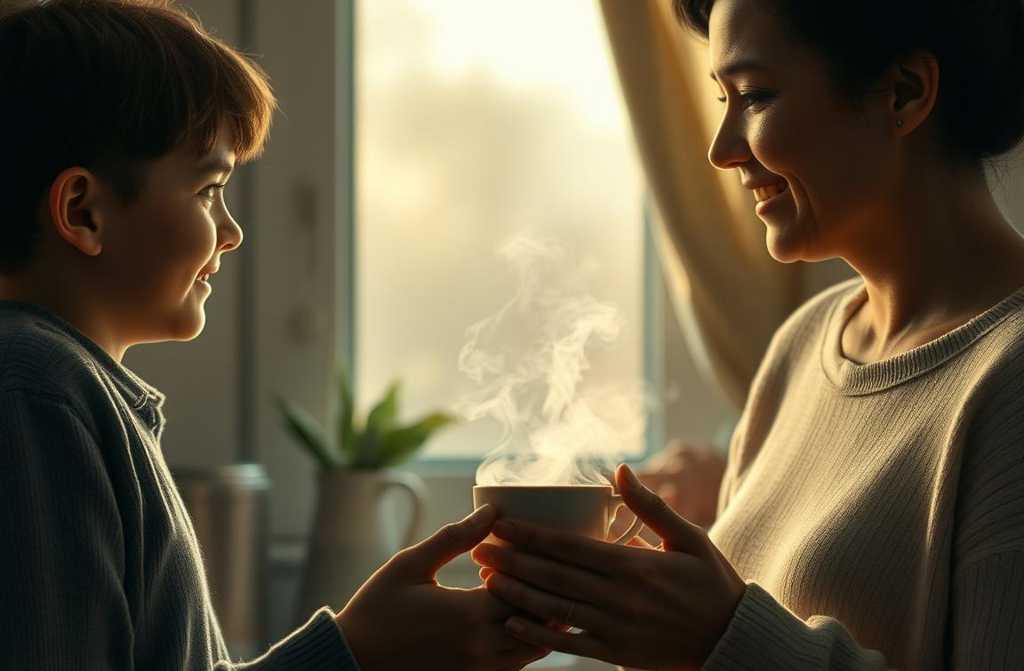
We fell silent again, but the tension seemed to ease with those simple words. I sat opposite him, pushing a box of tea toward his handa reflexive, soothing gesture.
Youre an adult now, I said gently. I need to learn to let you go a bit further Im scared Ill miss something or do something wrong.
He looked at me attentively.
Im still figuring out how to be here Back when I was in the unit it was simple: they said do this, we did it. At home everythings different. It feels like there are rules that existed before I returned.
I smiled at the corners of my mouth.
Were both learning to live together again maybe we should agree on a few things?
He shrugged.
Could try
That small willingness lifted a weight off me. We decided out loud who would handle the groceries (hed buy bread every other day), who would wash the dishes after dinner, and that wed each have a bit of personal time in the evenings without being asked where we were going or what we were doing. Both of us understood this was just the beginning, but at least the conversation had been honest and calm.
I asked cautiously about his plans for work.
You wanted to look for something, right? Do you still have your discharge papers?
He nodded.
Yes. They were given right after I left the service; theyre in my rucksack with my service record but now Im not sure where to start.
I thought of the local Jobcentre and told him briefly about the free advice and programmes for veterans. He listened, a hint of wariness in his tone.
Do you think its worth going?
I shook my head.
Why not? If you want, I can go with you in the morning for company, or just help sort the paperwork.
He thought it over for a while, then said,
Lets try together first
The kitchen warmed a little moreperhaps because we had switched off the overhead light, leaving only the soft lamp, perhaps because for the first time in days wed spoken calmly and openly. Outside, the neighbours lights flickered in the darkness; some other flats were still awake in the latespring night.
When the conversation dwindled naturally, we cleared the cups together and wiped the counter with a damp cloth.
Morning arrived with gentle light filtering through heavy curtains. The city outside was waking slowly; the courtyard echoed with the chatter of schoolchildren and the chirping of birds at the open kitchen window. This time, opening the windows no longer felt threatening. The air was a shade warmer; the nights chill had gone with the previous days anxieties.
I set the kettle on and pulled a packet of biscuits from the cupboard for breakfast, a substitute for the missing loaf. I laid out Toms papers on the table: his discharge certificate in a red folder, his service record, and his passport. I stared at them calmlythey now symbolised the new chapter of his life, one that would begin right here, right now.
Tom shuffled out of his room, still halfasleep but without the previous distance, and sat opposite me, offering a brief smile.
Thank you, he said.
I replied simply,
Shall we go together today?
He nodded, and that yes meant more to me than any grand promise could.